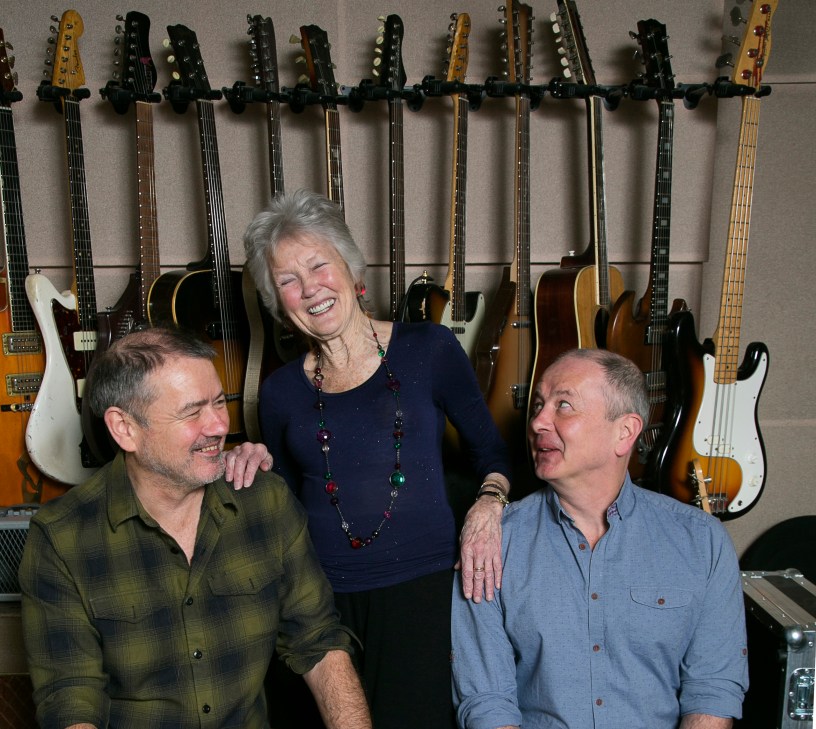
Peggy Seeger’s 25th and final solo album, released the month before her 90th birthday, is a fitting tribute to over 70 years as a working musician, feminist and activist. Peggy’s 25-date tour of the UK and Ireland in May & June will be her very last. After the tour, Peggy will retire from recording and live performance.
This is no apologetic or quiet farewell – she’s going out with a thoughtful, philosophical and very satisfying BANG. Peggy’s voice and songwriting are still major forces to be reckoned with. Nine brand new songs and two reinterpretations span the pillars that have sustained her career. Written and recorded with family members – established musician sons Neill and Calum (Calum also produced the album) and daughter-in-law Kate St John – this album is sheer class, suffused with love and respect.
Teleology is the belief that everything that has happened is an arrow aimed at a target called now, and this album celebrates both the now and the timeline that has led her here.
Peggy says: “It is unavoidable that at 90 I am preoccupied with life, love, loss, old age and death but I’ve never abandoned politics or the compulsion to speak up when something isn’t right. How I got here is still a bit of a mystery, but I’m exactly where I should be right now, and I’m at peace with that.”
Peggy plays The Lowry on Wednesday 21st May with tickets available here.
Back in 2019 I was lucky enough to see Stephen Fry’s Mythos shows. Fry gave a brief history of Greek mythology, regaling a captive audience with tales of spiteful gods, gruesome monsters and heroic mortals. Well, Sir Stephen may want to revisit the Lowry, as Zeus and Hera have arrived in Salford filled with malice and wrath!
Commissioned by the Lowry as part of their 25th Anniversary celebrations, Gods of Salford, sees ancient Greece relocated to the Greater Manchester city nestled on the banks of the river Irwell. The mortals work and toil away in order to pay tribute to the King and Queen of the Gods, Zeus (Emmerdale’s Anthony Quinlan) and Hera (West End star Laura Harrison). However, soon the humans grow tired of being at the whim of the Gods and a few brave individuals begin voicing their concerns about their treatment at the hands of the immortal rulers.
Zeus, upon hearing the discontent of the people, proposes a series of tasks whereby the humans could win their freedom. However, the humans soon realise that God’s don’t always play fair, whilst the omnipotent overlords soon learn that you underestimate human endeavour at your peril.
Not Too Tame are gaining a reputation for putting on fun, interactive shows that deliver a hugely entertaining night out and Gods of Salford carries on with that tradition. High energy, action packed and innovative, the myths and legends of ancient Greece are intertwined with stories of folklore from the pubs and streets of Salford.
The show has something for everyone: a punchy, witty script from Andrew Butler and Louise Haggerty, which playfully weaves the bizarre and absurdities of Greek Myth, with no nonsense Northern charm and honesty. Brutal one-liners and well observed social commentary mesh to make the classic underdog story.
Under director and co-writer Jimmy Fairhurst, we are treated to a cross between a Saturday night entertainment show and gladiator style combat as Zeus’ tasks are revealed. The show has the luxury of having a super talented cast of young actors at its disposal, giving performances packed full of energy and attitude. They fully embody the resilience and ‘never give up’ attitude at the heart of the story.
This innovative piece features impressive, choreographed set pieces, fine solo offerings, some ballet, contemporary dance, powerful vocal performances and even the theme tune to 80’s kids show Fun House for the nice little nostalgia hit.
Anthony Quinlan is an imposing figure of Zeus. It’s a turn packed full of menace, reminiscent of the local hardman you meet down the pub, who you want to be friends with only so he doesn’t smash you in the face, which he probably will do anyway. He is more than matched by Laura Harrison’s devious Hera, her stunning vocals are equalled by her ruthless streak. Jimmy Fairhurst and Max Healey bring a touch of razzmatazz to the mischievous compares for the tasks, Hermes Alpha and Hermes Beta while ensemble cast of young adults all get their chance to shine right from the get-go.
The set looked fabulous as the Quays Theatre transforms into Mount Olympus, if Mount Olympus were a building site. Jen McGinley’s impressive set design looks both gritty and majestic, but also allows for the cast to interact with the audience, and the audience to feel they are part of the drama, not immune from the Gods’ wrath.
Tonight’s show did have a few issues: at times during the first 15 minutes, it was hard to hear some of the cast members due to the frenetic nature of the show, however this was a minor quibble and understandable when you have a 20+ strong cast zipping around the stage.
This is a joyous, fun filled night at the theatre which showcases the talents of some fine young adults and allows them to do what they love and perform, and they do so with so much gusto and energy. Every Not Too Tame production I’ve previously seen has plenty of heart, soul and takes enormous pride in its working-class roots, everyone involved should be proud of what they have achieved: it is a no-nonsense, highly entertaining night out, which the Gods would more than approve of…👍
Following a record-breaking run in the West End the National Theatre, Olivier award-winning production of Dear England comes to Salford from 29th May for a four-week run.
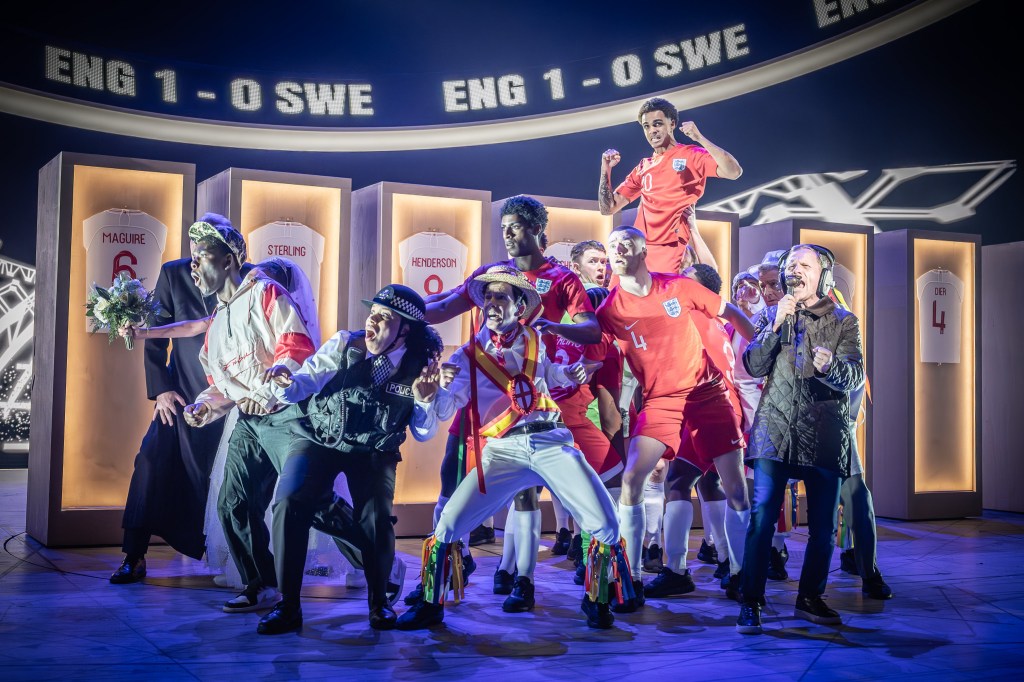
Written by award-winnng writer James Graham (Sherwood, BBC) and directed by Rupert Goold (Patriots, Cold War), this incredible play tells the uplifting, inspiring and often emotional story of Gareth Southgate’s revolutionary tenure as England manager. We all know the feelings of hope, heartbreak and elation being an England fan entails, Dear England dramatises this incredibly through one of the most ground-breaking and exhilarating pieces of theatre you’re ever likely to see as the reality of expectation and reality play out.
Ahead of its arrival in Salford next month we headed to the capital to catch this 5-star production and chat with four of the plays talented cast. Gwylim Lee (Gareth Southgate), Liz White (Dr Pippa Grange), Josh Barrow (Jordan Pickford) and Jude Carmichel who makes his stage debut as Marcus Rashford.
How challenging is it to play such well-known characters who are so prevalent in the media?
Josh Barrow (Jordan Pickford) : You don’t get much in terms of characterisation when they’re on the pitch they are very much their player self and the same really in the post-match interviews so you’re gonna have to go digging for scenes like in the locker room for example when it’s just them and you have to kind of make your choices with the characterisation that you make that’s when you get to play around a little bit. I think you don’t want to ever become a caricature of that person because they are so prevalent at the other top of their field, and they are still at the top so you still want to be able to serve them and also holding in mind the ideas from the play of what they have learnt and their ark from what Southgate has taught them.
Gwylim Lee (Gareth Southgate): I think we benefited during Southgate’s tenure from them opening up to the England fans with social media and everything else because we now get to see those YouTube videos for instance that go behind the scenes at St Georges and that’s really illuminating because when you watch them do post-match interviews they present in a version of themselves which is quite considered and placed for the media whereas when you see them in those videos when they’re with the inflatables in the swimming pool or just messing around that’s when you see them kind of free and without those constraints.
While you’re not a caricature of Gareth Southgate and I just wonder how much study you did because your interpretation is so convincing.
Gwylim Lee (GS): You start from the outside in when you’re working with a real person, which is kind of the opposite way round to how I would probably usually approach a character ’cause so much of it is just there for you to find but I suppose the trick is to find the whys, you know constantly ask that question, the physicalities like ticks and twitches and whatever his mannerisms might be, I wonder why he moves like that what is it about his character that makes him move like that. When you start filling in that kind of light and shade and that detail then it becomes less a mechanical thing and more a matter of character or intent you can let the mannerisms play out through the intentions that you are playing in the scene and the person that you’re in a scene with and all that stuff so that’s the hope anyway. We’re not impersonators, we’re actors and so the aim of an actor I hope is to try and find humanity of the character and also to find you in that character a little bit so it’s like this is very much my version of Gareth, I’m not trying to be a Rory Bremner or whoever else and yes they’re talented in what they do but I think it’s a different kind of craft so it’s just about trying to find your version cause we’re all playing those real people.
The staging is so impressive featuring three revolves, how much of a challenge is that when you’re performing?
Josh Barrow (JP): We had a whole portion of the rehearsals to learn how to use the revolves as it’s three tiers so one goes this way, the other goes this way, the other goes that way so we do we have to really practice hard how to walk on a moving stage.
Liz White (Dr Pippa Grange): I wasn’t there that morning and when we were in the rehearsal room doing the second scene when Pippa meets the security guard and then she walks through the locker and then has to cross all revolves, literally every time I was doing a Frank Spencer, going flying, thankfully I’m alright now ha ha.
Gwylim Lee (GS): You’ve just got to be braced for it at all times, just keep your knees slightly flexed, jut in case it goes!
Liz White (Dr PG): I don’t know if anyone else gets it, but I find when I’m on a train platform I suddenly get that moving sensation like the floor is moving.
Jude, how does it feel knowing you’re going to be playing Marcus Rashford a stones throw from Old Trafford?
Jude Carmichal (MR): When my agent called me to say I’d got the job it was like the fear came through, I was thinking when we go to Manchester everyone’s gonna be like ‘Go on then’ ha ha.
Gwylim Lee (GS): When you get closer to the weekend you get some football crowds in and that’s really that’s really fun ’cause you know you’ll have people that react when the players come out and say I’m Leicester City or Man City etc, I love it.
Josh Barrow (JP): We feed off that really, when you go to the theatre you sit down, you watch the show, you applaud the actors but I think with this it almost demands participation, it’s like we’re gonna throw this out to you and there’s laughs and cheers even boos but then it culminates in this a massive party at the end which is Sweet Caroline and I think the more a crowd lean into that and the more a crowd really give themselves over to you the more fun. As you said (Gwylim) when we do get some football fans in an audience that end moment is just wild, almost like a rock concert.
Gwylim Lee (GS): We talked in rehearsals a lot about having A’s, B’s and C’s so A’s would be your football buffs people that you just know everything all the way back and then C’s being that polar opposite. I’m probably a C+, maybe even a B now. But the play appeals to all three it has to appeal to all three of those audiences at any one time people come not knowing anything about football but it resonated on a different level and then polar opposite people come expecting it to be a football play which it is but then it’s a kind of Trojan Horse it’s about so much more.
This play feels so special because while we know the outcome we all watched and still felt hopeful, thinking just maybe just maybe…
Josh Barrow (JP): You clock audience members at the end of like the penalties at the end of Act One and everybody knows how it goes as it was such a big moment, but everyone is sat watching gripped and is so engaged, it’s just perfect.
Jude Carmichal (MR): You kind of get swept up in it, while you know the outcome obviously, you know what it means to be a fan watching and then even the aftermath whether that be good or bad you know that meaning, you can’t help but get caught up in it.
Josh Barrow (JP): With penalties it’s almost like the Colosseum there’s a roaring crowd cheering and cheering then this one person steps up in front of everybody and its gladiatorial and you feel that with the audiences that everybody’s watching you.
Jude Carmichal (MR): When Harry misses his penalty every time backstage I’m like arrggghhhhh.
Gwylim Lee (GS): It’s testament to these guys as well, because it’s a show it has to have a shape to it and a choreography to it which has to be kind of the same every night you know ’cause there’s a production that fits in around it but you can’t just go through the motions and do the moves, these are young athletes at the pinnacle of their game at the highest level of performance with adrenaline coursing through their bodies and you can’t just run to the penalty spot and take it, you’ve gotta fill it with all of that and they do every night they do and every rehearsal they do like there is no let up for the boys they work so so hard and that’s what sells it really.
Josh Barrow (JP): With Jordan Pickford when he’s on stage there’s so much tension, he’s almost rattling in the best kind of way and again that goes back to what we were saying before about making them real people I’m sure Jordan Pickford doesn’t go home and he’s like that, when he’s in the scenes in the class room that’s when you get to play around with it a little bit more, there’s not just that one version of him so you think about how he’d respond to Pippa to Gareth to the other players. It almost feels like an engine constantly running, I keep that image in my mind, everybody else is charged as well and you have that feeling that the keeper at the back like the last line of defence.
Have any of you performed at the Lowry before?
Gwylim Lee (GS): I was part of a tour years ago where we did King Lear up there with Derek Jacobi, I’m looking forward to going back, I love it, it’s a beautiful theatre and a perfect match to the Olivier, it’s a very similar kind of spaces and a great city it’s gonna be fun taking it to a new audience up there and seeing how they’ll respond to it.
There are so many themes in this play what do you want audiences to take away from it?
Gwylim Lee (GS): It was very interesting watching Gareth Southgate’s lecture last week and it feels like everything that was kind of touched on in that lecture is the heart of this play and it really is about resilience and belief and it’s trying to give people resilience and really encourages resilience and belief in people.
Liz White (Dr PG): Masculinity is an interesting part of it too, I’ve really enjoyed researching Pippa because I get to listen to all her strategies and her approaches for a better, calmer life and one that’s filled with deeper joy and deeper loss as well. She talks about how to lose, someone laughed today as I said well England have to learn how to lose and I thought, yes I can imagine it sounds quite defeatist but actually what she’s just saying is if you can look at it in a very reflective way and let that feed the way you approach your next battle or your next match…so I feel kind of infused by her lessons really and I hope that for people watching it as well to look at the way they approach things differently in a more whole, holistic way.
Gwylim Lee (GS): I think one of my favourite things of Pippa’s is when she talks about winning that’s kind of inferred in the play is the idea of winning deep and winning shallow and there’s a difference to just winning at all costs. It’s like winning with integrity and winning you know with depth.
Liz White (DR PG): I feel like that means that actually if you got out there and play with integrity after all your prep and put the effort in regardless of the outcome you’ve won. I think interestingly when COVID gets mentioned it’s so poignant as we’re not far away from it and yet we have enough time for hindsight to come in and when the Euro’s came to Britain as a bit of a surprise for us all it was the first time a lot of people have been able to go out together and even watching it from home we really needed it you needed to see.
Gwylim Lee (GS): We need these national moments of togetherness because when have them you realise how brilliant this country is and how great the people in it are and it’s a divided world at the moment, even at times a divided society. When Gareth wrote that Dear England letter it was a galvanizing moment, encouraging people to come together, there’s something about this country and when we do come together it’s brilliant and has power and strength and it can be glorious. He says I tell my players that what we are all a part of is an experience that lasts in the collective consciousness of our country and there is such a thing as a collective consciousness of England. I think that’s why this play has such power because it taps into that collective consciousness and hopefully that’s what audiences take away from it. There’s hope, there’s joy, there’s power in being together.
Liz White (Dr PG): On a very base level all of those things say, you’re not alone. Someone else is there having the same experience as you, it’s so powerful.
Gwylim Lee (GS): There are a lot of parallels, sport is about performance, we’re dealing with fear, I was scared about taking on this job,I read the script and thought yes you’ve got to take on your fears and go for it. Put yourself in the uncomfortable position and see what happens.
Dear England opens at The Lowry on Thursday 29th May and runs until Sunday 29th June tickets and further information are available here.
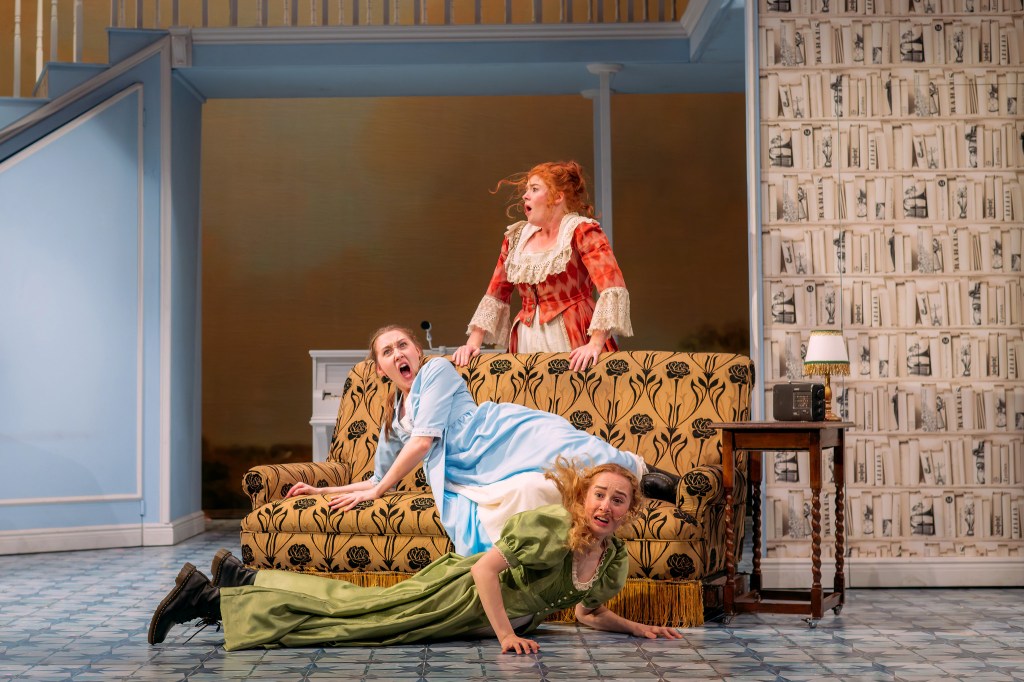
What if you took Jane Austen’s most popular novel, added a tower of Ferrero Rocher, a plethora of iconic pop hits and a life-sized horse on wheels? The answer, my dear, is Pride & Prejudice* (*sort of) – a wickedly funny and outrageously irreverent take on the classic story of the Bennet sisters and their rocky road to lasting love.
In a genius move, writer/director Isobel McArthur tells the story from the perspective of five ‘below the stairs’ maids who have an invisible hand in helping each sister get several steps closer to marriage (with more success than the meddlesome Mrs Bennet!).
With an all-female cast of just five players portraying every single character in the Austen universe (both above and below the stairs), the stage is set for a rip-roaring entertainment-fest in which your next giggle is never more than a second away.
With Naomi Preston Low expertly anchoring the action as the irrepressible Elizabeth Bennet and Christine Steel bringing sweetness and light as Jane Bennet, Rhianna McGreevy is free to showcase her exceptional range – switching effortlessly from potty-mouthed Mrs Bennet to the taciturn Fitzwilliam Darcy.
Whether thrusting her breasts as chief antagonist Caroline Bingley or wrestling with a tube of Pringles as the hapless Charles Bingley, Emma Rose Creaner is hysterical. But the scene-stealing plaudits must go to Eleanor Kane, whose Mr Collins, once experienced, can never be forgotten!
An honourable mention must go to Mr Bennet, who is represented by nothing more than an armchair, newspaper and cloud of smoke in one of several inventive sight gags throughout the play.
Other running themes include an impressive array of 1980s confectionery – from a plate of Wagon Wheels to a box of Viennetta ice cream. And, of course, there is always the (welcome) threat of a song around every corner, with the cast taking every opportunity to underpin each character or plot development with a tongue-in-cheek number. Highlights include Carly Simon’s ‘You’re So Vain’, Chris de Burgh’s ‘Lady in Red’ and Pulp’s ‘Something Changed’.
Comedy supervisor Jos Houben’s lightness of touch ensures no laugh is forced, while McArthur’s direction is imbibed with creativity and ease. Character transitions are helped enormously by the inventive wardrobe choices of multi-award-winning Ana Inés Jabares-Pita. A simple white dress for each maid creates the perfect canvas on which to layer on additional garments, which are whipped off and on before you can blink an eye.
Above all, this play is about sisterhood – and the bond between the players feels very genuine. They look like they are having a ball on stage, which is an energy that translates to the audience, who need no prompting to rise to their feet for a well-deserved standing ovation.
Back in 2018, McArthur and her fellow graduates fromThe Royal Conservatoire of Scotland were initially challenged by Andy Arnold, the Artistic Director of Glasgow’s Tron Theatre, to restage a classic. With an instant hit on their hands, the young company lost traction during the pandemic but, thanks to a collective effort from the theatre industry – and the considerable determination of producer David Pugh – this Laurence Olivier Award-winning play lived to see another day. It now stands as a testament to what can happen when talent meets opportunity meets resilience.
Sometimes considered complex and unwieldly in its classic form, Pride & Prejudice* (*sort of) is a modern-day rom-com triumph that anyone can enjoy. Just be prepared to go home with your cheeks sore from incessant smiling!
Pride & Prejudice* (*sort of) is on at The Lowry until Saturday, 22 March tickets are available here.
When picking a film at the cinema, we often like to know what genre of film we’re off to see, so hopefully there’ll be no nasty surprises for us. Surely the same would have been said when William Shakespeare was knocking out plays with such gusto. One play that has often proved difficult to pigeonhole is The Merchant of Venice, listed as a comedy, mainly because there is a wedding, a spot of farce and (spoiler alert), no one dies!
However, over time the play has been reappraised due to its problematic antisemitism. Director Brigid Larmour and Tracy-Ann Oberman are the latest to tackle this troublesome play, their ambitious artistic choices pay dividends with this bold, thought-provoking adaptation.
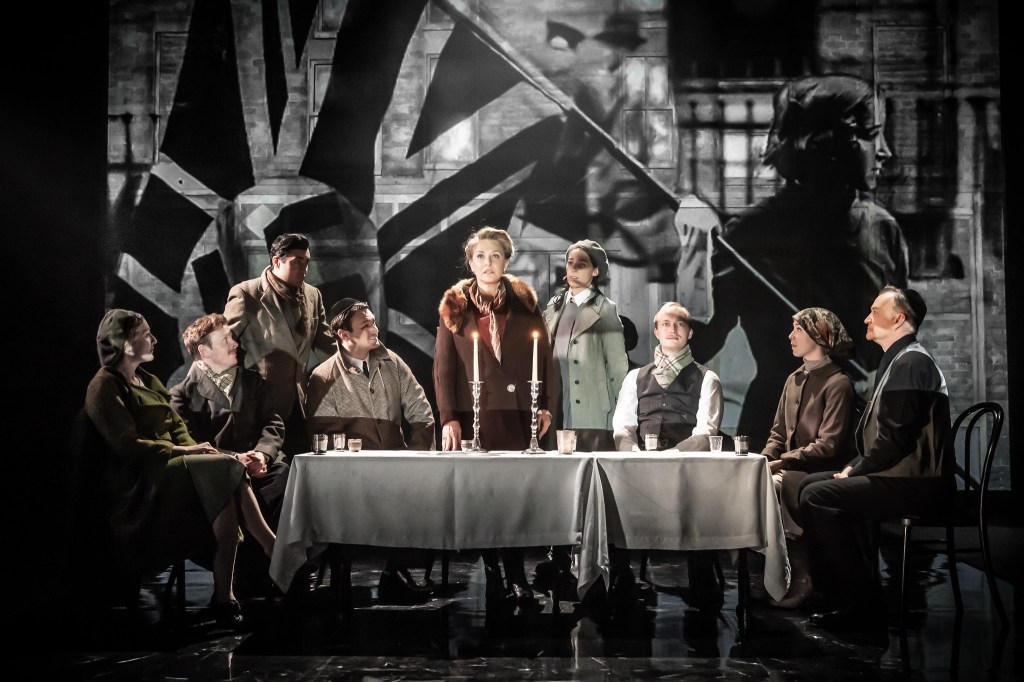
In their reworking, The Merchant of Venice 1936, the action is shifted to London’s East End: where the rise of Oswald Mosley’s British Union of Fascists sees the persecution of the local Jewish community. Here Oberman’s Shylock runs her money-lending business. She is a strong, feisty Jewish businesswoman, who’s devotion to her faith is only matched by her love for her family, especially her daughter, Jessica (Gráinne Dromgoole) evident in a beautifully staged family gathering at the start of the production.
Shylock is approached by Bassanio (Gavin Fowler), a socialite who has designs on a wealthy heiress, Portia (Georgie Fellows). Bassanio, asks his friend, Antonio (Joseph Millson), a local merchant and member of the BUF, to act as a guarantor in order for him to secure a loan from Shylock. Antonio and Shylock despise each other, yet the savvy money lender agrees to the loan, but the price Antonio must pay if he is late with the repayment is a pound of his own flesh. As tensions rise in the community, romances blossom, and fortunes fall, whilst Shylock and Antonio are heading for a collision that neither are willing to back down from.
Oberman’s steely Shylock anchor’s the production from the outset, her revenge mission sets the tone for the unpleasantness that follows. It’s a performance filled with passion and swagger, ensuring that when the inevitable sucker punch comes you feel her heartbreak all the more. She is more than equalled by Millson’s slimy, restrained but no less menacing black-shirted Antonio. They are supported by a tremendous cast, with special mentions for Evie Hargreaves’ portrayal of Mary Gobbo (also in a duel as Nerissa) who manages to get under your skin with her treacherous ways. Whilst Georgie Fellows, excels as the thoroughly unpleasant Portia.
Under Brigid Larmour stewardship the production thrives in its 1936 setting. It’s a harsh world, where you are on high alert ready for the situation to escalate. It’s a testament to the cast and direction that when that moment comes it rather takes you by surprise.
Liz Cooke’s grimy set design works tremendously well at selling the audience the fear, and isolation of Cable Street. Whilst her costume design especially for the more affluent characters look stunning: they dazzle as they showcase not just their wealth, but their prejudices too. The production is intercut with video footage of the rise of the BUF, on the march through Britain. It’s a terrifying yet timely reminder of a part of Britain’s past that some conveniently choose to forget.
Despite the unsatisfying end to Shakespeare’s play, Larmour and Oberman give us an optimistic conclusion, with a Oberman delivering a personal powerful message of unity that will remain with me for some time to come and goes to highlight the importance of theatre to not just entertain but remind us what it is to be human.
The Merchant of Venice 1936 runs until 1st March, tickets are available here.
Directed by Loveday Ingram, The Girl on the Train pulls you in right from the start, gripping you with its intensity and keeping you hooked throughout. The show is a wild emotional ride, balancing suspense, drama, and just the right amount of humour. This thought-provoking adaptation of Paula Hawkins’ best-selling novel by Rachel Wagstaff and Duncan Abel goes beyond anything you might expect. Taking a popular book and film and making it work on stage is no easy task, but this version is absolutely brilliant.
One of the standout performances is Giovanna Fletcher as Rachel. She brings a raw vulnerability to the role, perfectly capturing Rachel’s emotional fragility. Fletcher’s portrayal of Rachel’s struggles with alcoholism, guilt, and trauma is both powerful and moving. There were moments when I was holding my breath, captivated by how she would navigate her next emotional turn. Fletcher’s performance truly anchors the show, inviting the audience into Rachel’s complicated world, making it impossible to look away. Fletcher is on stage throughout this entire production, her stamina is incredible in this emotionally demanding role – I didn’t know what I was expecting from Fletcher, but it certainly wasn’t what I got. She is the embodiment of the character Rachel.
Paul McEwan brings some much-needed levity with his portrayal of DI Gaskell. His comedic timing is spot-on, offering light moments that provide a much-needed break from the heaviness of the rest of the story. McEwan’s warmth and charm balance the darker themes of the play, and his chemistry with Fletcher is electric. Their dynamic adds a unique layer to the relationship, with Gaskell seeing something in Rachel that others don’t. It gives the audience more reason to root for Rachel as the play unfolds, and together, they form a pairing that’s unexpected but works perfectly.
The ensemble cast is key to the success of this production. Their energy and commitment are essential to creating the shifting emotional and physical landscapes of The Girl on the Train. The actors use movement and physical theatre techniques to transform the stage, effortlessly moving between different locations and moments in time. This isn’t just functional; it’s a core part of the storytelling. The way they adapt to changes in atmosphere heightens the emotional tension, ensuring the audience stays fully immersed in the unfolding drama. The entire cast is truly exceptional.
Another standout element of the show is the use of digital technology. The projections aren’t just a backdrop—they’re seamlessly integrated into the narrative, adding so much depth to the story. The digital imagery reflects the characters’ internal struggles, giving us a glimpse into their psychological turmoil. These projections also help show shifts in time and place, mirroring Rachel’s fragmented memories and emphasizing the disorienting nature of her world. The digital elements blend so naturally with the live action, enhancing the flow of the story rather than distracting from it. This is theatre for 2025—innovative, immersive, and captivating in a way that feels fresh and exciting. It engages the audience in a completely new way, without relying on traditional sets or realism, and it works beautifully.
Adam Wiltshire’s minimalist set design complements the production perfectly. The simplicity of the set allows the actors to shine while still providing the flexibility to shift the space for different locations. The starkness of the design contrasts superbly with the vivid projections, creating an environment that feels both intimate and expansive. The projections add another layer to each scene, highlighting the emotional depth of the characters and enhancing the overall atmosphere. The whole staging feels like something we haven’t seen before.
Under Loveday Ingram’s direction, The Girl on the Train is perfectly paced, with every detail carefully thought out to keep the audience engaged. Ingram’s use of physical theatre, combined with the smooth integration of digital technology and the incredible ensemble cast, creates an experience that draws you in and doesn’t let go. The transitions between scenes, whether through the actors’ movements or the shifting projections, are fluid and seamless, making the narrative feel dynamic and cohesive.
Overall, The Girl on the Train is an exceptional production. It combines powerful performances, innovative design, and cutting-edge technology to create an unforgettable theatrical experience. With an incredible ensemble cast, sharp direction, and the brilliant integration of physical and digital elements, this show deserves every one of its five stars. Simply put, I was completely blown away!
The Girl on the Train is on at The Lowry until Saturday 15th February tickets available here.
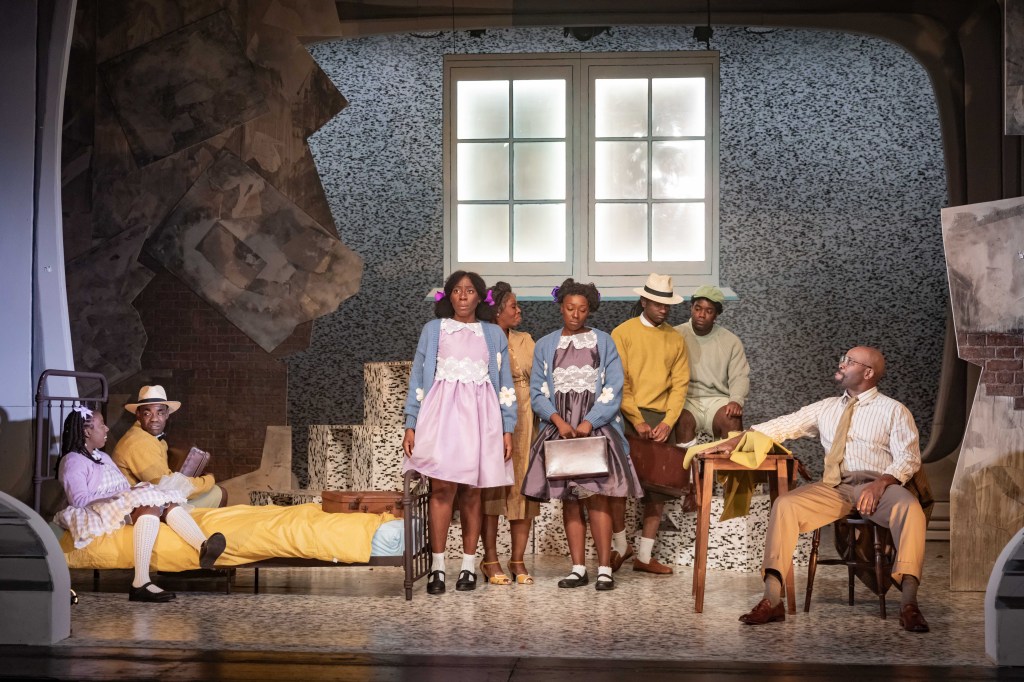
Coming to England at the Lowry is a heartwarming, exploration of migration, the windrush generation, identity, and the pursuit of a better life.
The production is based on the children’s book by Florella Benjamin about her life and her family’s journey from Trinidad and the struggles they faced when they arrived in England.
It is important that stories like this are shared, and this production is a success because it’s at a level that children can access the themes. The plot isn’t heavy, but the key messages about equality and inclusion are prominent.
The standout feature of the show is undoubtedly its cast, who bring passion and authenticity to their roles. Each actor shines in their portrayal of individuals facing personal and societal challenges, infusing their performances with depth and emotion as well as humour. The chemistry between the ensemble members is palpable, drawing the audience into the struggles and triumphs of their respective characters. The theme of family underpins every scene- you can feel the love shared between the characters.
Equally impressive are the songs, which are catchy and full of energy. The musical numbers are some of the strongest moments of the show, with a mix of heartfelt ballads and upbeat tunes that capture the emotional range of the story. The music does an excellent job of supporting the narrative, offering both emotional resonance and moments of levity.
However, while the cast and songs are excellent, the plot itself feels a bit uneven at times. Some parts of the story could benefit from further development, it would be wonderful to see how Florella rose to fame. Despite this, the production as a whole is a hugely enjoyable experience, thanks to its talented performers and the strength of its music. It’s an important story to tell. The production is aimed at children, and that is where it is pitched- it addresses important themes about discrimination and racism, but equally highlights the love of a family and the way in which they don’t let the discrimination define who they are.
Coming to England is a show that delivers strong performances and memorable songs. For fans of Florella Benjamin and those interested in heartfelt stories about migration and the windrush generation it’s a wonderful watch.
Coming To England is on at The Lowry until Sunday 9th February tickets available here.
Hard to imagine really that a mechanical shark by the name of Bruce, very nearly killed the Hollywood blockbuster, even before anyone knew what a Hollywood blockbuster was. Bruce was one of the main stars of the first Hollywood mega movie: Jaws. Bruce had a habit of breaking down on a regular basis, leading to several halts in production, and a great deal of frustration from his fellow co-stars. But how do a trio of actors pass the time, when cooped up on a small fishing boat? They argue, they drink, they gamble and get on each other’s nerves!
Co-written by Joseph Nixon and Ian Shaw, son of Robert Shaw, The Shark Is Broken is set in 1974, on the Orca, the fishing boat used in the film. Here we find the three principal actors, Roy Scheider (Dan Fredenburgh), Richard Dreyfuss, (Ashley Margolis) and Robert Shaw (Ian Shaw), struggling to fend off boredom, as Bruce is repaired. They discuss their careers, their families, and gamble. However not all is plain sailing, and soon tempers fray, with Scheider playing peacekeeper to the warring Dreyfuss and Shaw, with the former feeling disrespected by Shaw. Whilst Shaw sees Dreyfuss as arrogant, more interested in fame than the craft of acting.
There is a great deal to enjoy and admire about this production. The script is funny, witty and packed with cracking gags and one-liners. Opening with a nod to John William’s famous score, we see a shark fin, gliding through the ocean projected on a screen at the back of the stage, and soon any dramatic tension disappears as the shark breaks down, it’s a superb joke that sets the tone for the show. Other standout big laughs come when Scheider rules out doing a sequel to Jaws, which of course he did. Another highlight is Shaw’s making reference to Steven Spielberg’s next project: “Aliens? What next, dinosaurs?”
It’s a classic situation comedy set up, as three very different people find themselves in a cramped environment and the script plays up to this throughout. Duncan Henderson’s Orca recreation is beautifully claustrophobic, and dingy, as the cast clamber over it and at times each other. It looks so authentic that at times you almost smell the stench of fish guts and hard liquor coming from the stage.
The cast are in form throughout: it’s quite disconcerting how captivating Ian Shaw’s portrayal of his father is. Obviously, the close resemblance helps, but this is a performance filled with fire and passion as Shaw doesn’t flinch from showing his father’s battle with his demons including alcoholism, insecurities and disdain for elements of his profession that provided well for him and his family. It’s a towering presence that commands your attention throughout.
Equally impressive is Ashley Margolis’s unflattering portrayal of Richard Dreyfuss, filled with a nervous energy and self-doubt that in lesser hands could have been grating, but he navigates that tightrope perfectly. Finally there is a Dan Fredenburgh’s excellent understated, if slightly under-written turn as Schieder, who is essential in keeping proceedings grounded. Special mention to Carole Hancock’s whose flawless make helps to transform the actors into mirror images of the stars they are portraying.
The play tackles some weighty issues such Shaw’s alcoholism, and how it wasn’t just Bruce that was causing issues with production. It alludes to the well documented issues Dreyfuss would have with cocaine addiction in later years. One touching scene where the men bond over issues with their father’s is well played out, and one of the show’s highlights, you just wish there was a bit more of this depth in places
This is a funny, sharp insight into the magic of Hollywood, understandably executed with a great deal of love and affection for its subject matter. Fans of Jaws, and the Hollywood movie machine will undoubtedly love it. There is something for everyone to enjoy from the towering performances, high quality production values, all anchored by a sharp, poignant and well-crafted script.
The Shark is Broken is on the Lowry till 8th February tickets availablehere.
Back for the 4th year the National Lottery’s Big Night of Musicals yet again proved the perfect way to beat the January blues and celebrate the wonderful work done by the National Lottery AND the very best of musical theatre.
Superbly hosted by comedian Jason Manford as well as offering performances from some of the hottest West End shows, the event showcased a range of touring productions – some which are headed to Greater Manchester soon.
The show also highlighted the support the National Lottery has given to more than 20,000 theatre-related projects over the last 30 years.
Stand out moments from West End productions included a first look at Marisha Wallace’s Sally Bowles from Cabaret – with Maybe This Times – and a brilliantly bonkers number from the new cult hit Titanique – starring Layton Williams and the brilliant Lauren Drew (you might remember her from starring in Lizzie at Hope Mill Theatre last year).
Perhaps most exciting was the chance to for a first look at the brand-new Disney’s Hercules, which is coming to the West End this summer, with a spectacular performance of ‘Zero to Hero’ and ‘Go The Distance’ from Luke Brady (Hercules) and his fiercely fabulous Muses.
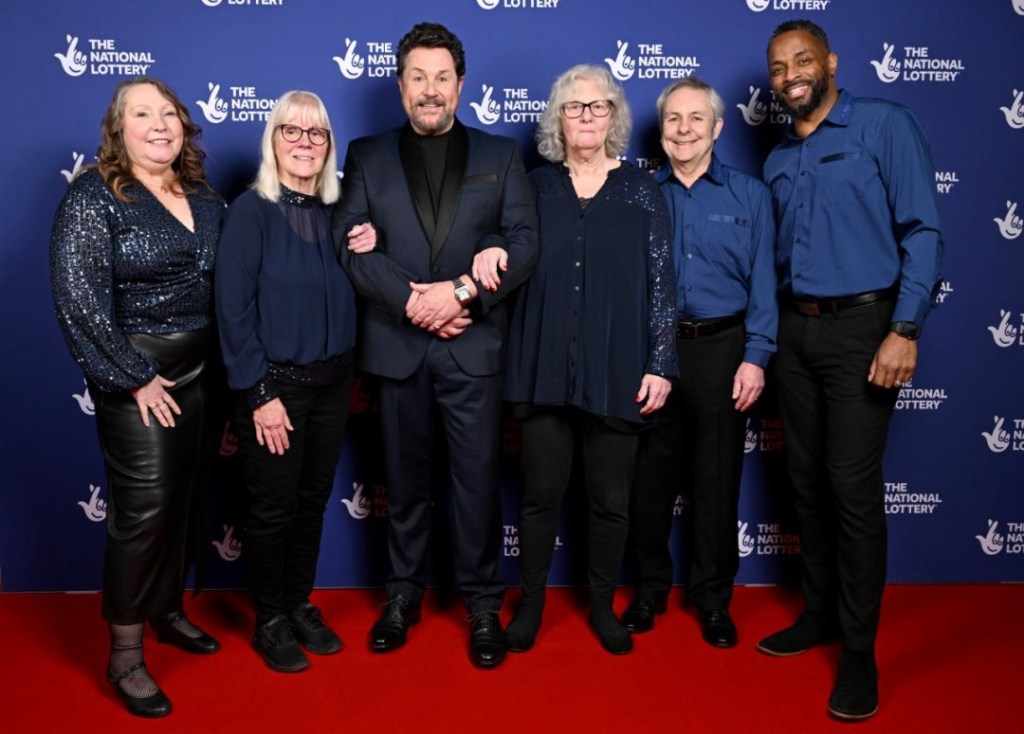
Undoubtedly one of the most moving parts of the evening was when musicals legend Michael Ball made a special appearance, singing a spine-tinglinh rendition of ‘The Impossible Dream’ alongside National Lottery-funded charity, Our Dementia Choir, founded by actress Vicky McClure. It’s not an exaggeration to say the performance moved many audience members to tears.
There was also a beautiful performance of Electricity from Billy Elliot by two youth theatre groups from Stockport and Yorkshire – the young people absolutely did themselves proud.
The National Lottery’s Big Night of Musicals celebrates 30 years of The National Lottery funding theatre and performing arts across the UK and serves to thank players who have helped support theatre-related projects to the tune of £1.3BN. National Lottery funding has helped restore theatres as well as enabling hundreds of performing arts projects.
The National Lottery’s Big Night of Musicals will air on BBC One, BBC Radio 2, BBC iPlayer and BBC Sounds this Spring.
There something so very special about A Christmas Carol, with its timeless story and perfect message for the festive season, this classic Dickens tale is a firm audience favourite.
This Christmas, Hope Mill Theatre bring Scrooge’s redemption to magical life at The Lowry with the added twist of the Ebenezer Scrooge we all know and love becoming Evelina Scrooge, played superbly by Claire Moore.
Seeing Scrooge as a woman offers an incredible opportunity to revisit a story we think we know so well and see it through fresh eyes as the tale takes on new meaning. We see an increased depth to Scrooge and gain a deeper understanding of what led to her life of stingy frugality.
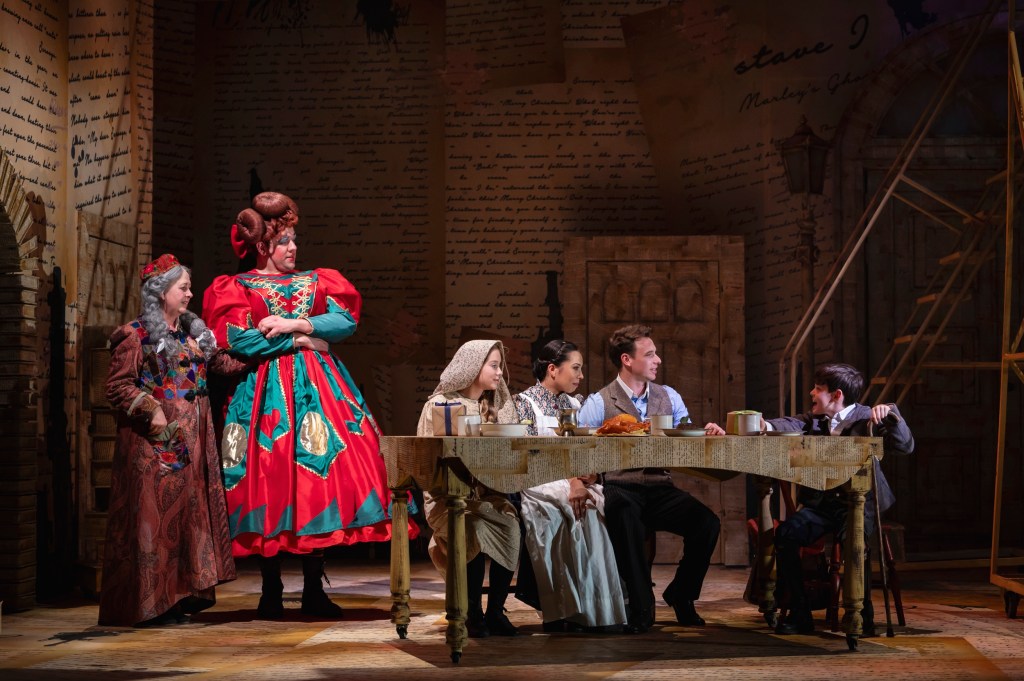
Set amidst the inky pages of a book this stunning musical adaptation is everything you want from a Christmas production. This traditional take oozes quality with its stunning set, impressive projections, wigs and costumes while the cast are truly phenomenal.
From Claire Moore as Scrooge right down to Team Holly’s Marnie Fletcher as an 8 year old Eveline, this cast is second to none. Their vocals are sublime while the ensemble deliver George Lyons choreography to perfection.
Director Joseph Houston alongside co-director William Whelton have created a production that would be at home on any West End stage, how lucky we are to have it right here in Salford.
Scrooge’s night of reckoning begins with a visit from a ghostly Jacob Marley, played superbly by Barry Keenan. His words ring true as the clock strikes one and the Ghost of Christmas Past (Mari McGinlay) appears. McGinlay is wonderful, full of memories and merriment as she reminds Scrooge of monumental moments from past which seem long buried by the Scrooge of present. Both painful and perfect memories emerge culminating in a celebratory scene at the Fezziwig’s Annual Christmas Ball.
This big company number is tremendous, showcasing George Lyons’ choreography while allowing Alan Menken and Lynn Ahrens stunning music the ideal opportunity to shine. Alexander Evans and Josie Benson play the perfect hosts as Mr and Mrs Fezziwig, comedic and commanding.
Next we meet James Hume as the Ghost of Christmas Present. Hume is an absolute joy while the staging of his scenes is a total triumph and a real highlight in an already wonderful show. His witty approach combined with a stunning company number will live long in the memory.
As Josie Benson returns to the stage as the Ghost of Christmas Future we see Evelina Scrooge repent as she lightens and brighten before us. Claire Moore shows such incredible versatility in her characterisation, from the cantankerous early Scrooge to the jovial Scrooge of the finale she takes us with her, every step of the way on this heartwarming journey.
The entire company all deserve high praise, their vocals are breathtaking while their skilful set changes become beautifully crafted choreography. Special mention must go to Matthew Jeans and Team Holly’s Joel Tennant whose pairing as Bob Cratchit and Tiny Tim is a joy.
From Andrew Exeter’s stunning set design to Alex Musgrave’s rich lighting magic has been made. The band led by Joseph Clayton solidify the sheer quality of this production.
After 9 award-winning years producing their own in-house productions, this is the first Hope Mill Theatre have created and produced for another venue and to say the bar has been set high would be a wild understatement. A Christmas Carol : The Musical is sublime. It will lift your spirits, warm your heart and remind you just how magical live theatre can be, sensational!
A Christmas Carol : The Musical is on at The Lowry until Sunday 5th January tickets available here.
Telling the incredible real-life story of remarkable human kindness in the face of unimaginable tragedy, Come From Away has arrived in Salford for a heartwarming festive season.
Having thrilled audiences from Broadway to the West End, Come From Away transports us to the small community of Gander, a town in Newfounland, Canada, which on September 11th 2001 suddenly found itself home to over 7,000 international visitors, grounded due to the 9/11 attacks.
Having been in New York myself on September 11th I put off seeing this much loved musical for several years, concerned I’d find it upsetting or triggering. I finally took the plunge as its award-winning run on the West End came to a close, my one regret was that I waited so long. I left the theatre uplifted, inspired and desperate to watch it again.
Come From Away while created as a result of the real-life stories of grounded passengers, crew and the wider Gander community is anything but dark. It shines the most beautiful light on the absolute best parts of humanity as the locals embrace their ’come from aways’ while their visitors find hope and heart in the most challenging of circumstances.
The cast of 12 take on multiple roles from Captain Beverley Bass, the first female pilot to fly for American Airlines to Claude Elliot, who was Mayor of Gander at the time of the attacks. Personal accounts are beautifully interwoven with stories of community all set to an addictively catchy score while the script is littered with witty, heartwarming moments which draw you in from the start.
Irene Sankoff and David Hein’s book, music and lyrics are seamlessly delivered by this brilliant company. From opening number ‘Welcome to The Rock’ right through to the joyous finale where the talented band led by Andrew Corcoran are given their moment in the spotlight, this life-affirming production delivers over and over.
The cast move both themselves and the props around the simple yet highly effective set to great effect. One moment we’re in Tim Horton’s at breakfast time, the next we’re on a flight, about to make an unplanned landing, every tightly woven movement pushes the narrative on wonderfully.
Christopher Ashley’s slick direction ensures despite the multiple characters every scene is delivered with clarity and precision. The perfect pacing and intricate transitions keep the flow just right while the cast carry you through this emotional journey with them as if you too are a Newfoundlander.
This is a story of kindness, human connection and compassion delivered by a cast at the absolute top of their game. Amidst the witty, melodic scenes there are more serious, emotive moments which are given just the right amount of time to breathe before the next wave of joviality whips you up again. There is also an important and frank spotlight shone on Islamophobia, something I remember vividly witnessing flying back from JFK in the days after 9/11.
This is real, authentic ensemble theatre where cast members collectively create a truly memorable production. At a time where darkness can often feel so prevalent Come From Away will restore your faith in humanity and remind you that every single one of us has the ability to make a difference. This is is incredible storytelling, beautifully told. Let Come From Away whisk you off to Gander, fill your heart with joy and remind you there is always light amidst the darkness.
Come From Away is on at The Lowry until Sunday 5th January tickets available here.
Set during the first Covid lockdown, 40 something Kevin is down on his luck, work sucks and to top it all off he’s just been dumped. Seeking refuge in the attic of his childhood home, Kevin soon realises quarantining can be a lonely business, especially when you’ve only got your old Dolly Parton records and posters for company.
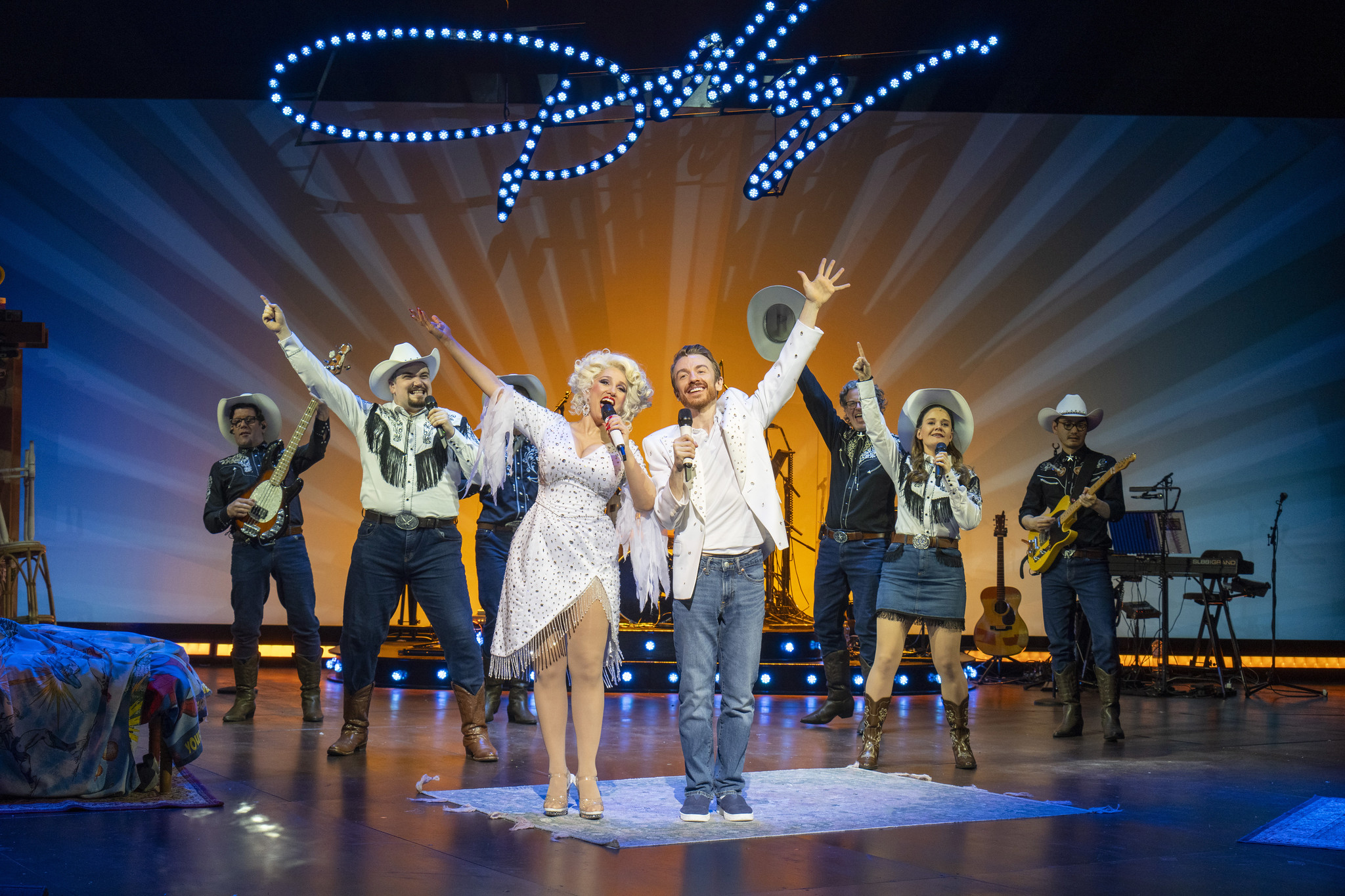
Fortunately for Kevin, Dolly quickly makes her presence felt, think Mary Poppins but with more sass, bigger boobs and a whole lot of sparkle. Through Dolly, Kevin gradually begins to remember just how wonderful and varied life can be, as he finds the courage within to pick himself up, dust himself off and transform his life for good. It reflects on the madness of the pandemic while demonstrating that we all have the ability to expand our own personal horizons even while stuck in our parents’ attic.
Written by multi-Emmy award-winning comedy and songwriter Bruce Vilanch with Gabriel Barre (who also directs) and writer/actor Tricia Paoluccio (who co-writes and stars as Dolly), Here You Come Again has already enjoyed successful runs in the US, ahead of embarking on this current UK tour the creatives called on much-loved writer Jonathan Harvey who added additional material for UK audiences. The result is a joyful, feel-good, heartwarming musical that will delight theatregoers for years to come.
Steven Webb is tremendous as Kevin, he bursts with loveable energy endearing him to audiences immediately. While incredibly funny Webb also skilfully taps (quite literally) into Kevin’s vulnerabilities which adds depth and relatability to this beautiful story. Sharing the stage with Webb is Tricia Paoluccio as Dolly, she absolutely shines in the role, her characterisation of Parton is perfection. She has real star quality and gives an unforgettable performance. The relationship between Webb and Paoluccio is what really anchors this show, cementing it as a wholesome, heartfelt production. They bounce of each other brilliantly, keeping you guessing as to what’s to come while skilfully engaging the audience with their animated performances.
Joining Webb and Paoluccio on stage are Charlotte Elizabeth Yorke and Aiden Cutler. Both brilliantly bring multiple characters in Kevin’s world to life adding further heart and humour to proceedings. They also add gorgeous backing vocals which in turn further lifts the energy of this joyous production. Special mention must also go to the onstage band made up of Luke Adams, Ben Scott and Kevin Oliver Jones who frequently become part of the scenes with great effect.
Paul Wills’ set design is intricate and effective, transporting the rest of us forty somethings in the audience to a place of sentimentality as the attic plays host to artefacts from our childhoods, a Bluebird Toys Big Yellow Teapot, a creepy Chucky doll and of course a box of discarded tangled tinsel.
This show is all about fun and ensures that’s exactly what the audience experience, the cast cleverly acknowledge that there may be Dolly fans in the audience bursting to sing along and that opportunity is given while being gently controlled by the cast, so it remains within the predetermined moments.
The placement of Dolly’s songs has clearly been done with great care. The lesser known are given their moment in the spotlight while the big hitters like 9 To 5 arrive just when you want them to.
Here You Come Again while set during the pandemic is anything but heavy, it’s uplifting, hopeful and sparkles with joy. A reminder to us all to: ‘Stop looking in mirrors and start looking out of the window.’
Here You Come Again is on at The Lowry until Saturday 2nd November tickets available here.


















 Opening Night