Twelfth Night

Reviewed by Nikki Cotter

Opening Night verdict ⭐️⭐️⭐️⭐️

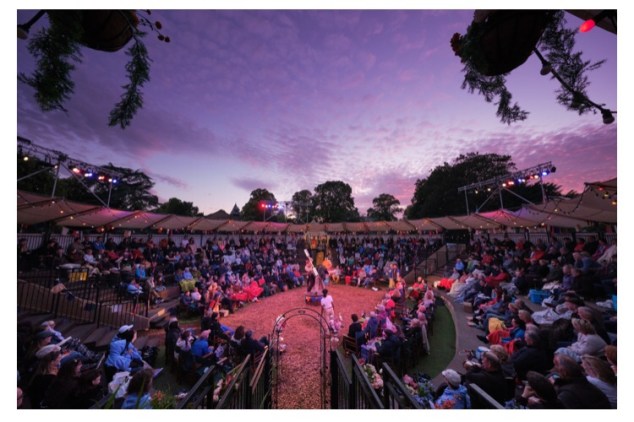
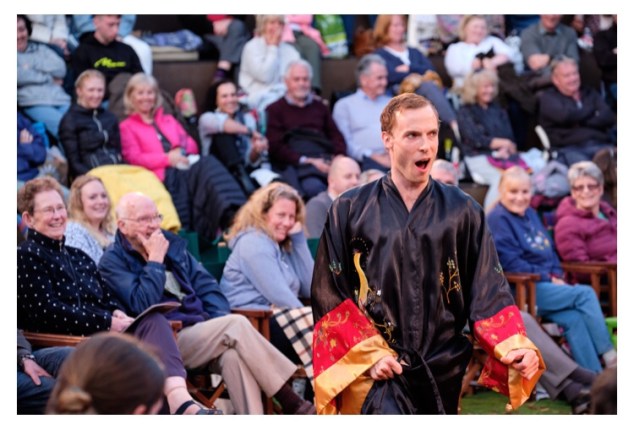
Twelfth Night has long been known as one of Shakespeare’s greatest comedies; in celebration of their 10th birthday Grosvenor Open Air Theatre are happy to prove why.

Locating the action in the Bohemian Balkans the celebratory festival vibe is strong, there’s flowers in hair while the drink is free flowing. The abundance of music and laughter indicate that Director Julia Thomas is prepared embrace the fun of this comedic and jubilant production.

This is an ode to the joyful and silly; there’s mistaken identities, unrequited love, a shipwreck, subterfuge as well as a whole host of entertaining characters.

The talented cast deliver Shakespeare’s verse with clear conviction while their enthusiasm and wit gives the piece both a light and accessible feel.

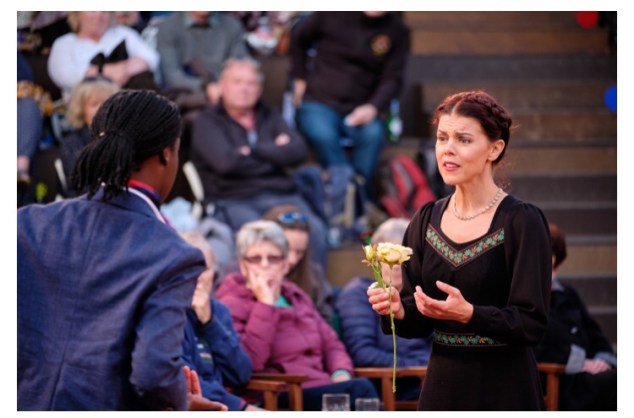
Separated twins Viola (Whitney Kehinde) and Sebastian (Marc Benga) each arrive on the shores of Illyria after a shipwreck; Viola first, allowing her 3 days of getting acquainted with the locals, enough time for two to fall in love with her while another two attempt to fight her albeit while she’s now dressed as as a man (Cesario) in a bid to keep the spirit of the brother she believes to be dead alive.

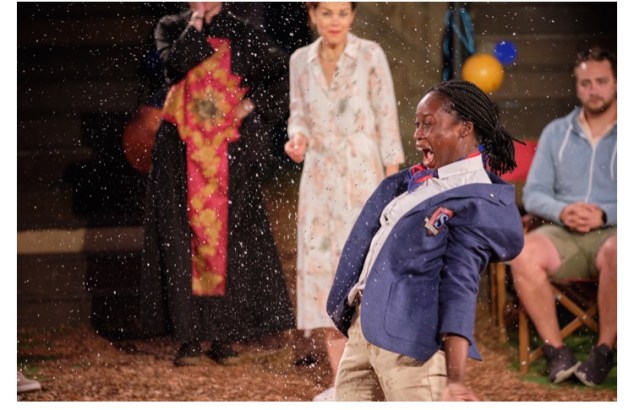
Kehinde is excellent as Viola/Cesario, cool and commanding she handles the confusion and complexities of life in Illyria with sass and style.

Sarah-Jane Potts shines as Olivia, hot in pursuit of her happy ending while Samuel Collings brings the house down as the put upon Malvolio whose transformation from stiff upper lipped steward to stocking wearing, downward dog facing smiler is pure genius.

Mitesh Soni is an absolute joy as Sir Andrew Aguecheek. His physical comedy, facial expressions and nice but dim personality really bringing this piece to life. Kudos to Soni for successfully delivering Shakespeare’s prose whilst flossing, impressive!

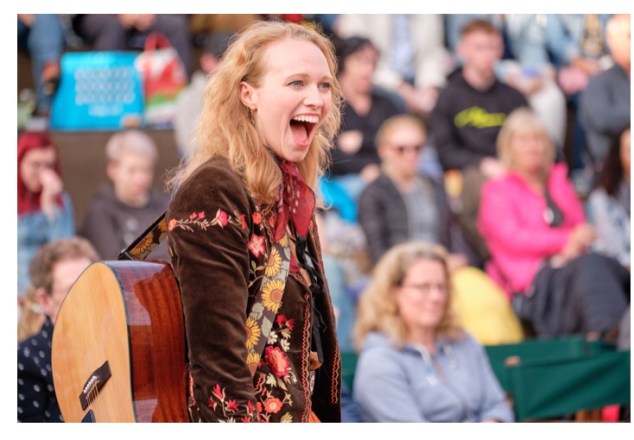
Jessica Dives as Feste takes on the form of a modern day wandering minstrel, offering an almost narrator like musical accompaniment while adding a wonderfully melodic energy to proceedings.

Director Julia Thomas isn’t afraid to embrace the silly or the slapstick and is greatly rewarded for her choices. Her cast embrace the opportunity, having a lot of fun with the piece while the audience reap the benefits.

A stand out moment which really embodies the playful nature of the production is the hilarious fight scene, outrageously farcical and absolute comedy perfection. The frequent witty exchanges between cast and audience further add to the playfulness and accessibility of this piece.

A highlight of Chester’s summer season for ten years now with productions as strong as this there is no doubt the Grosvenor Park Open Air Theatre will be celebrating birthdays for many years to come.

Outrageously good fun for all the family.

Twelfth Night is being performed at various dates over the summer further information and tickets can be found here.

Everything is Absolutely Fine

HOB

Reviewed by Nikki Cotter

Opening Night verdict ⭐️⭐️⭐️⭐️

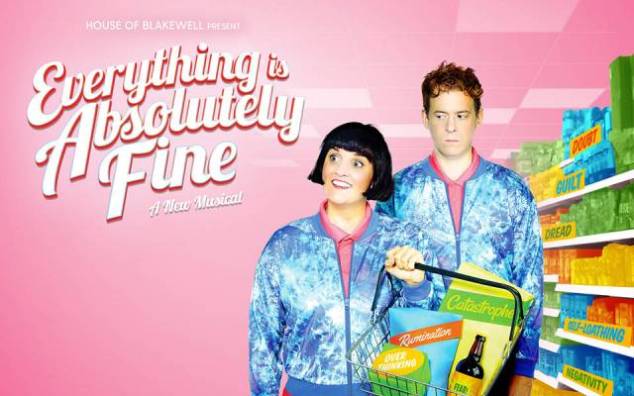
While talking about anxiety is thankfully receiving more positive media attention than ever before we still have a long way to go before we truly stamp out the stigma many people attach to mental health discussion. With their new musical comedy Everything is Absolutely Fine, Lowry Developed With artists House of Blakewell approach the topic of anxiety in an exploratory and wonderfully witty way.

Alice (played by book & lyric writer Alice Keedwell) is making a fresh start, smaller town, job at a smaller hospital & hopefully smaller problems. While a new situation is scary for most it’s made worse by the fact that Alice’s old friend anxiety (portrayed by musician and lyricist Harry Blake)has made the move with her too; constantly there in the background reminding Alice of her insecurities, drip-feeding doubt into every situation. “You’re too loud, you’re so embarrassing, your voice is annoying, you’re so awkward”.

While the subject matter may sound heavy House of Blakewell tackle this important topic in a creative and incredibly entertaining way. The snapshot of Alice’s life is delivered in various melodic, funny and extremely relatable songs. From small incidents like a trip to Waitrose where the choice of courgettes becomes overwhelming to the enormity of deciding you completely embarrassed yourself after one to many at the pub this inspired piece highlights just how all-consuming anxiety can be.

Every thought is questioned as anxiety attempts to drown Alice in negativity and destroy her self-esteem. The feeling of being the only one who doesn’t have their shit together looms large, amplified by the deadpan delivery from Harry Blakes while Alice attempts to soldier on regardless.

The lyrics are contemporary and clever, never before have I heard the words ‘garmin’ or ‘wingardium leviosa’ worked into songs and the genius of ‘shiter-er’ rhyming with ‘lighter’ certainly raised a smile. All delivered with great charm by both Keedwell and Blake.

House of Blakewell succeed in creating not only an entertaining piece of theatre but an enormously accessible piece which gently invites discussions about anxiety in a relaxed and innovative way. The performance is pitched just right allowing plenty of opportunities for relatable humour while reminding us of the importance of speaking out and seeking support from one another. Engaging and entertaining theatre.

Everything is Absolutely Fine has one more performance at The Lowry this evening Friday 28th June tickets available here.

The Importance of Being Earnest

Opening Night verdict ⭐️⭐️⭐️1/2

Reviewed by Nikki Cotter

While the Octagon Theatre undergoes an extensive refurbishment the company are performing in various venues across the town, one of the most impressive and merely a stones throw from the theatre itself is the beautiful Albert Halls. Part of the Town Hall the impressive Albert Halls acts as a perfectly fitting backdrop for Oscar Wilde’s much-loved Victorian comedy.

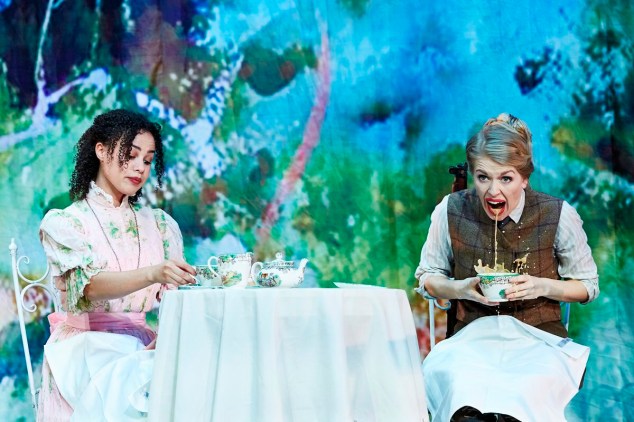
Our two protagonists, the dashing upper class cad Algernon (Jack Hardwick) and the seemingly more upstanding Jack Worthing (Dean Fagan) lead double lives in a bid to have some fun away from the strict social constraints of Victorian Britain whilst attempting to court the affections of headstrong City girl Gwendolen (Elizabeth Twells) and pouting country princess Cecily (Melissa Lowe) all of course to the distasteful displeasure of the domineering Lady Bracknell (Sarah Ball).

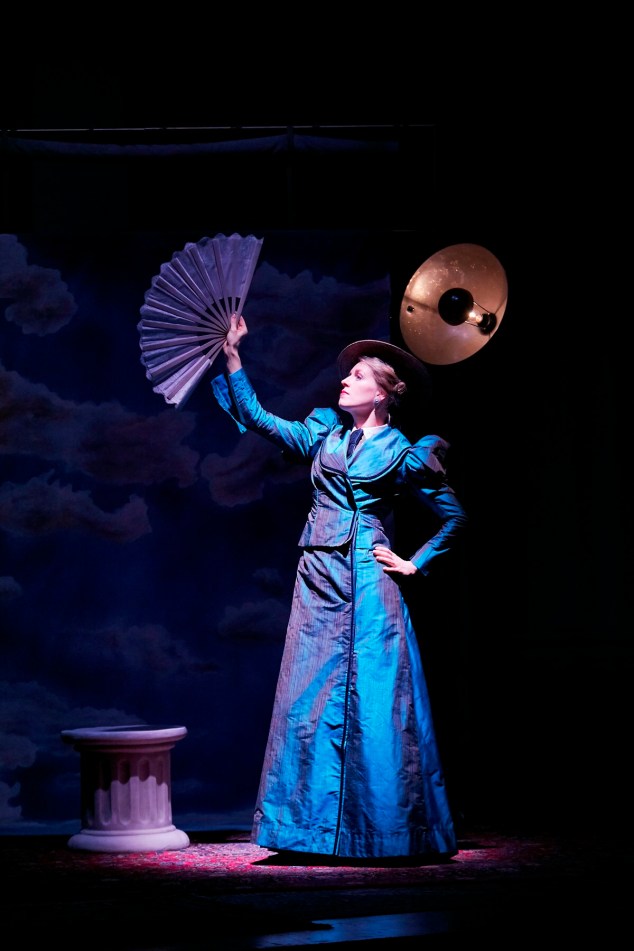
The play moves at a good pace once you get used to the slightly echoey acoustics within the lofty Albert Halls; Director Suba Das and designer David Woodhead have injected a real sense of style into this production. The stage resembles a photographer’s studio giving the cast opportunities to strike a pose and wink knowingly at the audience during some of the most quotable lines while the production opens with catwalk style vogueing from the cast by way of introduction.

Confusion and deception are the order of the day as we romp from the city to the countryside in this stylish interpretation. Jack Hardwick is exceptional as a flirty and flouncing Algernon. Hugely charismatic and convincingly charming you can’t help but root for this idle scamp. Dean Fagan’s contrastingly sensible Jack compliments Hardwick’s Algernon perfectly and the two bounce off each other offering some great comedy highlights.

Elizabeth Twells is in fine form as the determined Gwendolen. Strong and sassy she is a force to be reckoned with, the engagement scene is an absolute comedic delight while Melissa Lowe embraces the opportunity to play the brattish but ballsy Cecily with gusto.

There’s a slowing of pace during some of the scenes with Lady Bracknell, despite Sarah Balls’ authoritative performance some of her dialogue is lost due to the wordier nature of her lines in the expanse of the Albert Halls. The classic “A handbag?” however is delivered to perfection and gets the generous reaction it deserves.

david-cardy-jack-hardwick-and-vicky-entwistle

Vicky Entwistle and David Cardy as Miss Prism and Dr Chasuble bring an endearing frivolity to proceedings while Dan Shearer happily carries out his instructions as the put upon butler in various stages of undress.

Act I at more than an hour and a half does have the audience shifting in their seats a little while Act II at 35 minutes absolutely sails by, something a tweak or two could easily remedy.

sarah-ball

This stylish piece of theatre works and works well; it is fun, frivolous and delivered with a playful conviction. Another success for the Octagon Theatre in this faithful production dusted with a sprinkling of creative surprises.

Catch The Importance of Being Earnest at the Albert Hall until Saturday 15th June here.


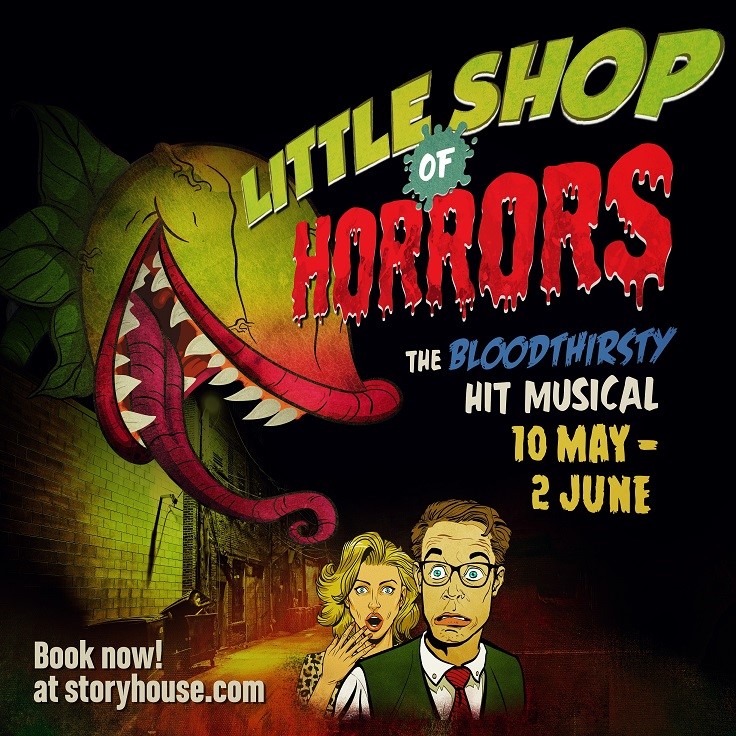
Little Shop of Horrors

thumbnail_LSOH_square_300dpi smaller


Little Shop of Horrors – Storyhouse, Chester

Director: Stephen Mear

Music and Lyrics: Howard Ashman

Music: Alan Menken

Reviewer: Matt Forrest

Star rating: ****

Little Shop of Horrors has all the ingredients of a great story: a love story between two beautiful souls who life has constantly mistreated. Throw into the mix themes of greed, fame and lust, and of course a giant man-eating plant!

The much-loved musical arrives at the Storyhouse for a spring run that is filled with toe-tapping tunes, absurd comedy and a hefty splattering of blood-soaked gore.

Based on the original film by B-movie maestro Roger Corman, we meet timid florist Seymour, the much put-upon assistant shop for Mr Mushnik. Seymour has a lot to deal with; Mushnik’s flower shop is going under fast due to its location on Skid Row, the wrong part of town. He is head-over-heels in love with his co-worker, Audrey and to cap it all off Seymour has discovered a new strange and unusual plant, which he has named the Audrey II. The trouble is, Audrey II is wilting away before his eyes. Following an accident with a rose bush, Seymour soon learns that Audrey II has an appetite for something a little stronger than Miracle Grow. However, as the plant grows bigger, Mushnik rakes in more and more money. Could this little botanic marvel be Seymour’s ticket to winning the girl of his dreams and the chance to leave behind Skid Row for ever, and if so, at what cost?

Little Shop of Horrors at Storyhouse, Chester, 2019

Little Shop of Horrors is an absolute treat and well worth catching. Some great catchy numbers from Alan Menken and lyrists Howards Ashman, stand out songs being the company ensemble sung Skid Row (Downtown) and the up tempo yet sinister Feed Me (Get it).

The cast are on great form with Joshua Lay and Michelle Bishop showing great chemistry as Seymour and Audrey: their rendition of the musical’s signature tune Suddenly Seymour brought the house down. The supporting cast are also great. Cindy Belliot, Tanisha Spring and Emily-Mae, are in fine voice as the sassy residents of Skid Row, Chiffon Crystal, and Ronette. Tony Timberlake is equally impressive as the devious Mr Mushnik, whilst Stephane Anelli, puts in a hilarious and scene-stealing turn as Orin, Audrey’s sadistic dentist boyfriend.

Ryan O’ Gorman and Brett Sheils do an amazing job bringing Audrey II to life, with Gorman giving the plant attitude and menace, Audrey II gets all the best lines and Gorman makes the most of them.

Tonight’s performance was not without its flaws, there were a few timing issues but these are minor quibbles for what is a fun enjoyable, heartfelt darkly comic night at the theatre. If you don’t enjoy this then maybe you need to take a closer look inside Audrey II, she’ll take all of those reservations away!


Little Shop of Horrors is at the Storyhouse, Chester till the June 2nd tickets available at:

https://www.storyhouse.com/event/little-shop-of-horrors


Home, I’m Darling

Darling 1

Reviewed by Nikki Cotter

Opening Night verdict ⭐️⭐️⭐️⭐️

Fresh from its Olivier Award success Laura Wade’s new play Home, I’m Darling arrives at the Lowry this week as part of a limited UK tour.

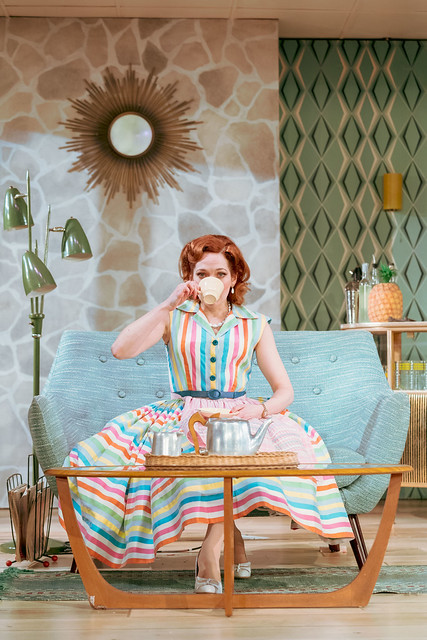
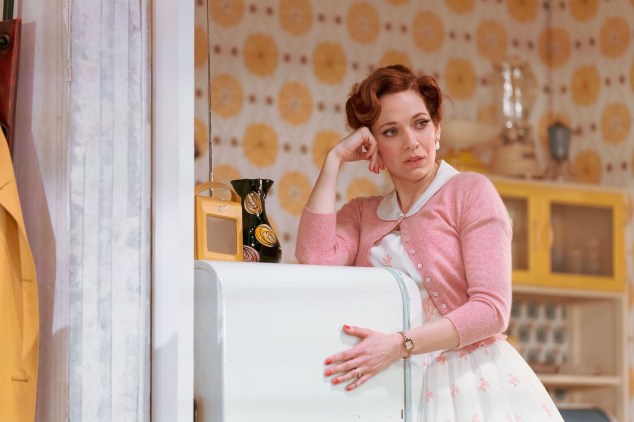
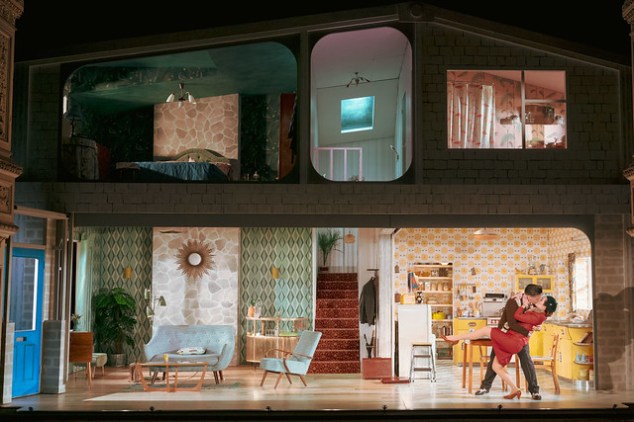
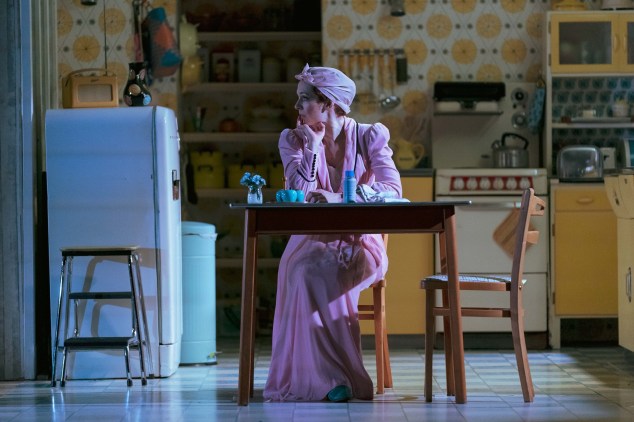
Co-produced by The National Theatre and Theatr Clwyd, Home, I’m Darling takes us into the perfectly stylised 1950’s home of Judy & Johnny; their bliss seemingly as bright as their primrose kitchen. Their marmalade is homemade while their gin gimlets are freshly poured as life in their 50’s bubble bounces along; that is until the rose tinted glasses begin to slip as this cleverly crafted comedy moves into choppier waters as the subtle analysis of gender divide and nostalgic perfection begins.

Judy’s made her choice: rebelling against her upbringing in a feminist commune eating lentil lasagne she now likes things shipshape, living a life of domestic bliss as a picture perfect housewife complete with pastel prom dress & devilled eggs on tap. While her mother argues against this misguided nostalgia insisting that the only people who were truly happy in the 1950’s where white, straight, men as choice, tolerance and acceptance were in very short supply.

Darling

Designer Anna Fleischle has created a magnificent 1950’s haven. The two level set a perfect home with living room and kitchen downstairs neatly topped by a bedroom and bathroom all connected by a central staircase. Director Tamara Harvey ensures the cast make full use of the visually stunning set as each corner of the house is explored and inhabited. The genius scene changes where cast members jive their way around the house add immensely to the charm of this initially playful piece.

Katherine Parkinson is excellent as the insecure domestic goddess Judy, insisting that her feminism is evidenced in the life choices she makes while she attempts to live harmoniously in an inaccurately imagined era.

Jo Stone-Fewings gives a strong performance as husband Johnny, increasingly frustrated with this nostalgic domesticity and what it means for their marriage.

Darling 2

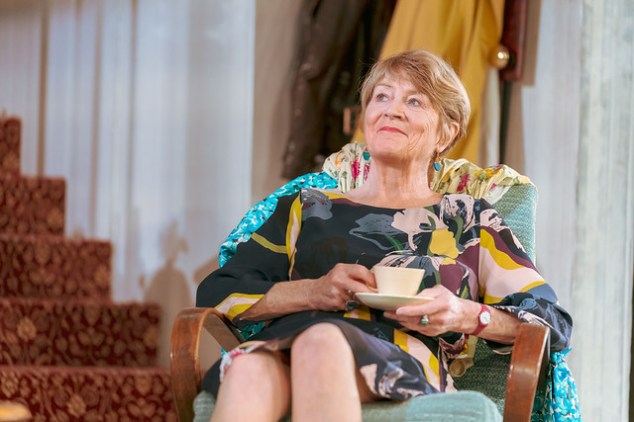
Susan Brown shines as Judy’s Mum Sylvia, exasperated by her daughters life choices and desperate for her to start living life in the here and now, her scalpel-sharp monologue in Act II is sublime.

The strong cast work together wonderfully keeping the audience guessing throughout as to where this fascinating story will take us. Laura Wade’s script is both generous in its humour and sharp in its observations. Once the saccharine surface has been scratched the grit and relevance of this black comedy effectively take hold. Judy of course insists she is happy but the cracks in her gingham palace quickly show as money begins to run out while the fantasy lifestyle becomes a prison of her own making.

Judy’s indulgence for her ‘hobby’ which she clings onto for far too long impacts not only on her own but the life of husband Johnny who feels emasculated and embittered by his wife’s endless care and devotion. The constantly shifting perspectives engage as well as entertain; add to this a hefty dose of humour, superb cast and stunning set and you have a uniquely brilliant production.

Home I’m Darling is on at The Lowry until Saturday 27th April tickets available here.

Abigail’s Party

Reviewed by Nikki Cotter

Opening Night verdict ⭐️⭐️⭐️⭐️

First premiered in 1977 at London’s Hampstead Theatre then broadcast on the BBC that same year, Mike Leigh’s ingenious Abigail’s Party brings to brilliant life the most painfully awkward cocktail party in the most hilarious & enthralling of ways.

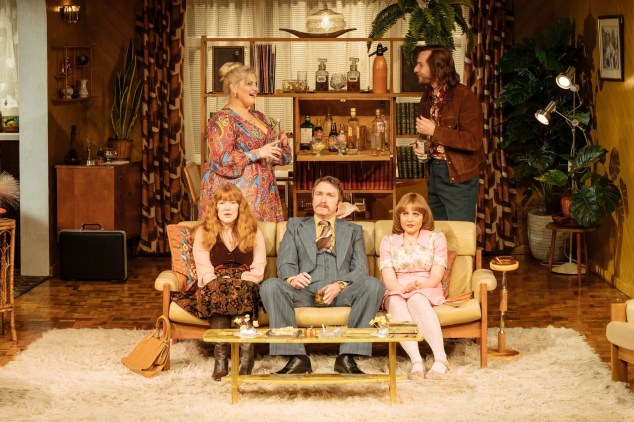
Suburban housewife Beverly has set the scene for her soirée; she’s prepped the cheese & pineapple on sticks, switched on the fibre optic lamp & stocked the drinks cabinet in readiness for the arrival of new neighbours Angela (Vicky Binns) and Tony (Callum Callaghan). Also invited is neighbour Sue (Rose Keegan) who is escaping 15-year-old daughter Abigail’s party over at her own house. Beverly’s husband Lawrence (Daniel Casey) is also in attendance in between running errands while his wife prepares to schmooze.

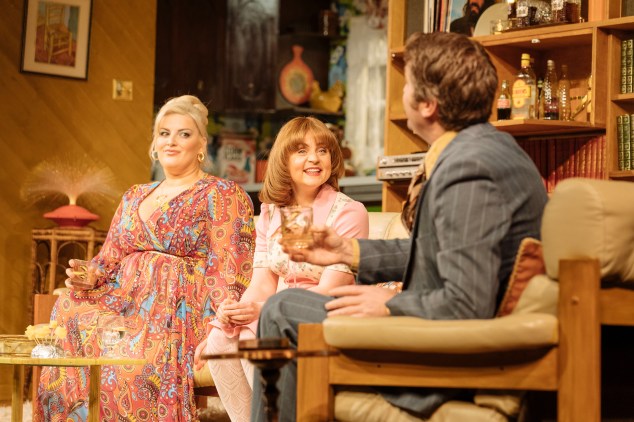
Janet Bird’s inspired set transports us right back to the 70’s as knowing giggles ripple through the audience from the off when Beverly enters the chintzy wood panelled living room cigarette in mouth, gin in hand, decked head to toe in garish paisley she glides around the stage to the sensuous sounds of Donna Summer.

Some spikey exchanges take place between Beverly and husband Lawrence before their guests arrive offering the opportunity for our brash hostess to really come into her own. She is liberal with both the booze and her opinions as some of the small talk soon begins to sting.

Jodie Prenger is exceptional as the infamous Beverly, getting more and more grotesquely brilliant as the gin flows. So versatile in her skills she embodies the desperate housewife to perfection. Daniel Casey gives a great performance as Lawrence keeping his pent-up irritation with wife Beverly hidden to begin with until pushed to breaking point when things quickly start to unravel.

Vicky Binns as Angela is eager to please her new neighbour, her genuine naivety and optimism making her all the more endearing. Her inane chatter leads to some terse tellings off from frustrated husband Tony whom Callum Callaghan portrays convincingly.

Rose Keegan shines as fifth party guest Sue, quiet and polite despite some overly familiar probing questions she gives a hilarious performance as the single guest caught in the middle of two clearly unhappy couples.

Director Sarah Esdaile at times focuses less on the uncomfortable interactions and undercurrent of frustration & more on the humour of the piece. Traditionally tense moments are played a little more for laughs than they were in the famous Alison Steadman led version, this does dilute the emotional impact of the ending a little however with such superbly executed performances the is no doubt that this is an enormously entertaining piece.

Although Abigail’s Party is very firmly set in the 1970’s its genius lies in its hilarious and at times painfully honest study on human interaction, ambition and all the complexities that come with it. Littered with laugh out loud humour and moments to make your toes curl Abigail’s Party is wonderfully entertaining theatre with themes as relevant today as they were 40 years ago, the most eventful party you’ll ever be invited to.

Abigail’s Party is on at Manchester’s Opera House until Saturday 13th April tickets available here.

The Wizard of Oz

The Wizard of Oz Image 4 - Credit David Munn Photography

Reviewed by Nikki Cotter

Opening Night verdict ⭐️⭐️⭐️⭐️

Continuing their run of half term pantos Regal Entertainment bring The Wizard of Oz to St Helens Theatre Royal this Easter.

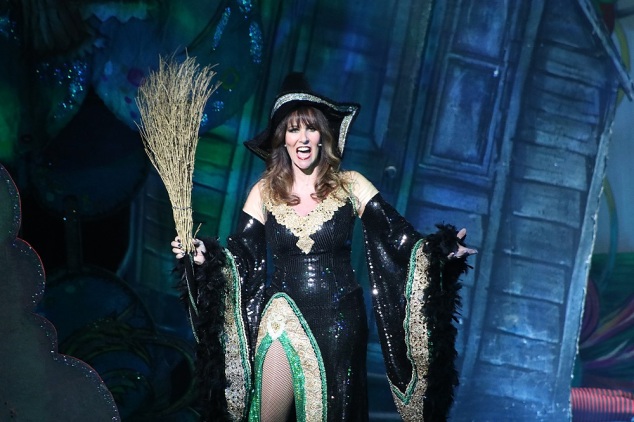
Their reimagined panto version of the much-loved family favourite sees an all new script as well as some star billing including a very glamorous Wicked Witch in the form of Linda Lusardi who is joined on stage by her daughter Lucy Kane, most recently seen on ITV’s The Voice.

The Wizard of Oz Image 1 - Credit David Munn Photography

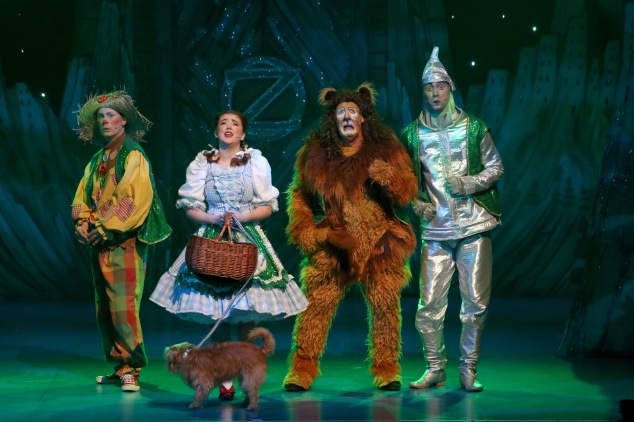
Directed by Chantelle Nolan and written by panto legend Si Foster The Wizard of Oz tells the magical tale of Dorothy Gale who finds herself accidentally killing the Wicked Witch of the East by dropping a house on her. When the Wicked Witch of the West finds out about her sisters untimely death she makes it her mission to seek revenge but will have to get past the power of Dorothy’s newly acquired ruby slippers to do so.

While The Wizard of Oz isn’t traditionally a pantomime Si Foster’s script cleverly reworks the story to ensure there are plenty of opportunities for the traditional boos, cheers and shouts of ‘its behind you’.

The Wizard of Oz Image 3 - Credit David Munn Photography

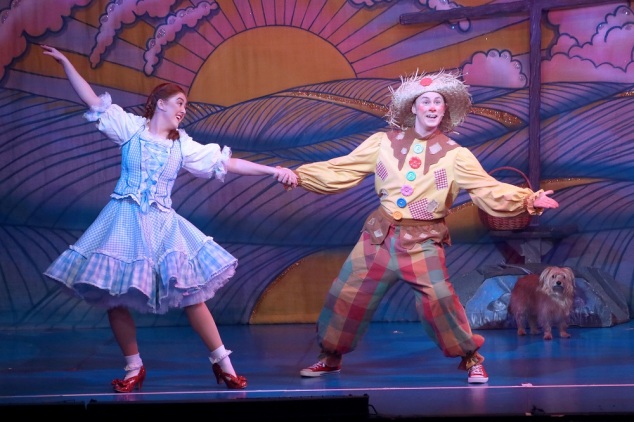
Foster’s writing allows for Reece Sibbald’s Scarecrow to take on a ‘Buttons-esque’ comedy role which he laps up. A natural entertainer, both his comedic timing as well as physical comedy are exceptional as he gets into some hilarious scrapes and showers the audience with more than just the usual water pistols. My little reviewers absolutely loved the part where he shrinks in size & giggled about it all the way home.

Mia Molloy gives a great performance as Dorothy, she is in fine voice and more than does justice to Somewhere Over The Rainbow. Her dancing and acting abilities also impress proving she is indeed a worthy wearer of the ruby slippers.

The Wizard of Oz Image 2 - Credit David Munn Photography

The talented cast work well together and keep the story moving at a pace. There’s a sprinkling of cheeky jokes for the adults as well as lots of laughs for the little ones. One moment of corpsing from Lusardi & Sibbald absolutely bringing the house down.

Music of course plays a huge part in panto and its great to hear in addition to some of the traditional songs from The Wizard of Oz there are some recent favourites including Baby Shark as well as a roarsome song from The Greatest Showman.

The Wizard of Oz Image 6 - Credit David Munn Photography

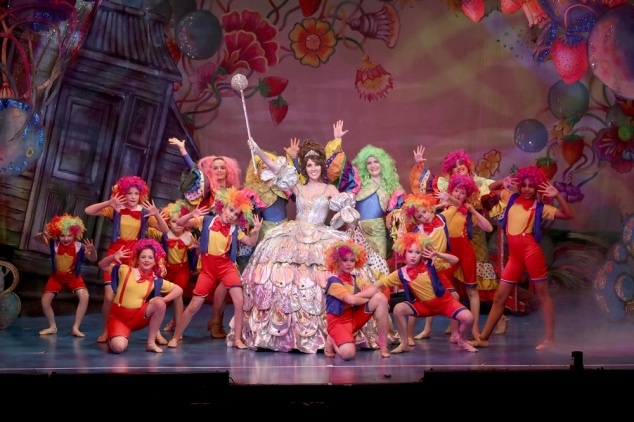
With impressive sets, lavish costumes and strong support from both the senior and juvenile dancers The Wizard of Oz impresses visually as well as musically.

While the story doesn’t allow for a traditional love story element writer Si Foster has added just the right amount of comedic adjustments to give the show a panto feel while still remaining true to the story.

The Wizard of Oz is a hugely entertaining family friendly version of a much-loved classic with ticket prices starting at just £13 this Wizard of Oz is wonderful indeed.

Catch The Wizard of Oz at St Helens Theatre Royal until 22nd April tickets available here.


eVULVAlution

Reviewed by Nikki Cotter

Opening Night verdict ⭐️⭐️⭐️⭐️

Life as a self published erotic novelist can be tough, especially when your creative juices have stopped flowing and you’ve been relegated to admin on your polyamorous husband’s WhatsApp group.

Pamela De Menthe however is not a woman to be kept down, that tricky 29th novel may be stuttering but she’ll use her mucky imagination and crude creativity to ensure her novel eVULVAlution reaches a pleasing and most satisfying climax.

Writer and performer Jenny May Morgan has created a hugely likeable and incredibly funny character in Pamela De Menthe; cleverly crafted with loving care resulting in an entirely convincing comedy heroine.

The show is presented as a book launch for new novel eVULVAlution with just one catch, it isn’t actually finished yet. Turning to the audience for inspiration and some hilarious sound effects Pamela strives to deliver the literary work she’s convinced herself is totally groundbreaking and entirely necessary.

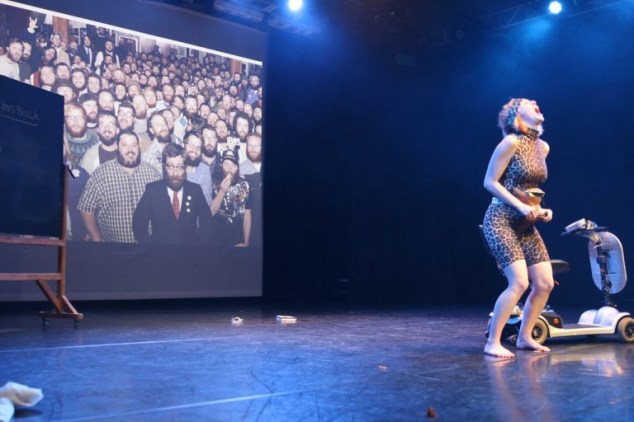
This time-travelling prehistoric erotic romp, set of course in Hull quickly becomes a hilarious adventure for both Pamela and her audience. Jenny May Morgan’s attention to detail is exceptional in this witty one woman show. It’s jam-packed with nuanced looks and brilliant throwaway comments that Alan Partridge would be proud of.

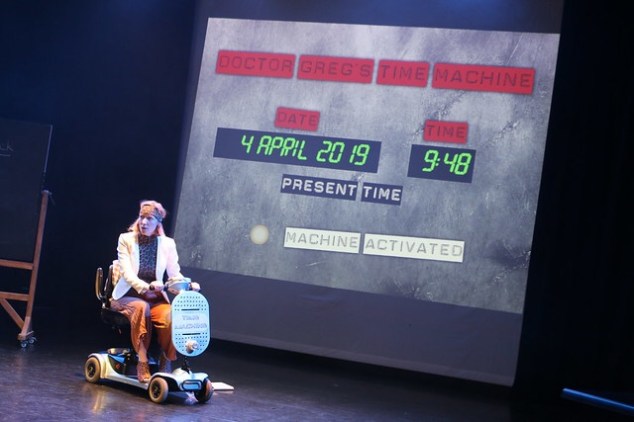
Her well developed humour is lapped up by the audience and while Pamela is pretty darn bonkers she is the kind of bonkers you can’t help but fall in love with. From her amateur power-point to her sponsorship deal with a motorbility scooter company she offers a well rounded character whose brilliance is a bright as her animal print bumbag.

A cheeky, fabulously fun and enormously entertaining romp through the world of self-published erotica. Roll on book number 30!

Catch eVULVAlution next at Waterside, Sale in July further information can be found here.

Interview | Jenny May Morgan talks eVULVAlution

Jenny_May_Morgan_Photo_Credit_Nathan_Chandler

In tackling that difficult 29th erotic fiction novel, author Pamela DeMenthe has hit a stumbling block, her time travelling prehistoric erotic fiction romp, set in Hull, eVULVAlution needs a little help; luckily for Pamela Lowry audiences’ creativity is there to be called on in this brand new comedy.

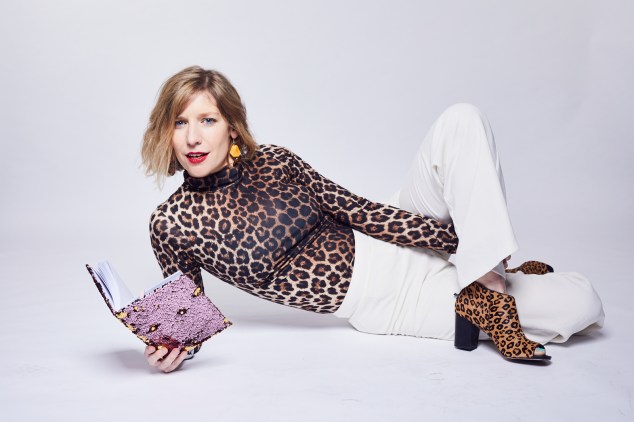
Following on from her hugely successful debut show ‘Pamela DeMenthe presents: Sticky Digits, Jenny May Morgan returns to The Lowry her brand new show eVULVAlution. We caught up with Jenny to hear a little more about the show, her involvement with The Lowry’s Artist Development programme and inappropriate offerings from her audiences.

Opening Night: For anyone unfamiliar with Pamela can you tell us a little bit about her?

Jenny: Pamela is a self-published erotic fiction author; she started writing erotic fiction a few years ago writing 28 books in the first year and then brought out Sticky Digits which is the title of my original show. Now a year on she’s writing her new book eVULVAlution which is a pre-historic erotic fiction story with time travel set in Hull, so far it’s been a bit of a stumbling block for her and she has a bit of writers block .

ON: I read that Pamela might be seeking help from her loyal readers; does this mean some audience interaction?

Jenny: Definitely, in the original show there was a bit of audience interaction, the original show was hosted a little bit like a TED Talk/Audience With… this one has a similar sort of premise but the audience will be expected to help Pamela complete the book as she’s left the book a little bit open-ended. I don’t get anyone up on stage or anything like that but there are definitely opportunities for audience interaction.

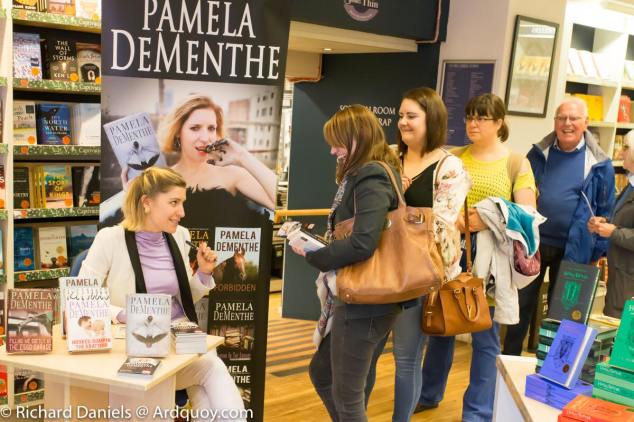
Pamela_Book_signing_at_Blackwells_Edinburgh

ON: Are you fully prepared for a wild variety of offerings from the audience?

Jenny: Ha ha oh yes, to be honest when audiences say things you maybe don’t expect it can be a bit of a gift and you end up getting something hilarious. It’s amazing how many people actually come up with the same kind of suggestions. When I did the original show I did a part with a bespoke original erotic fiction story and asked people to come up with a body part, I’d say around 80% of people said elbow, which was bizarre. I did around 25 shows up in Edinburgh and almost always they said elbow. So who knows what will happen this time around.

ON: Have you ever been thrown by any suggestions?

Jenny: I have been yes, I’m not sure I should say ha ha; in Edinburgh there was an older couple in the audience and at one point I ask the audience if they have any questions and the guy asked when was the last time Pamela had an orgasm and his wife just shot him a look, it was just so unexpected he went bright red!

ON: You’ve toured the show in different areas do you notice different responses around the country?

Jenny: There are definitely different reactions, some people enjoy the cruder aspects of the show, some audiences enjoy more of the storytelling nature of the show. I don’t know if you could draw any geographical comparisons to that; I did the show in Bristol at the end of last year and that was really interesting as Pamela the character is from South Gloucestershire so there’s lots of references to Gloustershire that are a little bit obscure and funny if you don’t know it but even funnier if you do know it so doing the show where people really get the references is a lot of fun.

ON: When you’ve had such a successful first show how do you find your starting point for show number 2?

Jenny: I’ve been thinking about the show for quite a long time so I’ve been slowly writing it in my head for the last couple of years. There is a pressure to deliver something funny, that’s remains true to the character but also you want to do something a little different to the last show. I quite like the fact that not only do I have that pressure but Pamela has that pressure so part of the show is about the follow-up and the pressure on her to write a new novel and the struggles with that. I guess it’s a bit of an analogy of my situation and the pressure writing a new show; I like those things colliding a little bit.

Pamela_DeMenthe_Actor_Jenny_May_Morgan_Photo_Credit_Nathan_Chandler

ON: How did you get involved with The Lowry’s Artist Development Programme?

Jenny: I live in Manchester so I know The Lowry well; I’ve been involved in their studio programmes as a performer engaging with workshops for quite a number of years. I invited them to come and see the original show and they kindly then programmed the original show last April. I was aware of the development programme so put an application in and luckily they agreed that they could develop me. It’s been fantastic, they create a bespoke package of support to help further your career, that’s exactly what I’m getting at the moment and it’s just lovely.

ON: As a female comedian, are doors harder to open or are things shifting now?

Jenny: I think it’s definitely changing, I think how things are for women in general are changing, the last few years certainly feels like there have been huge changes across the board. In the bigger cities there feels like there are more opportunities and you definitely see more female comedians about, I have done a few gigs in more remote places where you feel a little like you’re the token woman and the audience can be a little ‘Right come on then, make me laugh’ but I don’t actually mind that; I see it as a challenge. It’s still a male dominated industry but things are definitely changing, when you go to Edinburgh there are loads of brilliant females creating and that’s a wonderful atmosphere to experience.

ON: Will you be heading to Edinburgh Fringe this year?

Jenny: Not this year, but I’m hoping to take eVULVAlution up there summer 2020 so really looking forward to that.

ON: What do you think Pamela would make of online dating apps?

Jenny: Well she’s been married for 10 years so hasn’t been participating in that sort of world; I would say Pamela hasn’t got the most straight forward of private lives with her husband. There’s a slightly complicated relationship going on there in the background so I’d say a lot of her erotic fiction is perhaps wish fulfilment coming out through her writing. I don’t want to give too much away but there’s definitely been a bit of a development in her personal relationship with her husband, there’s been some talk about maybe becoming polyamorous so I think she might have to start engaging with the dating world which I think will be a bit of a whole new world for Pamela.

ON: So we need to book our tickets and see what happens next for Pamela then don’t we?

Jenny: That would be wonderful!

Catch eVULVAlution at The Lowry on Thursday 4th and Friday 5th of April tickets available here.


The Animals and Children took to the Streets

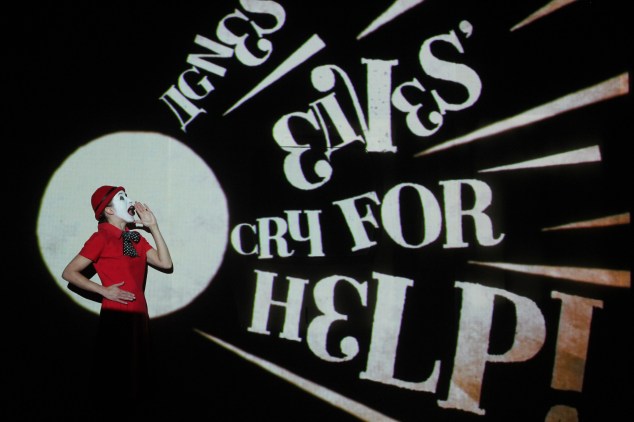
The Animals And Children Took to the Streets, presented by 1927 pic 2

Reviewed by Matt Forrest

Opening Night verdict ⭐️⭐️⭐️⭐️

For nearly 15 years the 1927 theatre company have been pushing the boundaries when it comes to theatre. They have gained quite the reputation for their bold, innovative productions which has seen them marry live performance and music with animation and illustration to create a theatrical experience like no other.

For their latest offering The Animals and Children took to the Streets, writer and director Suzanne Andrade again uses all these tools to create a satirical, jaw-dropping production that will leave you both mesmerised and enormously entertained.

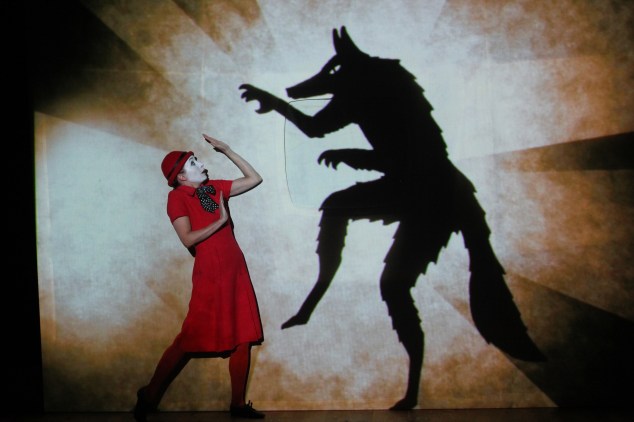
The Animals And Children Took to the Streets, presented by 1927 pic 3

Andrade transports us to the dark, dank Red Herring Street, on which stands the Bayou Mansions. This is a tower block located on the wrong side of town, housing the worst of society, from social misfits to murderers and sexual deviants; they all have a place here. The authorities and the rich have chosen to ignore their plight, deciding to let them implode. However, when a gang of feral children from the Mansions go on a destructive rampage that includes kidnapping the mayor’s beloved cat and running amok on a park for the middle-class, their mini-revolution does not go unnoticed. In retaliation, the Mayor takes drastic action.

The children’s only hope of escape comes in the form of the Bayou Mansion’s caretaker; a man who is desperate to woo Agnes Eaves, a middle-class do-gooder, who believes dried pasta collages and art classes are what the kids need. Agnes’s daughter, Evie has been caught up in a police round-up and only the caretaker knows what’s happened to them.

The Animals And Children Took to the Streets, presented by 1927 pic 1

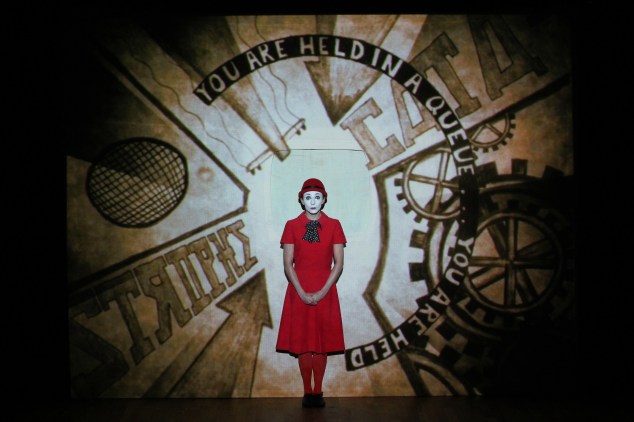
This is 70 minutes of pure joy, innovative, smart and darkly comic, this production is pitch perfect. Paul Barritt’s animation lies somewhere between a LS Lowry painting with some Terry Gillian sketches thrown in. Add into the mix the clear influence of 1920’s silent cinema, specifically the films of Fritz Lang and Georges Méliès and you have a visual feast that will leave you howling with laughter, whilst having a good old scratch as we see the rats, lizards and cockroaches that infest the Bayou scurry across the screens.

Andrade’s script is razor-sharp, witty and brutal, it clearly has a take on social inequality and the continual struggle of the working class who are denied the opportunities afforded to the privileged. The script is supported by three super talented performers in Felicity Sparks, Genevieve Dunne and Rowena Lennon – whose facial expressions alone are worth the price of admission. Their performances in conjunction with Barritt’s animation beautifully tell this story and breathe life into a highly original and rewarding piece of theatre.

The Animals and Children Took to the Streets is at Home till 16th February, tickets available here.


Trial By Laughter

trial by laughter 4

Reviewed by Matt Forrest

Opening Night verdict ⭐️⭐️⭐️

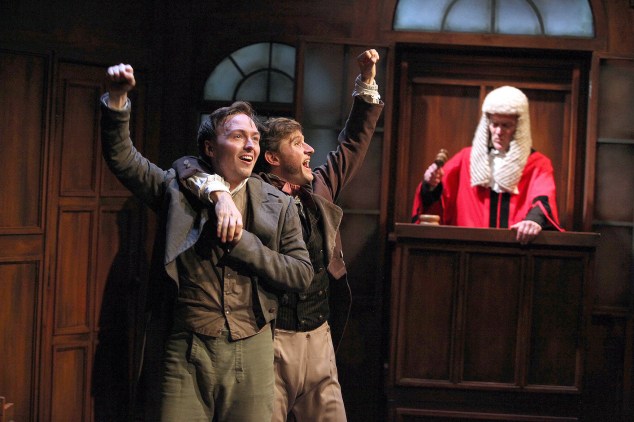
The name William Hone won’t mean that much to most people, which is crying shame. For back in the early 1817 this was a man who campaigned tirelessly for civil liberties, sought reform in the many lunatic asylums, and highlighted the miscarriages of justice that blighted the judicial system. In addition Hone was an investigative journalist, satirical commentator and publisher who along with his friend, George Cruikshank a political cartoonist lampooned the ruling class of the day: that being the Regency government.  So angered by Hone’s work the Prince Regent sought to have him prosecuted by any means possible.

So when it came to the story of William Hone, who better to tell it than Ian Hislop and Nick Newman. Both are champions of a free press, both have great form in sending up and holding to account politicians and world leaders through the magazine Private Eye. Newman is the cartoonist for the magazine and Hislop is the editor.  In addition Hislop is no stranger to a libel case having faced several down the years.  The two writers have reunited with director Caroline Leslie, with whom they worked with on their debut play The Wipers Times, to bring this intriguing story to the stage with their new production: Trial by Laughter.

trial 2

The play opens with the Prince Regent and his (alleged) mistresses angered by their depiction at the hands of Hone and Cruikshank, so enraged is he that he orders his government flunkies to prosecute Hone. Hone is charged with blasphemy and arrested, falsely imprisoned and denied legal assistance. With only the support of Cruikshank, and his wife, Sarah, Hone mounts a defence and against all odds wins the trail. This really is the beginning of Hone’s troubles as he faces three criminal trials in as many days, which could see him imprisoned or deported to Australia. With the Regency’s relentless pursuit and Hone’s health deteriorating is this really a battle he can truly win?

There is a lot to admire about this production: Joseph Prowen is on great form as William Hone, playing him with a twinkle-in-the-eye and a great deal of righteous optimism that is gradually beaten out of him as the trials progress. Dan Mersh (playing numerous roles) is equally fine as Hone’s tormentor; Justice Ellenborough who plagues his foe at every turn and cannot hide is distain or prejudices for Foe. Peter Losasso plays Cruikshank, with a cheeky swagger clearly relishing his pun filled part. Whilst Eva Scott is also strong as Hone’s long suffering wife, who in spite of all their trials and tribulations she never loses faith in her husband.

trial by laughter 2

Despite the subject matter being over 200 years old it relevance today cannot be understated as the play tackles such issues as freedom of speech and freedom of the press and measures how far governments and people of power will go to too stifle this, you only need to look at the recent murder of journalist Jamal Khashoggi to see its relevance. It also tackles the weighty issue of what is fair game for a joke: politicians, religion, the ruling class, and when does a joke go too far and become offensive. These are clearly subject matters that Hislop and Newman feel passionately about and it shines through in their writing.

The production does have a few issues: there are some great gags in here which poke fun at modern day celebrity culture, even Prince Charles is on the receiving end of a roasting. Whilst the jokes come thick and fast, and are exceptionally crafted there is nothing here that will have you rolling in the isles, more a wry smile then a big belly laugh. Despite this being a trail there is little jeopardy for Hone and thus at times the more dramatic elements of the paly can feel a little flat.

Overall this a fascinating, entertaining tale that needs to be told and deserves its platform, it’s worth a watch but you can’t help feel there is something missing.

Trail by Laughter is on the Lowry until 2nd February, tickets available here.


Interview | Ian Hislop & Nick Newman | Trial By Laughter

trial by laughter 4

After the enormous success of The Wipers Times in both the West End and on it’s UK tour, celebrated writers Ian Hislop and Nick Newman have once again joined forces for their new piece of work Trial By Laughter.

This new production based on their critically acclaimed BBC Radio 4 drama of the same name introduces us to William Hone a forgotten hero of free speech and asks if just over two hundred years later our press has any greater freedom. 1817 Hone then a bookseller, publisher and satirist stood trial for parodying religion, the despotic government and the lustful monarchy. The only crime he had committed was to be funny. The show which has been described by critics as ‘a sparky historical comedy’ heads to The Lowry next week. We caught up with writers Ian Hislop and Nick Newman to hear a little more about the show.

How would you sum up the premise of Trial By Laughter?

Nick: It’s a story about press freedom and free speech and a battle for freedom and free speech. It’s the story of a trial in 1817 – the trial of a man called William Hone, who was a sort of shy bookseller and publisher of cartoons and satirical pamphlets. He was taken to court by the Regency government to try and stifle jokes about the monarchy. That’s essentially what it’s about.

Ian: It’s exactly that. It’s a courtroom thriller but it’s a historical courtroom thriller with jokes, which means it’s three different genres in one for just one ticket price.

Nick: I think we’d describe it as The Madness Of King George meets A Few Good Men…

Ian: Meets Crown Court.

trail by laughter 2

What was the original inspiration for the radio play?

Nick: We’d just finished doing The Wipers Times for BBC 2, when we did the film of it, and the head of BBC2 Janice Hadlow sent us an email asking if we’d heard of William Hone. Janice is an expert on Regency history and has written books about it. We both said ‘Who?’ which is often a very good starting point for a story because we think ‘Well, if we don’t know anything about it let’s find out’. We started doing research and suddenly out came this amazing story about this amazing man – a complete nobody really but who took on the might of the government in a landmark case.

Ian: It’s incredible. He had his moment when history beckoned and then fell into obscurity, to our shame really. I’m the editor of Private Eye and Nick’s a cartoonist yet we didn’t know about him, but again that makes for a much better story because you’re telling people something new.

trial by laughter 2

From researching the tale what were you most surprised or interested to learn about Hone?

Ian: Without giving spoilers, it’s incredible that they tried him three times in three days. At the end of each day when the jury found him innocent they just tried him again the next morning until there were 20,000 people outside the Guildhall and they thought ‘We’re going to have a riot now’. This was only a couple of decades after the French Revolution…

Nick: And a year before the Peterloo Massacre so tensions were incredibly high. The Crown was very worried about the possibility of revolution and there were failed harvests and a lot of famine, squalor and whatnot. Meanwhile the Prince Regent was being portrayed in cartoons and in pamphlets as this libertine voluptuary who was scoffing vast quantities of food while people were hanging outside the windows. The other thing we discovered about Hone as we did more research is what a remarkable man he was because he wasn’t just a satirist, which was our first interest and his friendship with the cartoonist Cruikshank interested me as a cartoonist myself. Their working relationship was also a natural thing for us to explore and Hone was also probably our first investigative journalist. He was a witness to the execution of a young serving girl, a maid called Eliza Fenning, and he was absolutely appalled by it. He did a lot of research into her case and basically proved that it was a miscarriage of justice. We also learned he was an amazing philanthropist and he took a terrific interest in the lunatic asylums and campaigned for better conditions. There was the reform of juries, which he campaigned for and won. He never stopped working.

Ian: And he believed in universal suffrage, which at the time was a good 100 years away. If you look at his range of interests, they are pretty extraordinary.

trial by laughter

What changes have you made in preparing the play for the stage?

Ian: It’s completely different. The thing about radio is that it has to be very words-driven, which is fine because there are lots of bits about speeches and whatever, but to get it to the stage we have to make it more dramatic. There’s a lot more about the role of his wife and we’ve set more of it in pubs.

Nick: It’s a matter of fact that Hone and Cruikshank devised their strategy for the case in all the pubs and coffee houses of London so it’s a very rich milieu in which they were working. Hone was admired at the time by his literary colleagues, even though he was always bankrupt and had schemes which lost him money, and one of his admirers was William Hazlitt, who was one of the most caustic critics of the era. The only person Hazlitt seemed to like was William Hone so we’ve put Hazlitt in the story as well, which is great for the colour.

What do you feel makes Hone’s story a great subject for a play?

Ian: Hone’s tactic in the trial was to appeal to the jury so his whole way of winning was to make it accessible to an ordinary… I’d hate to say viewer but that’s sort of how he approached it. Courtrooms are great theatre on the whole and Hone and Cruikshank, in devising the strategy as it were, realised that playing to the gallery is not a bad thing in a big trial – it’s what you need to do because you need to get them on your side. That’s exactly what happens in the theatre.

Nick: What was slightly unusual about their tactics is that they set out to make the jury laugh. The basic of their entire case was that Hone spoke for six-to-eight hours every day of the trials just producing more and more examples of stuff he thought would make people laugh – and they did. There are some transcripts, which admittedly were edited or written by Hone so he did beef up his own amusingness quite a lot.

Ian: A bit like Oscar Wilde writing the account of his own trial and Hone’s account is fantastic. He’s brilliant in it, unsurprisingly because he edited it.

Nick: History written by the victors…

Ian: Yes and it’s bloody funny.

trail by laughter 3

How you feel the subject matter resonates for contemporary audiences?

Ian: I think it’s a reminder that this battle has to be won in every generation. We are incredibly privileged to be the beneficiaries of all those battles that were won in Britain in the 19th century but they can be lost again. History doesn’t only go one way.

Nick: And the arguments that are buzzing around now are very similar. Hone was targeted because he wrote parodies of religious text, principally The Lord’s Prayer and the Litany and The Ten Commandments, and they were the sort of stuff we’d put in Private Eye now for a bit of fun. Only the other week you had Rowan Atkinson talking about ‘Should we be allowed to make jokes about religion?’ Hone believed you should if the context is political or whatever and that’s what free speech is. On a global scale there are cartoonists in Turkey and Malaysia who are still being persecuted and there’s this amazing Malaysian cartoonist called Zunar who until recently faced 45 years in jail for seditious libel, which is basically the same charge that was levied against Hone, for making jokes about the Prime Minister and his wife. Zunar, like Hone, could have done a runner. I met him when he was over in England but he was going back to face trial because he felt this was an important case, like Hone did, that establishes what we can and can’t say about our rulers.

You’ve worked with director Caroline Leslie a few times now. What do you enjoy about the collaboration?

Ian: [Laughs] She’s very annoying because she demands you put in new scenes and change things around to try and make it better.

Nick: What’s that joke? ‘How many writers does it take to change a lightbulb?’

Ian: ‘None – don’t change anything!’

Nick: That’s very much our view but Caroline forces her to make changes. We first started working with her on our first play we did, A Bunch Of Amateurs, and she was absolutely brilliant and brought all kinds of things to the script which we didn’t know were there, including a lot of music. Then she directed The Wipers Times and that’s a play that’s full of music and movement and we wrote it accordingly because we thought ‘Caroline’s very good at this so let’s make sure she has a lot of stuff to work with’.

Ian: It’s very good having a woman director, particularly in situations that are quite blokey by definition like the Army and English court in the 1800s. She makes sure that it expands beyond that and that the emotional elements are not ignored.

trial 2

This is your third play to be developed by the Watermill Theatre. What do you see as its importance to the UK theatre scene?

Ian: It’s a very exciting place to work.

Nick: It’s a remarkable theatre. Apart from being a jewel in terms of its setting and the closeness to the stage you have as an audience, the standard of productions has been incredible. I first came across it when they did a production of Sweeney Todd in 2004 which transferred to the West End. They’re just brilliant at doing things, particularly with music. When we were invited to do A Bunch Of Amateurs there we knew nothing about the Watermill but we enjoyed the experience so much that if we were able to we’d always go there because the audiences are lovely and it’s a great place to do a play.

You’ve been writing together for a long time. How would you describe your collaborative process?

Ian: We write together, literally. We don’t send each other drafts and we physically work together in the same room. I suppose we try and make each other laugh; that’s the first thing. But we’ve known each other long enough to be able to say ‘That isn’t very good’ or ‘That’s a terrible suggestion’ and then just get on with it. There’s a sort of joint self-editing.

Nick: There’s always a lot of energy when it’s the two of us doing something, particularly because Ian’s time is so precious because he’s everywhere. When we get together we have to get on and do some writing. We tend to work quite fast. We both do stuff independently but to edit each other as we go is a sort of bonus. I’ve got lots of writer friends who write on their own, which I think is a very ghastly prospect. They have to rewrite and rewrite and rewrite; if you look at the greats like Alan Bennett, his diaries are full of the pain of rewriting. We have to rewrite as well but it’s a bit less than if we working on our own.

Ian: Because Nick’s a cartoonist he’s always had a strong visual sense whereas I tend to be a bit more word-bound. So there’s always a point where Nick’s thinking ‘What would look great is this…’ which I usually haven’t thought of. I’m thinking ‘This bit I’ve just written would be really clever’ when actually if might be terribly boring and getting something across visually is what it’s all about. That’s another reason we really enjoy collaborating.

How hands-on are you with your touring productions?

Nick: They take on a life of their own really. If we go do a Q&A we see the show and occasionally have some notes, which we pass on to our producer or to Caroline. But really by opening night it’s all pretty much there.

Ian: [Laughs] Our notes are always ‘Could the actors not ad-lib please? Can they only say exactly what we’ve written?’.

trial

You are doing post-show Q&As again for Trial By Laughter. What do like about the process?

Nick: The ones we have done for The Wipers Times are always very instructive because we meet people who’ve got their own stories to tell. We did a Q&A down in Chichester last year and a lady in the front row said ‘I have a little knowledge of this subject because my grandfather was Fred Roberts [who edited the paper]’ so we said ‘Please come up on stage’ and we just sat there asking her questions about him. It’s a great way of interacting with your audience. In Salisbury we were talking about trying to make The First World War accessible to younger audiences through a humorous story and a young girl at the back who was around 13 went ‘Well, it works!’ With the Q&As you get a bit of a discussion going and a bit of a debate.

Ian: There was a great moment just before one of the Q&As where someone said ‘There’s an Army chap in the audience who said he thought you’d got it pretty much right’ and when we asked who he was they said he was Deputy Supreme Commander Allied Nato Forces.

What you hope to get out of the Trial By Laughter Q&As?

Ian: We want to know what they think really, what bits they’re interested in and whether they think we should still be worried about this sort of thing. Hopefully they’ll think we very much should be.

Nick: We’ve become very energised by this subject matter and we’ve found it fascinating. All we’re really trying to do is try and get other people as interested in it as we are. We happen to think Hone is one of the most brilliant men in history and we hope other people share our opinion.
Trial By Laughter will be at The Lowry from Tuesday 29 January until Saturday 2 February 2019 tickets can be booked here.