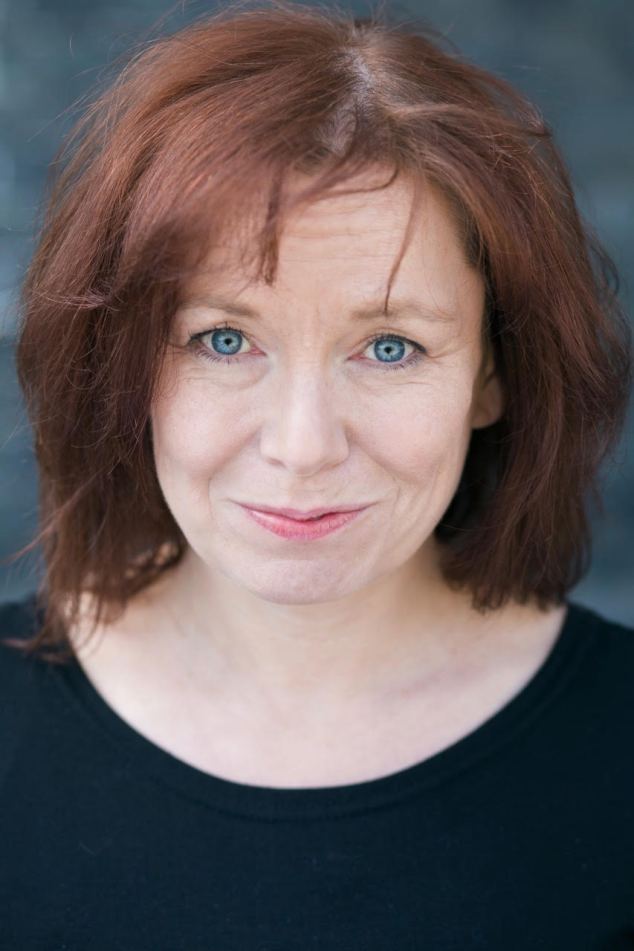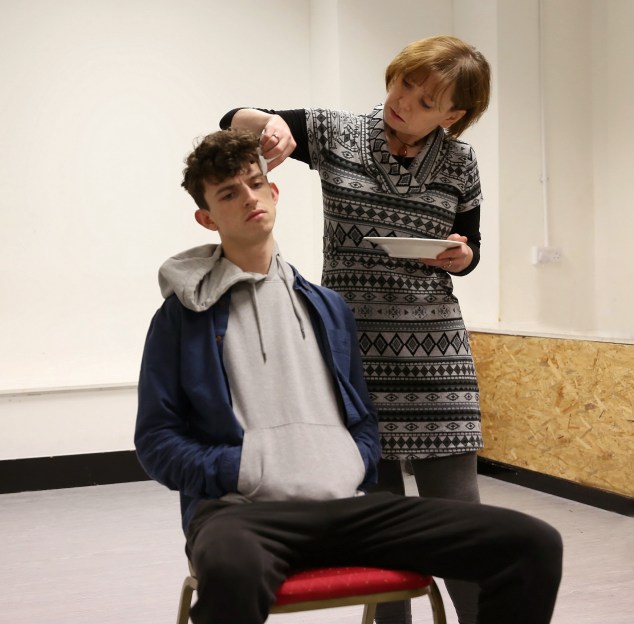
Interview | Anthony Ofoegbu & Yasmin Paige | Circle Mirror Transformation

CMT 4

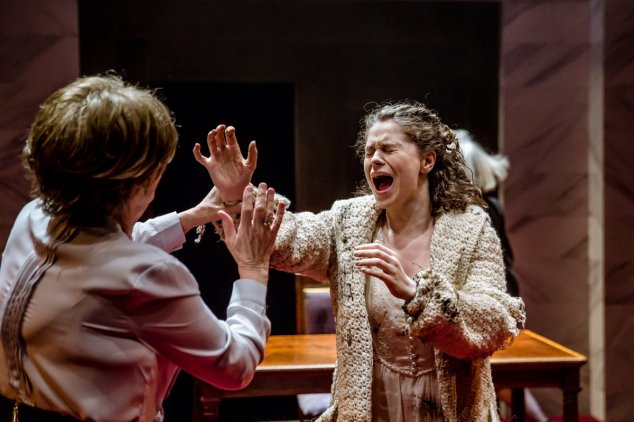
Award winning director Bijan Sheibani brings the Northern Premiere of Annie Baker’s critically acclaimed play Circle Mirror Transformation to HOME’s stage from 7th to 17th March with previews beginning from Saturday 2nd March.

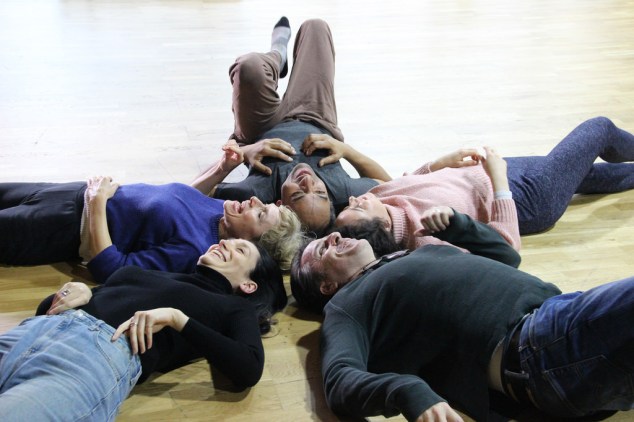
In a small town in Vermont, New England, five unlikely strangers come together in their community centre for a creative drama class for adults. The free-spirited Marty, recently divorced Schulz, former actress Teresa, the self-conscious high school student Lauren, and Marty’s quiet husband, James. Over six weeks of drama exercises and games ranging from the hilarious to the heart-breaking, their lives become entangled and transformed in the most humorous and moving ways.

We sat down with cast members Anthony Ofoegbu who plays James and Yasmin Paige who plays Lauren during a break in rehearsals to hear a little more about that play which won writer Annie Baker the 2010 Obie Award for Best New Play, and was voted one of the top 10 plays of 2009 by the New York Times, Time Out, and The New Yorker.

ON (Opening Night)- How are rehearsals going?

AO (Anthony Ofoegbu)- They are going great, I think the laid back persona of Bijan Sheibani our director keeps us all calm, he’s so giving and thoughtful, he sees the vision that maybe we can’t at the start then collectively through the process we start to see it too, it’s been a wonderful reciprocation of ideas and minds, incredible minds, I feel very privileged to be part of it, I’m pinching myself still.

CMT 3

ON – Can you tell us a little about the play?

YP (Yasmin Paige) – The play is very naturalistic, I almost want to be able to watch it but obviously I can’t as I’m in it, it’s quiet but there is loudness within the quietness as well, it’s definitely a play about feeling, it’s about life.

AO – The title itself Circle Mirror Transformation is interesting, the operative word being mirror, Annie Baker writes in such a true way, everything is said in the silences; it’s an incredible piece of work. As actors we get to look at ourselves within this work and for an audience it mirrors life but offers so much choice for interpretation dependent on where you’re coming from in your walk of life dependent on your experiences, you might connect with something different to the person sat beside you. The silences within the play are so important in terms of internal thought, internal process, internal practice, it also allows audiences watching to connect with that and feel that, that’s the beauty of this piece I think.

YP – It’s very much about stillness, at times in life there may seem like nothing is happening but there is so much happening, just thinking about something like a still life painting, like a bowl of fruit or a vase of flowers, in itself there may not be much happening but that fruit will eventually rot, those flowers will decay, that stillness will go on its own journey. When we reflect on life today where everything is so busy all of the time, we’re all always running around, talking, dashing from here to there, the tempo of life is so fast paced but in Vermont that’s not so, it’s the opposite so it’s a different world for us to inhabit, it strips everything back and what seems still and quiet actually is quite extraordinary and perhaps so with life’s journeys, we don’t realise or see that it has been a journey until we have gotten to the end and reflected on how far we have travelled. It’s a great insight into our internal journey in life.

CMT

ON – What can you tell us about your characters?

YP – My character is the youngest member of the group who goes to this drama class in Shirley, Vermont. She’s 16 and professes that she’s joined the class because she wants to become an actress and she is quite insular and shy but strong minded and very intelligent. Just because she’s quiet and shy doesn’t mean that she doesn’t observe what’s going on, she’s very ambitious and restless. She’s young and almost waiting for life to happen then suddenly she’s in a room with these older people for whom life has happened, it’s really interesting to see how much they all learn from each other. I don’t want to give anything away but I feel by the end of the play she probably grows the most.

AO – James I think is an unsettled soul, trying his best but I think the skeletons in his cupboard are continually rattling and I think he starts to see and understand that more in the process that takes place within the play that’s augmented by his wife Marty who runs the adult drama class in which the play takes place.

ON – Will the play stay with its traditional setting in Vermont, New England?

AO– Yes, we’re in Vermont, hats off to our voice coach Michaela she has just been sensational. We have had a lot of fun getting to grips with the accents.

CMT 1

ON – Have you enjoyed exploring the writing of Annie Baker?

YP – Yes, so much, she writes so beautifully about human experiences, she has a special sparkle within her writing, she like to put hope into her writing.

AO – She has a great understanding of humans, whatever we’ve been through, whatever experiences we’ve had there can be hope still. She has a wonderful way of giving us the remembrance of hope and being hopeful, she has a very skilled way of showing us through her writing what we can do to perhaps rectify whatever odds we think we’ve made in our lives.

YP – There’s s a lot of light and there is also darkness, it’s about searching in the darkness and remembering that darkness is interesting and there can be safety in darkens as well as in light and exploring the importance of both. I think being able to explore art is so important everything I’ve learned that has informed me has come from reading books, watching films, seeing theatre; it’s taught me so much about myself. Art is so self-reflective; it teaches you not only about yourself but about the world around you.

CMT 2

ON – Are you largely on stage for the entirety of the production?

AO – Yes, it’s one setting in which all the action takes place.

YP – Although we are in one place it’s set over 6 weeks, so there are weeks to show the growth and progression and journey.

AO – Although you never see outside of that room you really don’t need to, it’s all explained, it allows for the imagination to be rampant in scope.

ON – Have you ever performed at Home before?

AO – No, I’ve performed at the Lowry, but only briefly, we’re here for a month so I’m really looking forward to exploring Manchester as a city. The architecture of the city, this beautiful building we’re in particularly really interests me. My dream was to be an architect but that didn’t happen so I always look at buildings, Manchester has some wonderful buildings.

YP – I haven’t either but I’m so excited, HOME itself is beautiful, I really want to see and explore Manchester, I can’t wait. There’s so much art and culture here.

Mirror Circle Transformation begins preview on Saturday 2nd March with an official opening on Wednesday 7th and runs until Saturday 17th March tickets available here.




The Replacement Child

Reviewed by Angela Hazeldine

Abooo Theatre’s ‘The Replacement Child’ Directed by Martin Gibbons had its opening this week at the fabulous Hope Mill Theatre. Starring Rupert Hill, Clare Cameron, Julia Haworth and Caroline Read this a heart-braking story of child bereavement told from the Fathers perspective.

The set, designed by Sorcha Cocran and lighting by Adam Murdoch is stark and creates a somewhat eerie tableau when you enter the theatre which adds to the tension before the play has even started.

The play begins with an awkward meeting between father Oscar (Rupert Hill) and teenage daughter Grace (Caroline Read) shortly after her 18th birthday. Grace wants some answers about Jude (Clare Cameron), the mother she never met. It is difficult to tell from the off whether Oscar is going to be very likeable at all, he’s coarse, angry and there are hints towards an unhealthy relationship with alcohol. But, as one audience member declared to Rupert in the Q&A session afterwards ‘You made me like him!’. It does seem to be theme throughout the play where in one moment you are very much on a characters side and the next minute they do or say something which leaves you finding yourself trying to work out ‘who is the bad guy here?’ But there is no bad guy, this is a story of a breakdown of a relationship after possibly one of the most traumatic experiences a couple could experience.

RC

At times, the language borders on poetic rather than naturalistic but once you’re used to it as an audience it flows beautifully. There are a few moments that are so powerful they take your breath away with audience members visibly gasping at points. The use of flashbacks and projections keep the story moving and the hour and ten minutes flies with so many emotional journeys in such a short space of time.

My companion and I couldn’t fault the performances, all of them powerful and heart wrenching. The chemistry the cast have is a testament to the supportive rehearsal process led by director Martin Gibbons and Clare Cameron who not only had her fabulous acting head on but who also founded Abooo Theatre. During the Q&A session we were treated to after the show, we discovered that the rehearsal process, along with everything Abooo Theatre do was very much geared towards making is easier for parents within the cast with rehearsals fitting around the school run and also being able to bring kids along to those very rehearsals. One cast member joked about having to come up with inventive alternatives to swear words having kids around.

I highly recommend this play and applaud Abooo Theatre, the cast, crew, director and producer Hannah Ellis Ryan on taking on this piece so beautifully written by Vittoria Caffola. Some would shy away from tackling such a sensitive, emotional subject but here it is done with heart, skill and sensitivity.

On at Hope Mill Theatre until Friday 23rd February tickets available

Interview | Joyce Branagh | Vincent River

Joyce Branagh

Phillip Ridley’s thrilling and heart-breaking play Vincent River,, has been relocated to Manchester where it will receive its regional premiere at the award-winning Hope Mill Theatre next week.

Directed by John Young and starring Joyce Branagh and Dominic Holmes, Vincent River takes aim at homophobia and hate crime with a real and breath-taking honesty. This rousing modern classic, which premiered in London’s Hampstead Theatre back in 2000, slides under the surface of fear, hatred and love.

Davey has seen something he can’t forget. Anita has been forced to flee her home. These two have never met. Tonight their paths cross with devastating consequences.

We caught up with Joyce Branagh who plays Anita ahead of opening in Manchester to hear more about this exciting and intriguing piece of theatre.

ON – What attracted you to this production of Vincent River, and role?

JB – The play itself really. It’s been relocated by Philip Ridley to be set in Manchester, which means it feels like we’re doing a brand new play.   It’s a fantastic piece of writing – it manages to be naturalistic, but at the same time has lots of poetry within it.  It also has elements of a ‘whodunnit’ – we’re constantly trying to work out exactly what’s happening – and that gives it a huge amount of drive and drama too – which I think will be exciting to watch. Philip came to rehearsals on our first day, which was great – we got to pick his brains – but it also meant we had to do the first read through with the author in the room.  Dom and I were terrified! I play Anita – she’s a strong Mancunian matriarch – she could easily pop up on Corrie…straight talking, witty, sharp as a button, but because of the death of her son, she’s wounded and her vulnerability keeps surfacing.  She a really complex contradictory character – which is really intriguing to play.

ON – The subject matter of Vincent River is very hard hitting and emotional. Is it hard to shake that off at the end of the day’s rehearsals?

JB – It can be a bit pummelling doing this – especially at the end of a long day. But it only lasts for about 5 minutes.  Then you get back to real life.  And I think that because the play has a sort of cathartic element to it, that you have that too… you get it out of your system by doing it.  In a weird way, it’s kind of exhilarating.  We also tell each other a lot of bad jokes in the breaks.  (I have a huge supply).

JB

ON – I imagine that chemistry between you and your co-star is very important for a piece like Vincent River – how are you and Dominic developing this and are you enjoying working together?

Dominic is a fab actor – I met him in the audition, and to be honest he’s another reason why I took the job. I thought – “Ooh he’s good.  I’ll have to be on my toes with him”.  I feel safe with him as an actor – which is great.  It means you can let the characters battle, but you don’t have to.  And that’s what the play needs – two people who are sparring with each other – trying to work each other out get what they want. He also buys lots of mini donuts for us all, which I find very important in a co-actor.

ON – Vincent River is to be performed for a month at Hope Mill Theatre – have you been to this venue before? Either as a performer or audience member?

I’ve never performed at Hope Mill, but I’ve seen lots of productions there. (I’m going in a couple of days to see The Replacement Child actually…)  Because of the versatility of the space, it’s feels very different every time.  I thought I’d seen every configuration – but I think we’re doing something different again!   I think our audiences are going to be surprised by our set-up actually… but I think it’ll help to intensify the experience – make everyone feel that they are actually in the room with us.

ON – You are a regular on the theatre scene in Greater Manchester – why do you think we have such a vibrant and varied arts scene up here?

Why? – I don’t know. But isn’t it fantastic?  I feel like this year things may even have gone up a notch.  There have been so many plays on that I’ve really wanted to see, and so many coming up that I’ve had to get my diary out and strategically plan when I can fit everything in – and I’ve still missed some productions that sounded fantastic.

ON – You’re a successful theatre director as well as actor. Do you have a preference and if so, why?

No preference. I love both – and I feel very lucky when I get the opportunity to hop between the two.  With this I know what a strong connection John Young our director has to the play, which means I can relax and let him take the strain!   I love directing – getting projects underway, bringing a great team together and crafting a show… but then it’s so lovely to leave all that stuff behind and just solely get into the head of a character and bring them to life.  Especially a character as juicy as Anita. She’s a belter. Thanks Philip Ridley!

Vincent River begins previews at Hope Mill Theatre on Tuesday 27th Feb before official opening night on Thursday 1st March and runs through until Saturday 24th March tickets available here. Standard tickets £15 concessions £12.


Brief Encounter

img_0178

Opening Night Verdict ⭐️⭐️⭐️⭐️⭐️

Widely hailed as one of the most romantic love stories of all time, Emma Rice’s Brief Encounter is a thrilling and visually stunning interpretation of the classic tale of forbidden love.

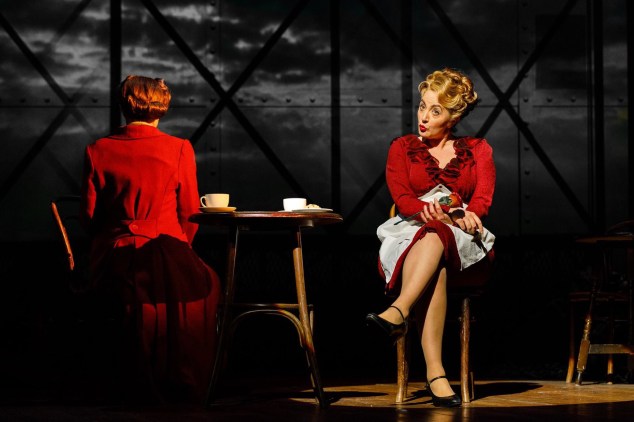
Taking inspiration from Still Life, the short play by Noël Coward which later became David Lean’s 1945 film Brief Encounter, the production offers more depth to the characters surrounding central lovers Alec (Jim Sturgeon ) and Laura (Isabel Pollen ) providing an opportunity to add multiple layers including a sharp injection of humour, music and dance, which takes this audience favourite to the next level.

Innovative director Emma Rice takes the best elements of both the play and the screenplay as she delivers a faithful and fresh take on the story of two middleclass married people who catch a glimpse of what could be should they dare to leap out of their predictable lives.

img_0180

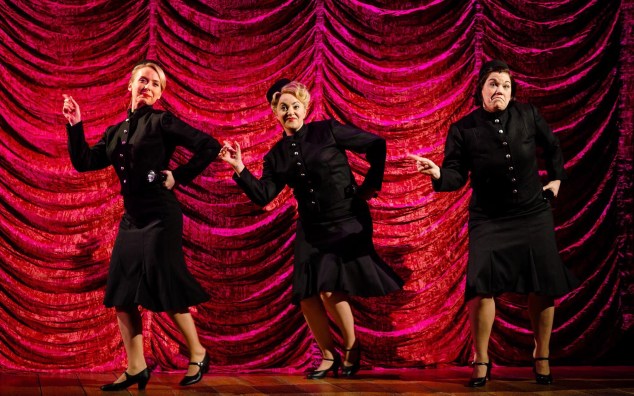
Upon entering the Lowry’s Lyric theatre, cast members mill about, dressed as 1930’s cinema ushers playing various instruments and singing harmonious ditties offering an instant glimpse into the musicality and originality of Emma Rice’s production and sending a clear message to the audience that we’re in for something a little different.

Multimedia elements are wonderfully woven into the exhilarating onstage action as the story of star-crossed lovers Laura and Alec unfolds. There is playfulness and passion as the tragedy of Laura and Alec’s forbidden love is interspersed with the comedy and joyful silliness of the two additional love stories within the production. Beverly Rudd and Jos Slovick as Beryl and Stanley deliver a perfectly judged interpretation of puppy love, all giggles, blushes and charming light-heartedness, Rudd providing a gorgeous version of Mad About The Boy while Slovick serenades his sweetheart throughout with his melodic observations on romance. Lucy Thackeray and Dean Nolan as Mrs Bagot and Albert are a delight, knowingly coy and completely hilarious, with the most impressively physical reprisal of Noël Coward’s I am no good at love you’re ever likely to see, sharp, witty and near acrobatic in delivery.

img_0181

Being a Kneehigh production the physical theatre element is second to none, perfectly judged it offers light in the shade of the heart-breaking love story which continues apace. The angst of Alec and Laura’s attempts to control their passion for each other is contrasted beautifully with the elation they experience when together which further adds to the intensity of their scenes together, the on stage chemistry between Sturgeon and Pollen is a joy to watch as love blossoms from their initial innocent meeting at the station.

img_0179

Designer Neil Murray, lightening designer Malcolm Rippeth and Sound Designer Simon Baker have worked in harmony to create something truly special as they manage to achieve the most striking of cinematic feels to this inventive production.

Innovative, deeply moving and impressively staged, Brief Encounter brings glorious technicolour to this most iconic of love stories.

On at The Lowry until Saturday 24th February here.

Hamlet

Hamlet Production Photos Photo Credit : The Other Richard

Opening Night Verdict ⭐️⭐️⭐️⭐️

Often described as Shakespeare’s greatest tragedy, Director David Thacker’s Hamlet is relocated to a gently suggested Soviet Block with it’s marbled walls and leaders portraits, a nod also perhaps to the troubled political times we find ourselves living today.

Upon entering the theatre James Cotterill and Ciaran Bagnall’s impressive set and lighting design looms large; making use of the full height of the Octagon it is dominant, multi-levelled and imposing. In the opening scenes at the funeral of Hamlet’s father we quickly get an idea of the style of this production, beautifully and dramatically lit, scenes change at a pace from bright and bold to soft and brooding.

Hamlet Production PhotosPhoto Credit : The Other Richard

Hamlet Production Photos Photo Credit : The Other Richard

Taking on the title role is the hugely impressive David Ricardo-Pearce, the tragic Prince, torn away from his studies abroad to a kingdom in turmoil, his Uncle taking not only the throne from Hamlet’s dead father but also Hamlet’s own mother to be his new bride. Overcome with confusion and grief the haunting sight of his dead father’s ghost sends Hamlet further into the depths of despair as he strives to find clarity in a world he feels increasingly uncertain.

Ricardo-Pearce delivers the multi-layered prince with conviction, playful yet proud, intense and sardonic. He takes of the task of avenging his father’s murder with fervour as he struggles to find an outlet for his grief, he is unflinching in his quest for retribution. At times addressing the audience directly, Ricardo-Pearce’s commitment to the role is exceptional as he questions, considers and confirms his plans.

Hamlet 1

The supporting cast are equally as impressive. Jessica Baglow captivates entirely as the broken and grief-stricken Ophelia, singing gently as she weeps for the loss of her love Hamlet and her father, her mind turns to madness. Eric Potts injects great humour amidst the intensity as the trusted Polonius while Brian Protheroe is impressive as the cold and composed Claudius. Marc Small makes for a loyal and committed Horatio while Michael Peavoy is a charismatic and dignified Laertes.

Thacker’s emphasis on the family tragedy of Hamlet reaps dramatic rewards, with the delivery of the script some of the clearest I’ve seen, this Hamlet is accessible and gripping, it feels fresh and inspired with the cast working together perfectly to deliver and engaging and enormously entertaining piece of theatre.

Hamlet Production Photos Photo Credit : The Other Richard

A great Hamlet of course rests enormously on the lead, Ricardo –Pearce succeeds entirely in involving the audience in his journey as we experience and feel not only Hamlet’s broken and disillusioned heart but his manic and mesmerising mind. Fast-paced, gripping and utterly compelling.

On at the Octagon Theatre until Saturday 10th March tickets available here.

Dancing Bear

Dancing Bear 1 credit Matt Tullett

Opening Night Verdict

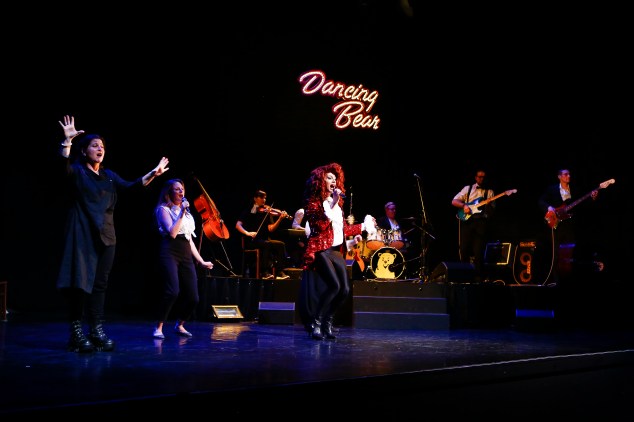
As part of the Queer Contact Festival 2018, Jamie Fletcher & Company and Contact bring their dramatized musical, Dancing Bear to Manchester’s Palace theatre for two nights ahead of further dates at the West Yorkshire Playhouse in April.

Conceived by director/musician Jamie Fletcher and writer/musician Beccy Owen, Dancing Bear is an unflinchingly provocative piece of theatre which examines the navigation of daily life for many LGBTQ+ individuals while focussing on their individual challenges and fight for inclusivity, acceptance and a sense of spiritual peace in whatever forms that may take.

Each member of the company is given time and space to deliver their story, ensuring from the start we see each person as an entirely unique and special being. Stories are shared, some happy some painfully sad, offering an opportunity to reflect and consider our own views and experiences. A wonderful addition to the show is the inclusion of Katie, a BSL Interpreter who is wholly part of the company and who testifies like each other cast member.

Dancing Bear 2 credit Matt Tullett

The honest and personal testimonies are interwoven with an inspired piece of poetry in which we see the Dancing Bear move through various animal communities in a bid to find his people after being banished by his family; he yearns for somewhere he feels safe, loved, accepted and free to be the person he knows he truly is inside.

Whilst the show implores you to question and explore it also entertains enormously, with superb original songs and powerful contemporary dance in addition to the real-life stories, there is a wonderful cabaret vibe to the production. There is no preaching, nor pushing of an agenda other than delivering a message illustrating the importance of love and acceptance. The glorious array of individuals on stage wonderfully demonstrates our strength as individuals lies in acceptance and the grace to embrace difference in all its forms. In exploring faith it becomes wonderfully clear that to each individual God can be exactly what they want God to be, a powerful being in which faith can be placed. Poignant, provocative and an opportunity to find our own inner peace & spirituality on our own terms, conclusions need not be drawn as we celebrate the uniqueness of each other.

On at the Palace theatre 8pm this evening tickets can be found here.


Strangers on a Train

SOAT

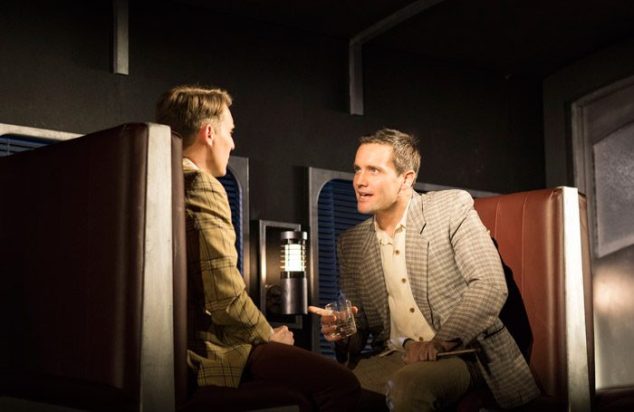
When two men meet by chance on a train journey, little do they know the impact this life-changing encounter will have. As they relax into their journey, the drinks begin to flow and stories of their lives are shared. As hopes, dreams and life’s troubles are discussed an idea emerges which will have an untold impact on both their lives.

Based on the novel by Patricia Highsmith which was adapted for the cinema by Alfred Hitchcock in 1951, Craig Warner’s Strangers on a Train is a sinister tale of persuasion. Smiling psychopath Charles Bruno (Chris Harper) charms architect Guy Haines (Jack Ashton) into revealing his innermost thoughts then hatches a plan to commit what he thinks are the perfect murders, clever and calculated in a way the truth could never be uncovered. Of course something as dark as murder could never be so simple, the plan quickly begins to unravel & suffocate Guy as a manipulative and unhinged Charles becomes ever-present and looms large in all aspects of Guy’s life.

Chris Harper and Jack Ashton are entirely convincing in their individual roles. Harper is commanding and brash as Charles, obnoxious, obsessive and chillingly intense, he perfectly embodies a man on the edge of madness. Perfectly paired with Ashton’s calm and relaxed presence which becomes increasingly strained as the horror off his characters situation takes over, pushed past the point of no return by a tormentor he barely knows, he takes on the role of cornered victim well, keeping up appearances believably whilst battling with an increasingly manic oppressor.

While both leads and the ensemble deliver strong performances the pace of the play lets the production down, leaving a feeling that a good chunk could have been edited in order to allow the chilling tension the cast are so clearly capable of delivering to florish.

David Woodhead’s set while wonderfully intricate with sliding panels revealling hidden rooms at times muffles conversations & in several scenes blocks cast members from view for audience members sitting anything but bang central.

While some scenes are drawn out others feel rushed, with only fleeting appearances from Helen Anderson and John Middleton as Helen Anderson and Arthur Gerrard, both are excellent and draw attention each time they are on stage.

While there are some excellent performances which hold your attention for the duration of the production, the promised chill is never quite felt. Trimmed down this could be an excellent and gripping piece of drama.

On at the Opera House until Saturday 10th February tickets available here.

Things I Say When I Don’t Say I Love You

SB

Opening Night Verdict ⭐️⭐️⭐️⭐️

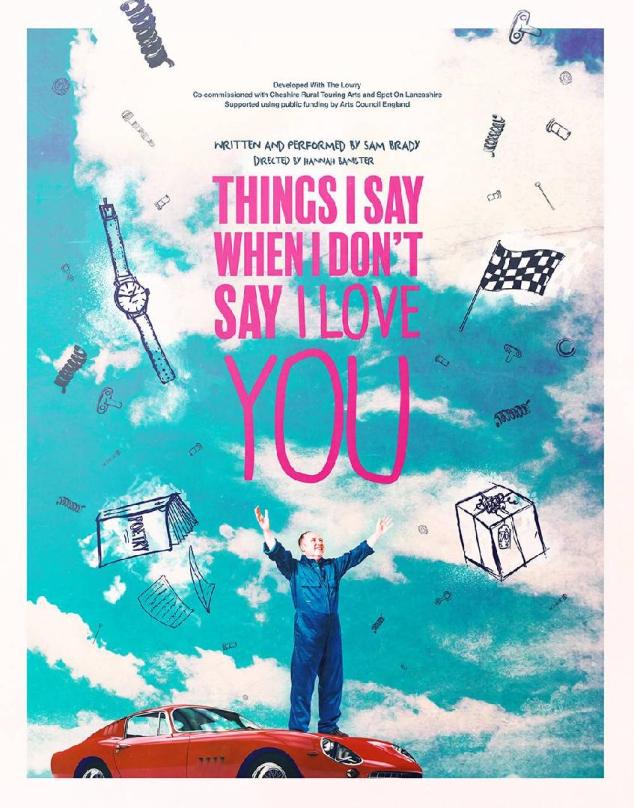
Created as part of the Lowry’s flagship ‘Developed With’ programme Things I Say When IDon’t Say I Love You is a poignant and perfectly judged one-man play about male relationships within one family when dealing with a life changing dementia diagnosis.

Writer and performer Sam Brady focuses on three generations of one family, granddad Tommy, the no nonsense northern alpha male of the family, grandson Scott who is desperately trying to establish his own identity amidst a upbringing of tough love & what he sees as harsh parenting from dad Ian, who is seemingly stuck in the middle and trying his best to please everyone.

Tommy’s diagnosis ignites the nostalgia within Ian as he throws caution to the wind and purchases a clapped out 1967 Triumph Spitfire, a project to work together on, a dream to fulfil. Of course in theory the three generations would come together & restore the rusted shell to its former glory, real life however doesn’t work out quite this way as tempers fray, stress levels rise and the symptoms of dementia because all too obvious. How can three men who talk but never really say anything to each other communicate when they’re too busy butting heads?

Directed by Hannah Banister, Things I Say When I Don’t Say I Love You will warm your heart, provoke your thoughts and make you laugh out loud. Brady has a true gift for honest, intelligent and humorous storytelling. Witty and incredibly likeable, his script is littered with funny anecdotes and all too familiar situations we can all relate to from tense stand offs with a partner over broken promises to hilarious disagreements with a nosy neighbour. All bases are covered in this highly amusing, incredibly touching and well observed piece of writing. It is no mean feat to stand solo on stage taking on a variety of roles but Brady engages his audience entirely with genuine charisma and clever wit, his character definition is wonderfully clear & you quickly find yourself caring deeply for this family, dealt a cruel blow familiar to so many. Relationships are beautifully explored, bridges are built and laughs dished out a plenty.

Brady succeeds in taking a heart-breaking topic and exploring it with such care and respectful attention that it allows the human and humorous elements to shine through. Honest, relatable and thought-provoking theatre.

RSC | Hamlet

Ham 2

Opening Night Verdict ⭐️⭐️⭐️⭐️⭐️

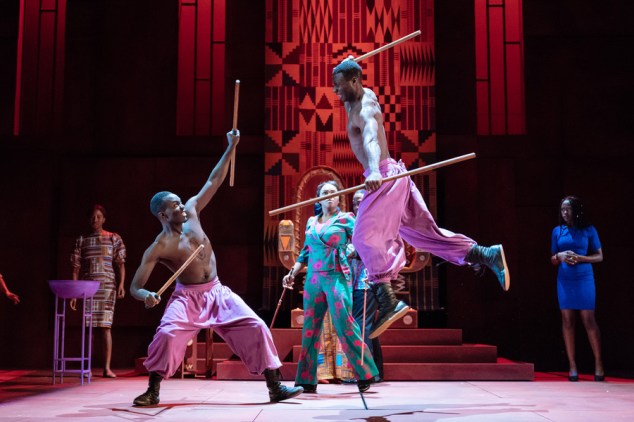
From it’s opening scenes showing Hamlet receiving his degree at Wittenberg University, it’s clear that the RSC are offering something very different, director Simon Godwin has painted this version of Hamlet with glorious technicolour and focuses firmly on a Prince who feels displaced, an outcast amongst his own people.

Making history back in 2016 when Paapa Essiedu became the first black actor to play Hamlet at the RSC he is undoubtedly the heart of this production with director Simon Godwin very much shaping it around him. Essiedu is of Ghanaian descent which has been used to influence the piece and shifted the coordinates offering a rich and absorbing West African flavour. Ripped away from his overseas education due to the death of his Father, Hamlet is struggling not only with his grief but also with a feeling of dislocation from his people as well as a confusion at the swiftness in which his mother has remarried. Seeing the haunting ghost of his dead father impacts him enormously, from here he begins a powerful psychological unravelling as he bids to seek revenge upon his uncle Claudius who murdered his father before stealing not only the throne but also Hamlet’s own mother for his wife. In Hamlet’s bid to expose the truth, lives and loves are lost as almighty tragedies unfold.

Ham 3

Essiedu is a revelation as Hamlet, sardonic and unpredictable, charismatic and incredibly witty; he devours Shakespeare’s words and delivers them as if they were his own. His commanding presence fills the Lowry’s expansive Lyric theatre entirely, this riveting and contemporary Prince of Denmark is playful and beguiling with a unsettling element of danger that’s fascinating to watch. He questions, dissects, flips the expected on it’s head and offers an entirely new Hamlet.

This critically-acclaimed RSC production feels incredibly fresh, unlike any Hamlet I’ve seen before. The cultural richness and sheer brilliance of the ensemble brings an entirely new spin on this Shakespeare classic while playful, exuberant choreography casts light on the shade on Shakespeare’s most famous tragedy. While there is intensity there is also great humour with sharp performances from gossipy chief counsellor to the King, Polonius (Joseph Mydell) and matter of fact, take-each-day-as-it comes Gravedigger, Ewart James Walters. Mimi Ndiweni makes for a heartbreakingly tragic Ophelia partnered beautifully with a touching and honest performance from brother Laertes (Buom Tihngang).

Ham

The vibrancy of designer Paul Wills staging breathes further life into this ground-breaking production, the staging reflecting the state of Hamlets grieving and maddening mind. Lighting designer Paul Anderson succeeds magnificently, from the hauntingly atmospheric to the blisteringly bold every scene lit to perfection and recreated for this tour by Matt Peel.

Part tragedy, park dark comedy Hamlet is a drum-thumping, high-energy, intoxicating triumph of theatre. The contemporary twist, perfectly paced & honest performances ensure the RSC succeed in delivering Shakespeare in an accessible and wholly captivating way. Paapa Essiedu captures not only the heart and soul of the character but makes the text seem new and original. I struggled to find any fault in this daring & dynamic production which will stay with me for some time. Inspired and inspiring theatre at its finest.

On at The Lowry until Saturday 3rd February tickets available here.

The Play That Goes Wrong

Opening Night verdict ⭐️⭐️⭐️⭐️1/2

Reviewed by Matt Forrest

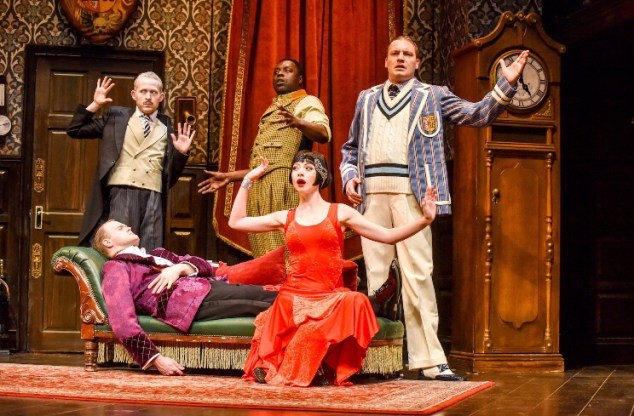
We’ve all had one of those days where nothing seems to go right for you: be it losing your car keys or locking yourself out of the house, or even that accidental fall when walking down a busy a street. You may want to go back to bed but soldier on you must. Well imagine your worst day multiply it by 100 add 50 and you’re not even close to the nightmare faced by the cast of The Play That Goes Wrong Now in its sixth year this Tony award winner sees the plucky but flawed local am-dram group ‘The Cornley Polytechnic Drama Society’ stage a classic ‘Cluedo’ style murder mystery. The production of Murder at Haversham Manor doesn’t get off to a great start with a missing dog, Duran Duran CD, and a faulty shelf hampering proceedings, and all this before the play even gets started!

Chris Bean (Jake Curran) the stressed director/head of the drama society, and lead role of inspector Carter welcome us to shows and informs us of some of the societies less successful endeavours, it provides the perfect set up for what promises to be a highly entertaining evening. Along the way we are introduced to the various society players which include Max Bennett, who plays Cecil Haversham, (Bobby Hirston) a first time performer milking his role for all it’s worth, Sandra Wilkinson as Florence Colleymoore (Elena Valentine) somewhat over egging her part in a desperate bid to steal the show, and Dennis Tyde as Perkins (Benjamin McMahon) clearly nervous and not very good at learning his lines. In addition they are supported by the technical crew of Trevor (Gabriel Paul) and Annie (Catherine Dryden) who try to fight the flames of disaster (quite literally) and with bigger roles then either would have envisaged. As the action continues we see the play go from one hilarious catastrophe to another, taking a mental and physical toll on all the cast and crew, just thankful it’s over and that they survived.

This is comedic theatre at it’s finest; director Mark Bell has crafted a night of pure unadulterated fun that I could watch over and over again. The cast work their socks off, with an endless barrage of slapstick and physical comedy very much in the tradition of Laurel and Hardy, or Buster Keaton, all of the cast do exceptionally well but the stand out performance goes to Kazeem Tosin Amore, as Robert and Thomas Colleymoore, whose performance at one point had audience members howling with laughter with a little a hint of fear for the actors safety. In addition Steven Rostance as Jonathan and Charles Haversham who plays the least convincing dead body you are likely to see.

The writing of Henry Lewis, Jonathan Sayer, and Henry Shields is bang on point firmly taking a swipe at the pompous nature of the theatre, there are moments when the action is so cringe worthy that you just want the play to stop so the cast can be put out of the misery, which is of course exactly the point of it all.

My only complaint (and this is being picky) is that show’s finale is a little over chaotic and needs to be reined in slightly as there genuinely is so much going that you become lost in the chaos so that the grand finale loses a little something, it may be hard to believe but less certainly could be more in this case.

Overall this fantastically fun night at the theatre that will leave you grinning from ear-to-ear with aching sides to boot. Be warned though if you are a vegan or vegetarian you may see more HAM then you could ever have thought possible!

They Play That Goes Wrong is on at the StoryHouse Chester till February 3rd tickets available here.

Interview | Sam Brady

SB

Edinburgh Fringe regular, comedian and story-maker Sam Brady brings his new show about the effect a life changing diagnosis has upon male relationships within a family to the Lowry this week.

Created as part of the Lowry’s ‘Developed With’ programme Things I Say When I Don’t Say I love You is a warm, witty and uplifting one man play about three generations within one family, granddad, father and son and the effect Alzheimer’s has upon their relationships. Sam explains that “Although the men talk a lot they don’t really communicate, Granddad Tommy, the alpha male of the family is diagnosed with dementia which completely alters the dynamic within the family as he has to get used to not always being the strong one and maybe now being looked after while Scott the 20 year old is trying to establish himself as an independent adult and Ian, the father, is trying to learn how to let his son go whilst also becoming a parent now to his own Dad. It’s about male ego’s, relationships, three people who love each other very much but also drive each other nuts and really aren’t very good at communicating their emotions.”

A real focus and driving force within Sam’s work is looking at how families cope in a crisis, when something comes along that completely changes things, how do families adapt to that change and how does this affect their relationships? While dementia is the catalyst for the play, it’s a piece that addresses how individuals deal with loss and change. While there is a lot of sadness surrounding dementia Sam found through his research that families shared a lot of humour and also found that people in the face of tragedy and change discover what’s important to them, “Crisis and loss often gives people almost a permission and an opportunity to say things that they’ve never been able to say before. While there may be loss and upset involved there is also opportunity to strengthen relationships. While researching for the play and specifically dementia it was described to me that we have our emotions and also our cognitive function and it’s the cognitive function that goes but your emotions are still there, so people may say ‘what’s the point in going to visit someone if they don’t even know you’re there’ although they may not know who you are emotionally they still know that they love you and they feel that and feel good because they’ve been in the presence of someone they love, this is something we’ve built into the play.”

SB2

The importance of humour in helping people get through life’s challenges is something Sam feels strongly about after experiencing his own difficult times and personal loss, “The way people get through these times is often by laughing, it’s so important to have that light and shade, in my research for this play, meeting with families and people living with dementia we’ve had such a lot of laughs, the spirit and humour of the people I spoke to was incredible, people who know they’re facing a terminal illness, who are scared about what they might lose, scared they might forget their children, it’s genuinely terrifying but at the same time their ability to laugh at themselves and their situation is what gets them through, facing tragedy and still being able to laugh is so incredible, in the play I aim to reflect this, so while here are some sad moments it is also very warm, uplifting and also very humorous.”

The theme of kindness is something that runs through former Buddhist monk Sam’s work, his one-man stand up storytelling show Kindness toured successfully and after the Lowry expressed an interest in putting it on in the studio, Sam saw this as an opportunity to create a piece of theatre, arrangements were made and Sam created a double bill in which in the first half he delivered his show then in the second half delivered a work in progress of the story he was developing, “It got a really good response so on the back of that I was asked to joined the Developed With programme, it’s been absolutely amazing. I’ve watched so much great theatre in preparation for my show, I’ve learnt so much, I’ve been taking acting lessons, I’ve worked with a writing mentor to ensure I really bring out the best in me. It’s been the most fantastic opportunity.”

Audiences can see Things I Say When I Don’t Say I Love You at the Lowry on Thursday 1st and Friday 2nd February with 5 rural dates booked in in Cheshire and Lancashire and a full autumn tour also in the pipeline.

Further information and tickets can be found here.


The Weir

Weir

Opening Night verdict ⭐️⭐️⭐️⭐️

English Touring Theatre and Mercury Theatre Colchester’s revival of Conor McPherson’s Olivier award-winning play The Weir arrives at the Lowry’s Quays theatre this week, proving it is as fresh and as engaging as it was when it took the west-end by storm back in 1997.

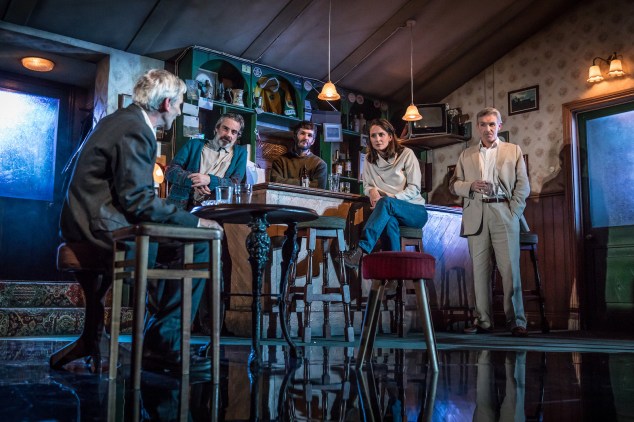
Set in a rural in a rural Irish pub, vastly unvisited out of tourist season apart from by its entirely male regulars, conversations are familiar amongst Brendan (Sam O’Mahony) the happy-go-lucky landlord and middle aged locals cantankerous Jack (Sean Murray) and mild mannered Jim (John O’Dowd), both bachelors with their own crosses to bear. Tonight however something is different, Finbar (Louis Dempsey) the local fella turned successful businessman has been seen with a woman, not only has he been seen with a woman but he has been bold enough to bring her to the pub, and him a married man and all, changing the landscape of the status quo from the minute she arrives.

Weir 3 The Weir is a play based entirely round the art of storytelling in which writer Conor McPherson delivers the loneliness of small-town life in Ireland for his isolated characters with humanity and heart. Past and present intertwine as stories are shared and the ghosts of times gone by are reimagined and redelivered. Links to folklore litter the narratives as incidents and goings on become more peculiar and harder to explain, lives woven together by circumstance bonded over many years through the sharing of tales and the comfort of company now have a new source of narrative in the intriguing and attractive out of towner, Valerie (Natalie Radmall-Quirke).
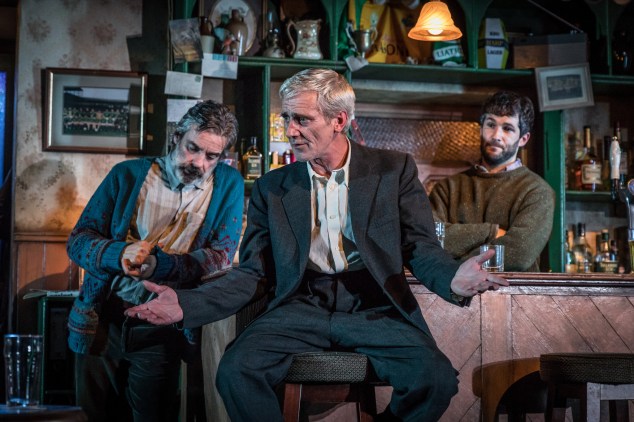
The regaling of stories to entertain their visitor ultimately exposes their anxieties and loneliness, when finally it’s Valerie’s turn to share her chilling tale, unexpected and deeply powerful, the truth she calmly reveals bonds her to the group, comrades now in their complexities.

Weir 2 At approximately 90 minutes straight through The Weir captivates entirely, each actor on stage delivering a compelling and gripping performance, from the deadpan put downs to the infectious Irish charm. Director Adele Thomas is happily includes awkward silences, a taste of the daily norm in The Weir. While there is great poignancy there is also great wit in McPherson’s script, presented with impressive skill by this incredibly strong cast.

Just as important as the storytelling is the listening, director Adele Thomas ensures that each storyteller is the focus of their moment with fellow cast members their audience, perfectly placed around Madeline Girling’s set, while Lee Curran’s lighting design further adds depth, atmosphere and weight to each tale.

The Weir is a cleverly constructed and entirely compelling piece of theatre, goosebump chilling in parts with laugh out loud moments of deliciously sharp humour. Perfectly paced with an excellent cast and exceptional writing which will leave you longing to pull up a chair, grab a Guinness and revel in the delights of the storytellers.

On at The Lowry until Saturday 27th January tickets available here.