The Last Yankee

Reviewed by Matt Forrest

Opening Night verdict ⭐️⭐️⭐️⭐️

UK theatre goers have seemingly been having an affair with the works of American writer Arthur Miller for decades now. The National Theatre has staged more productions of Miller’s plays than any other writer apart from Shakespeare, which is an impressive feat indeed.

Director David Thacker during his time as the Director of the Young Vic in London staged nine Arthur Miller plays seven of which he directed himself: one of these works The Last Yankee, was a huge commercial and critical success and now 26 years later Thacker reprises his role bringing the play to the impressive Bolton Library Theatre.

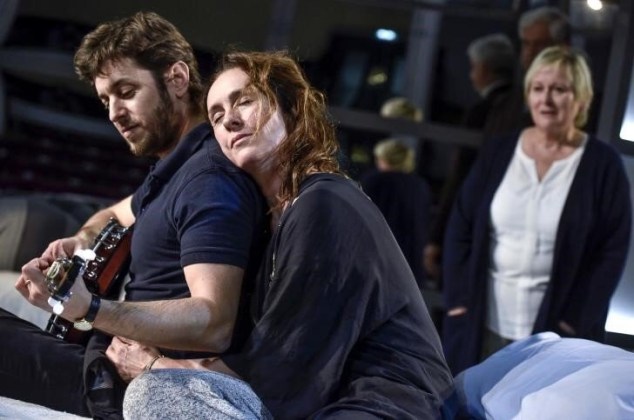
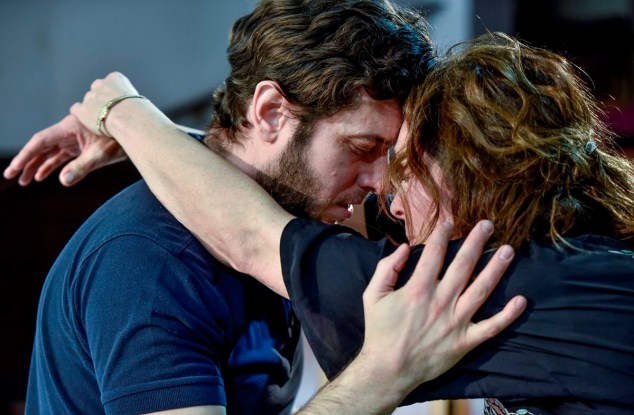
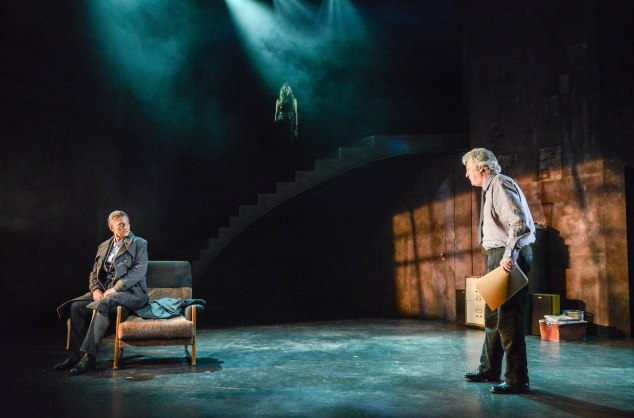
Set in an American psychiatric hospital, we are introduced to two married couples: Patty Hamilton (Juliet Aubrey) and her carpenter husband, Leroy Hamilton (David Ricardo-Pearce). We also have successful business man John Frick (Patrick Poletti) and his wife Karen (Annie Tyson). The two couples are polar opposites: the Hamilton’s have seven children and are just financially struggling to keep their heads above water. Whilst the Frick’s have no children yet a vast wealth at the disposal. Despite their differences the two couples have one thing in common, depression, anxiety and a self-loathing that threatens to not just wreck their marriages but destroy them individually as well.

Miller has crafted a near perfect fable of the chase for the American dream and how quickly it can go sour, whilst raising some important issues about mental health and its treatment. The script is measured and refreshingly low-key, the dialogue is terse and pulls no punches: there is nothing ‘showy’ or flash just an honest, gut wrenching account of a struggle that is becoming more and more prevalent in modern society with each passing day. Despite its weighty subject there is also a great deal of black humour adding a touch and of warmth and a much-needed respite from the drama.

The four leads are superb, the interactions between Poletti and Ricardo-Pearce in the first act sets the tone for the production, Poletti is solid as the snobbish know-it-all, yet clueless, Frick, whilst Ricardo-Pearce gives subtle, weathered performance as the blue collar all American.

Aubrey and Tyson are equally good as Patty and Karen, who’s unlikely friendship is the heartbeat of the production. Aubrey is captivating, filled with nervous energy, that is at times unsettling, whilst Tyson cuts a tragic figure and as the loveable Karen, a performance filled with whimsy and heartbreak in equal measure.

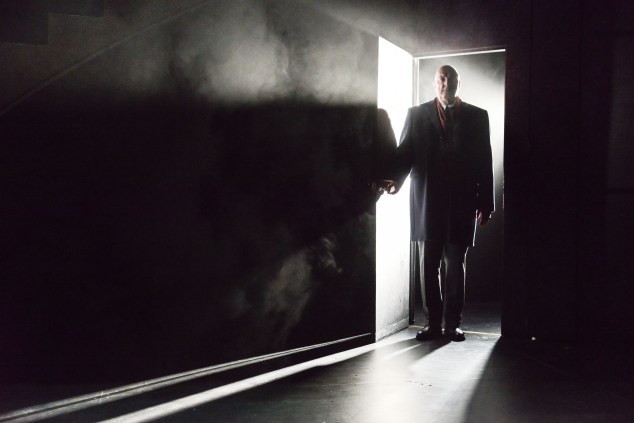
Thacker’s simple but effective directions works beautifully with Ciaran Bagnall’s intriguing set design: throughout performance we see a patient lying motionless in hospital bed, never mentioned or referred to, the proverbial elephant in the room and a damning critique of how we treat mental illness and our attitudes to mental health. This marries perfectly with the wall of mirrors back drop, distorting both perception and reality.

This is a thought-provoking essential production that despite its weighty subject is engaging and accessible, with the time flying by. A production that is superbly acted, powerful, and certainly a relevant message for our times: everything dramatic theatre should be.

The Last Yankee is at Bolton Library Theatre until 16th March tickets available here.


The Full Monty

Reviewed by Nikki Cotter

Opening Night verdict ⭐️⭐️⭐️⭐️

FM

The Full Monty arrived back in Manchester this week and judging by the whoops and excited cheers from the audience when Gary Lucy and Co take to the stage their return is very welcome.

Adapted from Simon Beaufoy’s 1997 film of the same name, The Full Monty tells the story of six out of work Sheffield steel workers, bored, broke and battling various issues of their own.

Gary Lucy as Gaz is behind on his child maintenance, his custodial problems worsening by the day. Best mate Dave’s (Kai Owen) confidence is rock bottom and his relationship with wife Jean (Liz Carney) is suffering. After stumbling upon a Chippendales night at the local social club Gaz sees an opportunity to earn a quick buck and hopefully prove to son Nathan (Fraser Kelly) he’s not a complete failure.

TF1_7141_Sep18_RT

Right from the off it’s clear what the audience are here for; they want a reet good laugh and of course ‘that’ infamous scene at the end of the show. Each teasing flash of flesh is lapped up as this story familiar to many begins to play out. Fans of the film will be glad to know the adaptation has been respectfully done, characters remain the same ones they fell in love with back in the 90’s and the northern witty one-liners come thick and fast.

Designer Robert Jones has translated the industrial disused steelworks into an effective and efficient set, doubling up as offices, social clubs and performance space with ease.

What starts off as feel-good escapism soon deepens into something more as we see friendships grow, self-respect return and important issues raised. Beaufoy’s script doesn’t shy away from sensitive themes; suicide, sexuality and self-worth are all covered here but done so in a typically northern no-nonsense fashion where problems are faced with a laugh and a joke but at all times a genuine warmth.

FM 1

Heading up the cast Gary Lucy is clearly an audience favourite although his accent takes a trip across the Pennines on more than one occasion the audience lap up his cheeky banter as Gaz the Lad. Fraser Kelly as son Nathan is convincing and committed, leading you to question just who is raising who here. Kai Owen as Gaz’s best mate Dave gives a warm and relatable performance while both Joe Gill as Lomper and Andrew Dunn as Gerald shine in their respective roles. Louis Emerick as Horse proves despite a dodgy hip he’s still got the moves while James Redmond as Guy proves he’s packing more than just a girder down there!

The Full Monty is an entertaining night out, a heart-warming story delivered in a fun and feel-good way with more than enough laughs to send you home smiling.

Catch The Full Monty at Manchester’s Opera House until Saturday 23rd February tickets available here.


Mydidae

Reviewed by Nikki Cotter

Opening Night verdict ⭐️⭐️⭐️⭐️

The day starts as any other, Marian (Hollie-Jay Bowes) practices her French while brushing her teeth, her partner David (David Gregan-Jones) does his best to convince that his business spiel has some actual meaning; it soon becomes clear however that their inconsequential chatter & random mutterings are merely a means of avoiding a much deeper, darker and undoubtedly more difficult conversation.

Affectionate chat becomes increasingly saturated with barbed comments as with each trip to the bathroom insecurities and an inability to communicate honestly are exposed.

Jack Thorne’s script is both challenging and remarkably honest, stripping each character both physically and emotionally. Laura Woodward’s focussed direction ensures warped domestic life takes centre stage as light-hearted interrogation becomes something altogether more shocking.

Hollie-Jay Bowes & David Gregan-Jones unselfconsciously move throughout the intimate space allowing the audience a genuine fly on the wall insight. Each have an ability to connect deeply with the audience; you feel their pain, their heartache, their frustrations as the reality of their grief in all it’s complicated detail is stripped bare.Their believability as a fractured couple allows the emotion of Jack Thorne’s piece to rise to a brutal and unexpected peak which literally knocks you for six. Both are outstanding.

Natalie Johnson’s set and costume design of varying shades of blue are lit to subtle yet dramatic effect by Joseph Thomas, a hint of what’s to come with a flash of colour lighting up the freestanding bath between scenes.

Wonderhouse Theatre succeed in delivering this provocative & powerful piece impressively well, holding the audience entirely for the full 75ish minutes. It is the kind of theatre that will remain in your thoughts for days, weeks, maybe more as you pour over the detail & examine the issues raised.

Brutal, honest and brilliantly executed theatre.

Catch Mydidae at Hope Mill Theatre until Saturday 23rd February tickets £12/14 are available here.


The Animals and Children took to the Streets

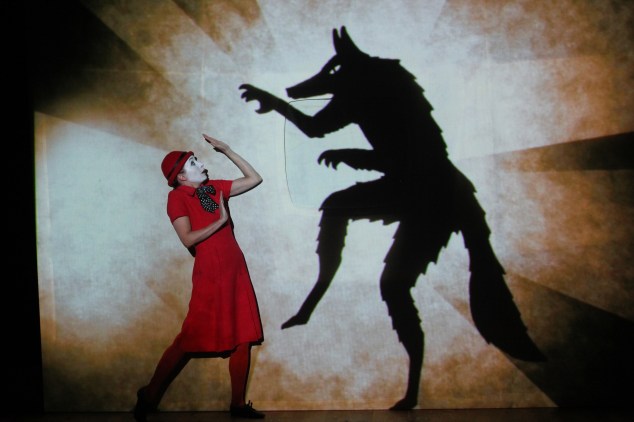
The Animals And Children Took to the Streets, presented by 1927 pic 2

Reviewed by Matt Forrest

Opening Night verdict ⭐️⭐️⭐️⭐️

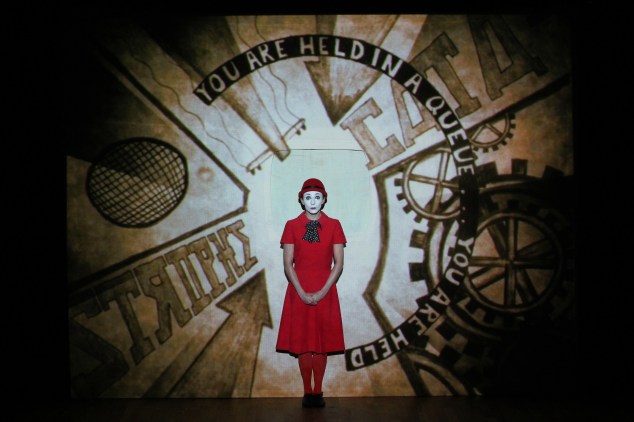
For nearly 15 years the 1927 theatre company have been pushing the boundaries when it comes to theatre. They have gained quite the reputation for their bold, innovative productions which has seen them marry live performance and music with animation and illustration to create a theatrical experience like no other.

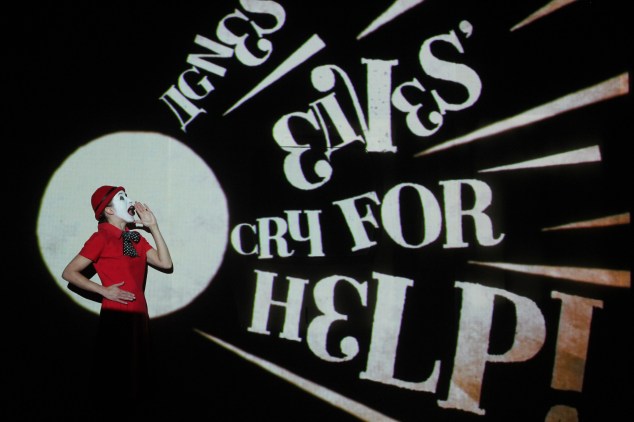
For their latest offering The Animals and Children took to the Streets, writer and director Suzanne Andrade again uses all these tools to create a satirical, jaw-dropping production that will leave you both mesmerised and enormously entertained.

The Animals And Children Took to the Streets, presented by 1927 pic 3

Andrade transports us to the dark, dank Red Herring Street, on which stands the Bayou Mansions. This is a tower block located on the wrong side of town, housing the worst of society, from social misfits to murderers and sexual deviants; they all have a place here. The authorities and the rich have chosen to ignore their plight, deciding to let them implode. However, when a gang of feral children from the Mansions go on a destructive rampage that includes kidnapping the mayor’s beloved cat and running amok on a park for the middle-class, their mini-revolution does not go unnoticed. In retaliation, the Mayor takes drastic action.

The children’s only hope of escape comes in the form of the Bayou Mansion’s caretaker; a man who is desperate to woo Agnes Eaves, a middle-class do-gooder, who believes dried pasta collages and art classes are what the kids need. Agnes’s daughter, Evie has been caught up in a police round-up and only the caretaker knows what’s happened to them.

The Animals And Children Took to the Streets, presented by 1927 pic 1

This is 70 minutes of pure joy, innovative, smart and darkly comic, this production is pitch perfect. Paul Barritt’s animation lies somewhere between a LS Lowry painting with some Terry Gillian sketches thrown in. Add into the mix the clear influence of 1920’s silent cinema, specifically the films of Fritz Lang and Georges Méliès and you have a visual feast that will leave you howling with laughter, whilst having a good old scratch as we see the rats, lizards and cockroaches that infest the Bayou scurry across the screens.

Andrade’s script is razor-sharp, witty and brutal, it clearly has a take on social inequality and the continual struggle of the working class who are denied the opportunities afforded to the privileged. The script is supported by three super talented performers in Felicity Sparks, Genevieve Dunne and Rowena Lennon – whose facial expressions alone are worth the price of admission. Their performances in conjunction with Barritt’s animation beautifully tell this story and breathe life into a highly original and rewarding piece of theatre.

The Animals and Children Took to the Streets is at Home till 16th February, tickets available here.


Trial By Laughter

trial by laughter 4

Reviewed by Matt Forrest

Opening Night verdict ⭐️⭐️⭐️

The name William Hone won’t mean that much to most people, which is crying shame. For back in the early 1817 this was a man who campaigned tirelessly for civil liberties, sought reform in the many lunatic asylums, and highlighted the miscarriages of justice that blighted the judicial system. In addition Hone was an investigative journalist, satirical commentator and publisher who along with his friend, George Cruikshank a political cartoonist lampooned the ruling class of the day: that being the Regency government.  So angered by Hone’s work the Prince Regent sought to have him prosecuted by any means possible.

So when it came to the story of William Hone, who better to tell it than Ian Hislop and Nick Newman. Both are champions of a free press, both have great form in sending up and holding to account politicians and world leaders through the magazine Private Eye. Newman is the cartoonist for the magazine and Hislop is the editor.  In addition Hislop is no stranger to a libel case having faced several down the years.  The two writers have reunited with director Caroline Leslie, with whom they worked with on their debut play The Wipers Times, to bring this intriguing story to the stage with their new production: Trial by Laughter.

trial 2

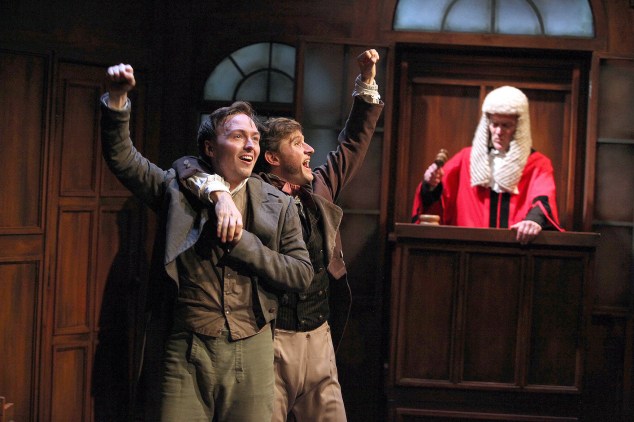
The play opens with the Prince Regent and his (alleged) mistresses angered by their depiction at the hands of Hone and Cruikshank, so enraged is he that he orders his government flunkies to prosecute Hone. Hone is charged with blasphemy and arrested, falsely imprisoned and denied legal assistance. With only the support of Cruikshank, and his wife, Sarah, Hone mounts a defence and against all odds wins the trail. This really is the beginning of Hone’s troubles as he faces three criminal trials in as many days, which could see him imprisoned or deported to Australia. With the Regency’s relentless pursuit and Hone’s health deteriorating is this really a battle he can truly win?

There is a lot to admire about this production: Joseph Prowen is on great form as William Hone, playing him with a twinkle-in-the-eye and a great deal of righteous optimism that is gradually beaten out of him as the trials progress. Dan Mersh (playing numerous roles) is equally fine as Hone’s tormentor; Justice Ellenborough who plagues his foe at every turn and cannot hide is distain or prejudices for Foe. Peter Losasso plays Cruikshank, with a cheeky swagger clearly relishing his pun filled part. Whilst Eva Scott is also strong as Hone’s long suffering wife, who in spite of all their trials and tribulations she never loses faith in her husband.

trial by laughter 2

Despite the subject matter being over 200 years old it relevance today cannot be understated as the play tackles such issues as freedom of speech and freedom of the press and measures how far governments and people of power will go to too stifle this, you only need to look at the recent murder of journalist Jamal Khashoggi to see its relevance. It also tackles the weighty issue of what is fair game for a joke: politicians, religion, the ruling class, and when does a joke go too far and become offensive. These are clearly subject matters that Hislop and Newman feel passionately about and it shines through in their writing.

The production does have a few issues: there are some great gags in here which poke fun at modern day celebrity culture, even Prince Charles is on the receiving end of a roasting. Whilst the jokes come thick and fast, and are exceptionally crafted there is nothing here that will have you rolling in the isles, more a wry smile then a big belly laugh. Despite this being a trail there is little jeopardy for Hone and thus at times the more dramatic elements of the paly can feel a little flat.

Overall this a fascinating, entertaining tale that needs to be told and deserves its platform, it’s worth a watch but you can’t help feel there is something missing.

Trail by Laughter is on the Lowry until 2nd February, tickets available here.


Interview | Ian Hislop & Nick Newman | Trial By Laughter

trial by laughter 4

After the enormous success of The Wipers Times in both the West End and on it’s UK tour, celebrated writers Ian Hislop and Nick Newman have once again joined forces for their new piece of work Trial By Laughter.

This new production based on their critically acclaimed BBC Radio 4 drama of the same name introduces us to William Hone a forgotten hero of free speech and asks if just over two hundred years later our press has any greater freedom. 1817 Hone then a bookseller, publisher and satirist stood trial for parodying religion, the despotic government and the lustful monarchy. The only crime he had committed was to be funny. The show which has been described by critics as ‘a sparky historical comedy’ heads to The Lowry next week. We caught up with writers Ian Hislop and Nick Newman to hear a little more about the show.

How would you sum up the premise of Trial By Laughter?

Nick: It’s a story about press freedom and free speech and a battle for freedom and free speech. It’s the story of a trial in 1817 – the trial of a man called William Hone, who was a sort of shy bookseller and publisher of cartoons and satirical pamphlets. He was taken to court by the Regency government to try and stifle jokes about the monarchy. That’s essentially what it’s about.

Ian: It’s exactly that. It’s a courtroom thriller but it’s a historical courtroom thriller with jokes, which means it’s three different genres in one for just one ticket price.

Nick: I think we’d describe it as The Madness Of King George meets A Few Good Men…

Ian: Meets Crown Court.

trail by laughter 2

What was the original inspiration for the radio play?

Nick: We’d just finished doing The Wipers Times for BBC 2, when we did the film of it, and the head of BBC2 Janice Hadlow sent us an email asking if we’d heard of William Hone. Janice is an expert on Regency history and has written books about it. We both said ‘Who?’ which is often a very good starting point for a story because we think ‘Well, if we don’t know anything about it let’s find out’. We started doing research and suddenly out came this amazing story about this amazing man – a complete nobody really but who took on the might of the government in a landmark case.

Ian: It’s incredible. He had his moment when history beckoned and then fell into obscurity, to our shame really. I’m the editor of Private Eye and Nick’s a cartoonist yet we didn’t know about him, but again that makes for a much better story because you’re telling people something new.

trial by laughter 2

From researching the tale what were you most surprised or interested to learn about Hone?

Ian: Without giving spoilers, it’s incredible that they tried him three times in three days. At the end of each day when the jury found him innocent they just tried him again the next morning until there were 20,000 people outside the Guildhall and they thought ‘We’re going to have a riot now’. This was only a couple of decades after the French Revolution…

Nick: And a year before the Peterloo Massacre so tensions were incredibly high. The Crown was very worried about the possibility of revolution and there were failed harvests and a lot of famine, squalor and whatnot. Meanwhile the Prince Regent was being portrayed in cartoons and in pamphlets as this libertine voluptuary who was scoffing vast quantities of food while people were hanging outside the windows. The other thing we discovered about Hone as we did more research is what a remarkable man he was because he wasn’t just a satirist, which was our first interest and his friendship with the cartoonist Cruikshank interested me as a cartoonist myself. Their working relationship was also a natural thing for us to explore and Hone was also probably our first investigative journalist. He was a witness to the execution of a young serving girl, a maid called Eliza Fenning, and he was absolutely appalled by it. He did a lot of research into her case and basically proved that it was a miscarriage of justice. We also learned he was an amazing philanthropist and he took a terrific interest in the lunatic asylums and campaigned for better conditions. There was the reform of juries, which he campaigned for and won. He never stopped working.

Ian: And he believed in universal suffrage, which at the time was a good 100 years away. If you look at his range of interests, they are pretty extraordinary.

trial by laughter

What changes have you made in preparing the play for the stage?

Ian: It’s completely different. The thing about radio is that it has to be very words-driven, which is fine because there are lots of bits about speeches and whatever, but to get it to the stage we have to make it more dramatic. There’s a lot more about the role of his wife and we’ve set more of it in pubs.

Nick: It’s a matter of fact that Hone and Cruikshank devised their strategy for the case in all the pubs and coffee houses of London so it’s a very rich milieu in which they were working. Hone was admired at the time by his literary colleagues, even though he was always bankrupt and had schemes which lost him money, and one of his admirers was William Hazlitt, who was one of the most caustic critics of the era. The only person Hazlitt seemed to like was William Hone so we’ve put Hazlitt in the story as well, which is great for the colour.

What do you feel makes Hone’s story a great subject for a play?

Ian: Hone’s tactic in the trial was to appeal to the jury so his whole way of winning was to make it accessible to an ordinary… I’d hate to say viewer but that’s sort of how he approached it. Courtrooms are great theatre on the whole and Hone and Cruikshank, in devising the strategy as it were, realised that playing to the gallery is not a bad thing in a big trial – it’s what you need to do because you need to get them on your side. That’s exactly what happens in the theatre.

Nick: What was slightly unusual about their tactics is that they set out to make the jury laugh. The basic of their entire case was that Hone spoke for six-to-eight hours every day of the trials just producing more and more examples of stuff he thought would make people laugh – and they did. There are some transcripts, which admittedly were edited or written by Hone so he did beef up his own amusingness quite a lot.

Ian: A bit like Oscar Wilde writing the account of his own trial and Hone’s account is fantastic. He’s brilliant in it, unsurprisingly because he edited it.

Nick: History written by the victors…

Ian: Yes and it’s bloody funny.

trail by laughter 3

How you feel the subject matter resonates for contemporary audiences?

Ian: I think it’s a reminder that this battle has to be won in every generation. We are incredibly privileged to be the beneficiaries of all those battles that were won in Britain in the 19th century but they can be lost again. History doesn’t only go one way.

Nick: And the arguments that are buzzing around now are very similar. Hone was targeted because he wrote parodies of religious text, principally The Lord’s Prayer and the Litany and The Ten Commandments, and they were the sort of stuff we’d put in Private Eye now for a bit of fun. Only the other week you had Rowan Atkinson talking about ‘Should we be allowed to make jokes about religion?’ Hone believed you should if the context is political or whatever and that’s what free speech is. On a global scale there are cartoonists in Turkey and Malaysia who are still being persecuted and there’s this amazing Malaysian cartoonist called Zunar who until recently faced 45 years in jail for seditious libel, which is basically the same charge that was levied against Hone, for making jokes about the Prime Minister and his wife. Zunar, like Hone, could have done a runner. I met him when he was over in England but he was going back to face trial because he felt this was an important case, like Hone did, that establishes what we can and can’t say about our rulers.

You’ve worked with director Caroline Leslie a few times now. What do you enjoy about the collaboration?

Ian: [Laughs] She’s very annoying because she demands you put in new scenes and change things around to try and make it better.

Nick: What’s that joke? ‘How many writers does it take to change a lightbulb?’

Ian: ‘None – don’t change anything!’

Nick: That’s very much our view but Caroline forces her to make changes. We first started working with her on our first play we did, A Bunch Of Amateurs, and she was absolutely brilliant and brought all kinds of things to the script which we didn’t know were there, including a lot of music. Then she directed The Wipers Times and that’s a play that’s full of music and movement and we wrote it accordingly because we thought ‘Caroline’s very good at this so let’s make sure she has a lot of stuff to work with’.

Ian: It’s very good having a woman director, particularly in situations that are quite blokey by definition like the Army and English court in the 1800s. She makes sure that it expands beyond that and that the emotional elements are not ignored.

trial 2

This is your third play to be developed by the Watermill Theatre. What do you see as its importance to the UK theatre scene?

Ian: It’s a very exciting place to work.

Nick: It’s a remarkable theatre. Apart from being a jewel in terms of its setting and the closeness to the stage you have as an audience, the standard of productions has been incredible. I first came across it when they did a production of Sweeney Todd in 2004 which transferred to the West End. They’re just brilliant at doing things, particularly with music. When we were invited to do A Bunch Of Amateurs there we knew nothing about the Watermill but we enjoyed the experience so much that if we were able to we’d always go there because the audiences are lovely and it’s a great place to do a play.

You’ve been writing together for a long time. How would you describe your collaborative process?

Ian: We write together, literally. We don’t send each other drafts and we physically work together in the same room. I suppose we try and make each other laugh; that’s the first thing. But we’ve known each other long enough to be able to say ‘That isn’t very good’ or ‘That’s a terrible suggestion’ and then just get on with it. There’s a sort of joint self-editing.

Nick: There’s always a lot of energy when it’s the two of us doing something, particularly because Ian’s time is so precious because he’s everywhere. When we get together we have to get on and do some writing. We tend to work quite fast. We both do stuff independently but to edit each other as we go is a sort of bonus. I’ve got lots of writer friends who write on their own, which I think is a very ghastly prospect. They have to rewrite and rewrite and rewrite; if you look at the greats like Alan Bennett, his diaries are full of the pain of rewriting. We have to rewrite as well but it’s a bit less than if we working on our own.

Ian: Because Nick’s a cartoonist he’s always had a strong visual sense whereas I tend to be a bit more word-bound. So there’s always a point where Nick’s thinking ‘What would look great is this…’ which I usually haven’t thought of. I’m thinking ‘This bit I’ve just written would be really clever’ when actually if might be terribly boring and getting something across visually is what it’s all about. That’s another reason we really enjoy collaborating.

How hands-on are you with your touring productions?

Nick: They take on a life of their own really. If we go do a Q&A we see the show and occasionally have some notes, which we pass on to our producer or to Caroline. But really by opening night it’s all pretty much there.

Ian: [Laughs] Our notes are always ‘Could the actors not ad-lib please? Can they only say exactly what we’ve written?’.

trial

You are doing post-show Q&As again for Trial By Laughter. What do like about the process?

Nick: The ones we have done for The Wipers Times are always very instructive because we meet people who’ve got their own stories to tell. We did a Q&A down in Chichester last year and a lady in the front row said ‘I have a little knowledge of this subject because my grandfather was Fred Roberts [who edited the paper]’ so we said ‘Please come up on stage’ and we just sat there asking her questions about him. It’s a great way of interacting with your audience. In Salisbury we were talking about trying to make The First World War accessible to younger audiences through a humorous story and a young girl at the back who was around 13 went ‘Well, it works!’ With the Q&As you get a bit of a discussion going and a bit of a debate.

Ian: There was a great moment just before one of the Q&As where someone said ‘There’s an Army chap in the audience who said he thought you’d got it pretty much right’ and when we asked who he was they said he was Deputy Supreme Commander Allied Nato Forces.

What you hope to get out of the Trial By Laughter Q&As?

Ian: We want to know what they think really, what bits they’re interested in and whether they think we should still be worried about this sort of thing. Hopefully they’ll think we very much should be.

Nick: We’ve become very energised by this subject matter and we’ve found it fascinating. All we’re really trying to do is try and get other people as interested in it as we are. We happen to think Hone is one of the most brilliant men in history and we hope other people share our opinion.

Trial By Laughter will be at The Lowry from Tuesday 29 January until Saturday 2 February 2019 tickets can be booked here.


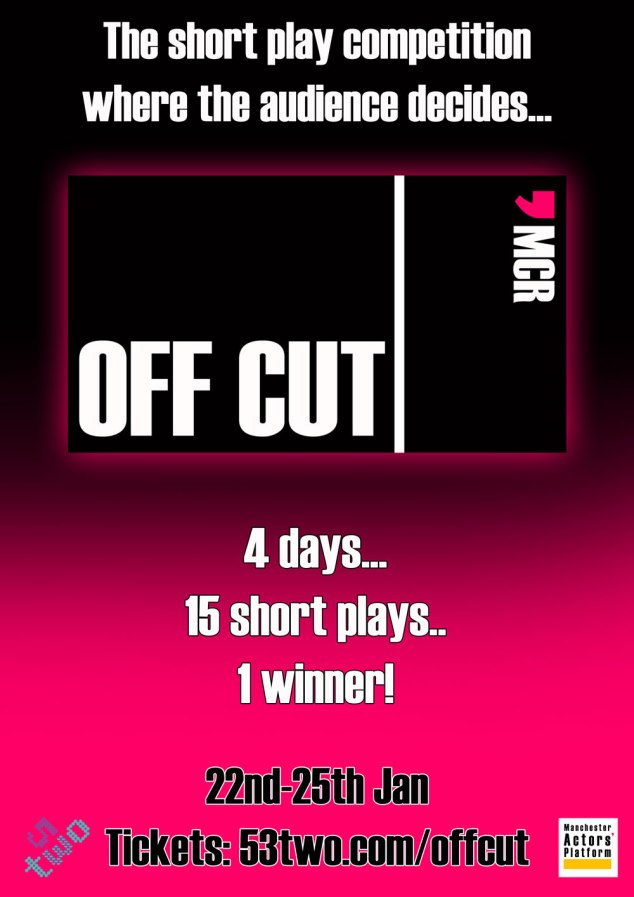
Off Cut Festival | Manchester

off-cut-poster


If you want to see the finest in new short plays where you as an audience member can influence which winners will be offered the opportunity to develop their piece into a fully-staged production with Manchester Actors’ Platform then get yourself down to 53two this week.

For five years, the Off Cut Festival has been one of the UK’s most successful platforms for undiscovered writing, acting and directing talent, the festival now has a new northern home and takes place between 22nd and 25th January.

Over the past few weeks, 15 brand new short plays from writers around the country have been rehearsed and reworked by Manchester’s finest up-and-coming directors and actors, ready to be performed to audiences over three nights. They will be shown over three nights with five plays performed each night, the audience will be asked to vote for their favourite plays each night. The top two from each group will then go through to be performed again on the last day of the festival, Saturday 25th January. The audience will then vote on the plays again alongside a panel of industry professionals who will also be selecting their favourites to decide the winner.

Producer Simon Naylor from Manchester Actors’ Platform and FOUNDation/53two said “OFFCUT fills a hole that has long been empty. It embraces all of the qualities we strive for in independent and fringe theatre and provides the perfect platform to showcase and launch careers alongside celebrating the brilliant spirit and bond that this city has.”

The performances have been broken down into the following groups

22nd Jan – 7:30pm

Home Fires Burning by Kevin Cuffe

Summerland by Brian Coyle

The Fish and the Sea by Jeff Nolan

Born on the Right Side by Maddie Wakeling

Grow by Gemma Langford


23rd Jan – 7:30pm

Home by Alexandra Keelan

Best Friends by Lewis Charlesworth

FOMO by Curtis Cole

Here We Are by Anne Price

There’s a Fly in My Room by Rachel McMurray


24th Jan – 7:30pm

Tortoise by Naomi Westerman

Tremble by Rob Johnston

To Sleep by Stephanie Lacey

Granola by Gemma Whiteley

Click by Chantelle Dusette


GRAND FINAL

25th Jan – 7:30pm

The six plays, chosen by the audience over the previous three nights, are performed again. From them, the winner of the Audience Award for Favourite Play will be developed and fully-staged at 53two.

Tickets are £8 per show

£24 for OFFCUT PASS to all 4 nights

Available here.

Unwaged tickets at £2 available every

Rebus: Long Shadows

Rebus_Cathy Tyson as Siobhan Clarke & Charles Lawson as Rebus_c Robert Day (2)

Opening Night verdict ⭐️⭐️⭐️⭐️

Reviewed by Matt Forrest

After appearing in 19 novels, numerous audio books, and a TV series, it seems long overdue for writer Ian Rankin’s most celebrated creation, Inspector Rebus to make it to the stage, and boy was it worth the wait.

Rankin and playwright Rona Munro have created a brand new case for the now retired Rebus (Charles Lawson). He spends his time trying to stay off the ‘fags and the booze’, but one drug he still cannot shake is that of good, old-fashioned policing. A chance encounter with Heather (Eleanor House), a young woman whose mother was murdered some 17 years ago brings up some ghosts of the past, forcing the ‘old gunslinger’ out of retirement and maybe a chance to exorcise some of his own personal demons as well.

Haunted by these past victims, this particular cold case takes Rebus back into Edinburgh’s criminal world, landing at the door of his old nemesis, crime kingpin ‘Big Ger’ Cafferty (John Stahl). In addition, Rebus must contend with Siobhan Clarke (Cathy Tyson), a friend and former colleague who wants to make sure a case from 25 years ago doesn’t come back to haunt them both.

Rebus_John Stahl as Cafferty_C Robert Day

Rebus: Long Shadows  is almost the perfect storm of a production, fast paced, slick, and razor-sharp script with some stinging, pitch black dialogue. Lawson is excellent as the no nonsense troubled former detective, who will do anything to get the right result, even if it means breaking the rules. Stahl is on superb form as Cafferty, full of charm and menace; he certainly makes for a worthy adversary. The interactions between the two are natural and fully demonstrate the respect and loathing they have for one another.

Cathy Tyson is equally as good, if somewhat underutilized as Siobhan Clarke: her character seems the weakest in the triangular relationship between Rebus, Clarke and Cafferty. The supporting cast are on fine form with Eleanor House and Dani Heron as the ghosts of Rebus’s past plaguing him at every turn: whilst Neil McKinven morphs into every other character, from Barman to criminal low life, he plays them all: enjoyable are the scenes between Mckinven and Lawson, where Rebus is shaking him down for information: authentic, believable and filled with humour.

Rebus_Cathy Tyson as Siobhan Clarke & Charles Lawson as Rebus_c Robert Day

Occasionally the story becomes a little contrived, but there are a few neat twists and turns: this isn’t a ‘whodunnit’ in the traditional sense, more a tale of redemption, morality, and growing old in an ever-changing world.

Ti Green’s multi-purpose stage design is outstanding: it changes effortlessly from luxury apartment, to dingy back street boozer. It does a fine job of evoking images of Edinburgh’s snickets and passageways: if anything, you want it to be more dank, mysterious and atmospheric.

This is a first-class production with actors at the top of the game: Rebus may be long in the tooth, but this production could certainly teach other murder/mysteries a thing or two.

Rebus: Long Shadow is at the Manchester Opera House till 3rd November 2018. Tickets are available here.

The Damned United

The-Damned-United_Red-Ladder_pressimage2-700x455

Opening Night verdict ⭐️⭐️⭐️⭐️

Reviewed by Matt Forrest

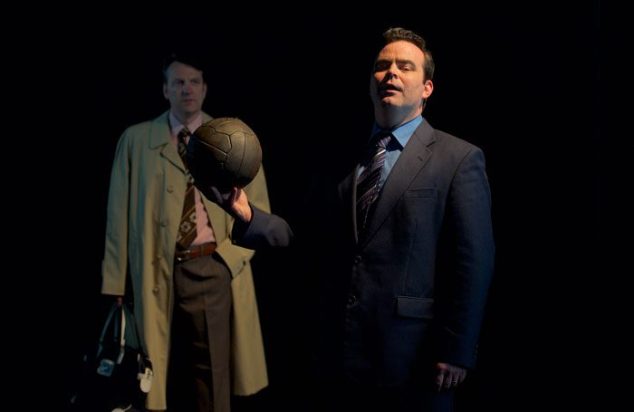
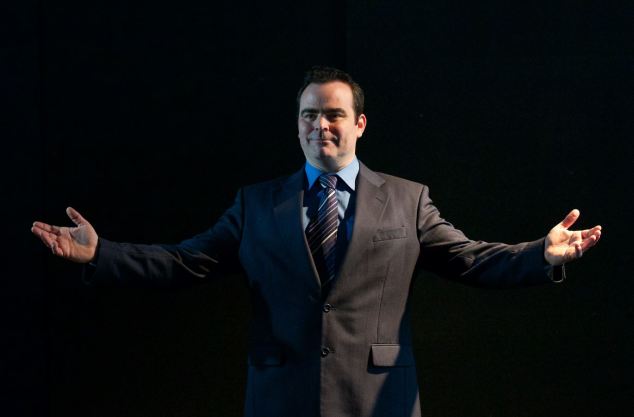
In 2006 The Damned United hit the bookshelves, blending fact and fiction it told the story of charismatic, controversial football manager, Brian Clough and his ill-fated tenure at Leeds United. Author David Peace described it as “An English Fairy Story”. In 2009 it was turned into a film starring Michael Sheen, and now somewhat inevitably it has been adapted for the stage by the Red Ladder Theatre Company.

Following the same narrative structure of the book, we start with the end of Clough’s playing career due to injury. The demons, the nagging self-doubt are there for all to see from the onset, as well as the brash arrogant showman the world of football came to love or loath depending on your point a view. The action zigzags between him taking the helm at Leeds in 1974 and his successful but turbulent run as Derby County manager from 1967 through to 1973.

This is a fast paced, journey into the tortured mind of one man battling many enemies – unhappy players, interfering chairman, the bottle and rival manager Dom Revie. However, it’s Clough’s own insecurities and his relationship with his assistant manager and best friend Peter Taylor that is the heartbeat of the production.

Damned-Utd-1

The time-hopping narrative structure can be a little confusing at times, but the production is anchored by two outstanding central performances: Luke Dickson puts in a nuanced, layered shift as Clough, filled with subtly traits and mannerisms: it would be easy to play this as a caricature but Dickson avoids this. David Chafer is also on fine form as Taylor, a man loyal and true to his friend but growing disillusioned by his treatment. Their relationship is what holds the production together. They are supported by James Smelt who morphs into all the other parts in the play.

The action is played against a corrugated fence backdrop: adding to the tension and authenticity of the surroundings, you can almost feel the deep-heat in the air. The fence doubles as a screen with various images projected on it throughout, pushing the drama along.

This is a fascinating look at obsession, addiction and self-loathing that is well worth a watch.

The Damned United is at the Lowry until the 27th October tickets can be found here.

The Pride

Opening Night verdict ⭐️⭐️⭐️⭐️

Reviewed by Nikki Cotter

Using Alexi Kaye Campbell’s debut play to mark their own debut production, new theatre company Green Carnation present The Pride, an affecting, powerful and poignant piece of theatre.

Focusing on two separate Britain’s, that of the repressive 1950’s and the supposedly liberal 2008. Three central actors, (Gareth George, Simon Hallman and Joanna Leese) play the identically named but hugely different characters of each era with a forth actor (Alex Thompson) playing a trio of strong supporting roles.

Designer Frankie Gerrard centres the action during both eras within a sitting room setting, a slight shift of furniture and a roll of the clouds via simple hanging drapes indicating the changing days.

We firstly meet 1950’s Phillip (Gareth George) an unfulfilled, middle-class, married estate agent who gets introduced by wife Sylvia (Joanna Leese) to well-travelled, articulate yet lonely Oliver (Simon Hallman) for whom she is illustrating his most recent children’s novel. An immediate attraction is felt between the two men as secrets are kept and truths lie unspoken, Phillip’s true self being denied and suppressed with devastating consequences.

In 2008 Oliver is so free sexually it is damaging the one person he truly loves resulting in him losing partner Phillip due to his need for risqué sex with strangers and posing the question is 2008 Oliver just as detached from his true-self as 1950’s Phillip?

Sylvia shifts from 1950’s actress turned illustrator whose mental health problems are hinted at to forthright friend whom both Oliver and Phillip both turn to, an ally and advocate in both era’s.

Simon Hallman excels as Oliver, while rigid and desperately lonely in the 1950’s he transforms into a sexually liberated yet painfully shambolic character come 2008. Hallman adds emotional depth to the outrageously promiscuous Oliver and a heart-felt desperation to 1950’s Oliver who yearns to feel love.

Gareth George’s 1950’s Phillip convincingly bubbles with violent frustration while his 2008 self is calm and composed, at complete contrast to hedonistic partner Oliver.

Joanna Leese impresses as Sylvia giving an emotional and committed performance, the scene where she gently confronts her husbands lover heartbreaking in its honesty. Elsewhere Alex Thompson injects some great comic relief in his three varying roles of rent boy, wide-boy magazine editor and 1950’s aversion therapist, his superb comedic acting changing the tone of an early scene entirely.

Director Dan Jarvis along with co-director Dan Ellis have succeeded in bringing this thought-provoking revival bang up to date. As Campbell’s script cleverly weaves history together the characters although hugely different feel on many levels connected as the heartbreaking fears of loneliness resonate in both era’s. There are moments when the pacing could improve slightly with Act I feeling much longer than Act II but this is a minor quibble.

Shifts in attitudes from the 1950’s to 2008 while abundantly clear cannot remove the fear of being unloved as this insightful drama explores not just what it is to truly be yourself but that cost at which for many this comes.

With beautifully poignant writing and impressive performances The Pride examines and explores without sugarcoating.

Important, rewarding and impressive theatre.

On at Hope Mill Theatre until Saturday 20th October more information can be found here.

Nothing but the Roof

NothingButTheRoof-HopeMill-2

Opening Night verdict ⭐️⭐️⭐️

Reviewer: Matt Forrest

Writer: Adam Colclough

Director: Adam Colclough

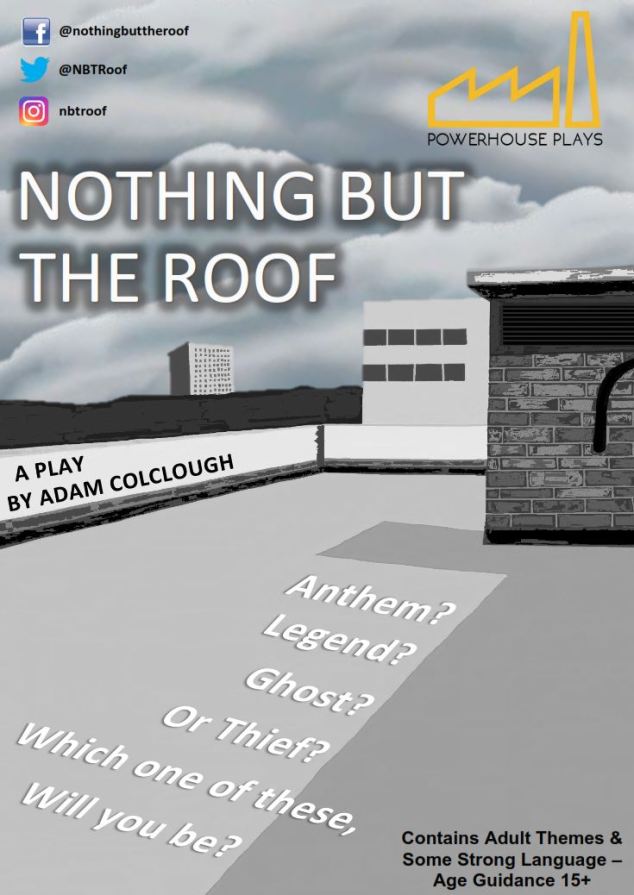
Back in 1962, the Drifters sang about heading to the roof to get away from the cares and troubles of the world: alas, the same cannot be said of three characters at the heart of Adam Colclough’s latest play Nothing but the Roof.

The action opens with Warren (JP Smith) clutching a letter standing near the edge of a rooftop on a rundown block of flats, he is coincidentally joined by childhood friends Step (David Hyde) and Millsy (Peter Thompson). The pair are dressed as Fred and Barney from The Flintstones: Step has roped Millsy into a father’s for justice protest; however, a mix up with the sign puts paid to that.

As the three friends get reacquainted with each other, they laugh, they fight, they reminisce as they discuss what hand life has dealt them: grief, unemployment, debt, and abuse are some of the hardships the three pals have faced, but can they come out of it the other side?

Despite the weighty subjects covered, the script is exceptionally funny indeed, with some stingy one-liners: it certainly has that lad’s night at the pub feel, as the friends point out each other’s faults, failings and generally just ‘rib’ each other to huge comic affect.

The production does however try to pack too much in with our three friends facing just about every disaster you could possibly think of; the play bounces from one tragedy to another, skimming the surface of these subjects rather than tackling them. Sometimes less is more and the play would certainly benefit from a trim, and as well as a few pauses here and there as the dialogue is delivered at such a breakneck speed that it could do with allowing the audience time to breathe.

The cast despite a few early missteps are on great form, you firmly believe friendship and the chemistry between all three is fantastic. The setting of the rooftop looks the part and allows the actors to fully express themselves.

This is an important play which raises some interesting points about modern Britain and one that should be seen by as many people as possible, it will certainly make you laugh and offer some food for thought, it just needs to iron out it’s kinks and it’ll be a great piece of work.

Tags: Nothing but the Roof, Hope Mill Theatre, Adam Colclough, JP Smith, David Hyde, Peter Thompson, Drama, Theatre

The Comedy About A Bank Robbery

Bank 1

Opening Night verdict ⭐️⭐️⭐️⭐️

Writer Matt Forrest

It would appear that anything Mischief Theatre touch turns to gold; maybe they should rename themselves the Midas Theatre instead. First, there was the enormously popular The Play That Goes Wrong, which is a huge West End and Broadway smash. This was followed up by Peter Pan Goes Wrong, which although did not perform quite as well still proved immensely popular. Now the company return to the Lowry with their third offering: The Comedy About A Bank Robbery

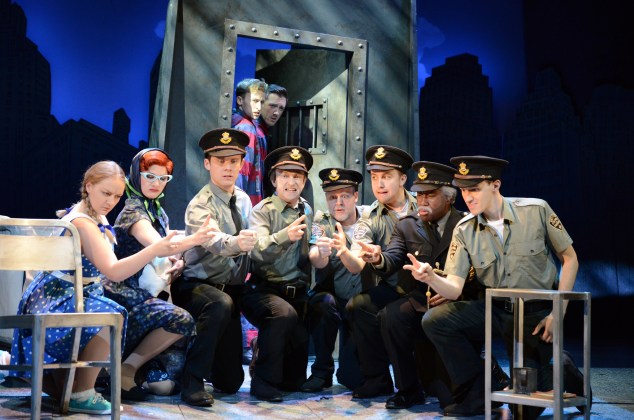
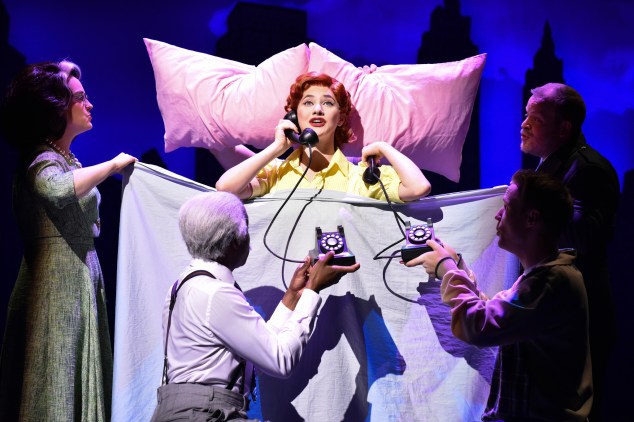
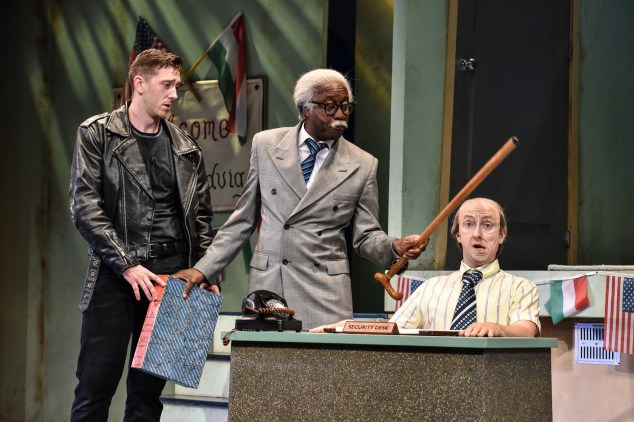
Set in 1958, we are transported too Minneapolis, a city ravaged by crime, where no one is to be trusted: in addition, the city is blighted by a seagull problem that seems to be getting out of hand. Despite Minneapolis becoming the crime capital of the USA, Prince Ludvig of Hungary is bringing the Hungarian royal family’s crown jewels over to Minneapolis for a state visit, and everyone wants a piece of them!

Bank 3

The list of suspects include: shady bank manager Robin Freeboys (Damian Lynch), his manipulative daughter, (Julia Frith), local street hustler Sam, (Sean Carey), escaped convict Mitch Ruscitti (Liam Jeavons), and his hapless sidekick, Cooper, (David Coomber). As plans are forged and alliances formed just who will walk away with the centrepiece of the crown jewels, the Maguvin Diamond: a 300-carat stone with a huge value.

I am not ashamed to say I loved The Play That Goes Wrong and was looking forward to this show immensely: I’m glad to say it did not disappoint. Heavily influenced by the films of Jim Abrahams, David Zucker, and Jerry Zucker, who brought us the Naked Gun and Airplane series, this smart, innovative and ridiculous comedy will have you grinning like a Cheshire cat. The Comedy About A Bank Robbery draws heavily from the ‘Teen Exploitation’ films of the 1950’s and is more a love letter to them than it is to the heist/bank robbery genre, which is a welcome surprise.

Bank

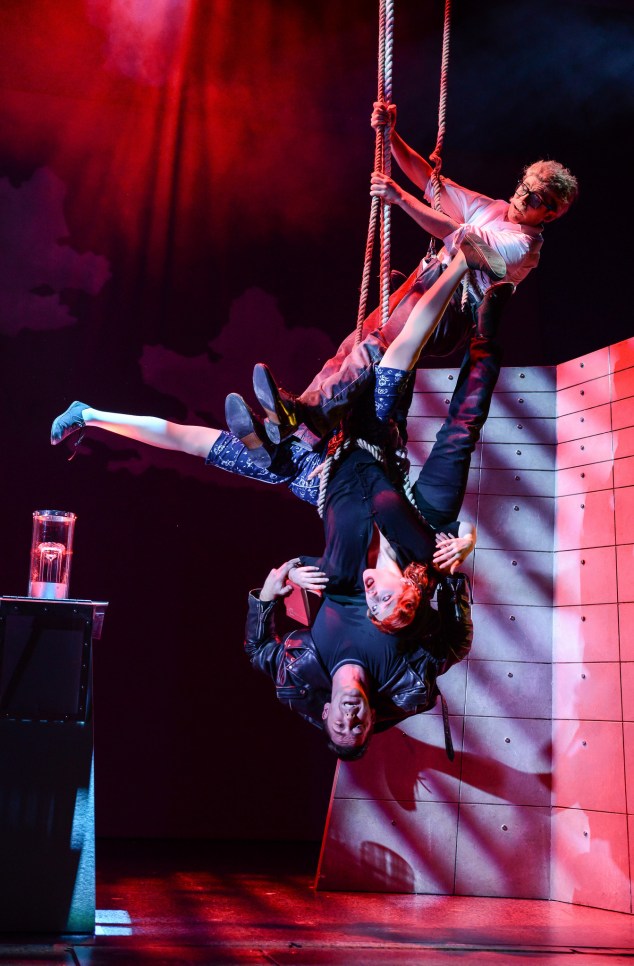
Getting off to a slow start by Mischief’s standards, the first act is packed full gags around word play, who knew the name Robin Freeboys could be such resource for material? However, following the interval, the production leaps from one set piece to another showcasing the physical comedy the company have become famed for; highlights include a three-man fight performed by one man (the super talented George Hannigan playing as credited Everyone Else) and the trademark ‘dangle from a rope sequence’ with a twist. The undoubted highlight is the jaw dropping and innovative sequence as the would-be bank robbers view the bank from inside the ventilation ducts plotting their approach: spectacular and visually brilliant this scene alone is worth the price of admission.

Bank 2

With this production we are treated to something a little different with a few songs and dance routines which showcase the fantastic voice of Ashley Tucker, these again are firmly in keeping with the absurd nature of the show.

There are a few minor issues: some of the scene changes could be a bit slicker, and there is a slight pacing issue, however these are minor quibbles. This is a show so packed full of visual and verbal gags that there is something for everyone. Unlike most major banks following the crash of 2008 I cannot see the stock on this production diminishing anytime soon!

The Comedy About a Bank Robbery is at the Lowry until 15th September tickets available here.