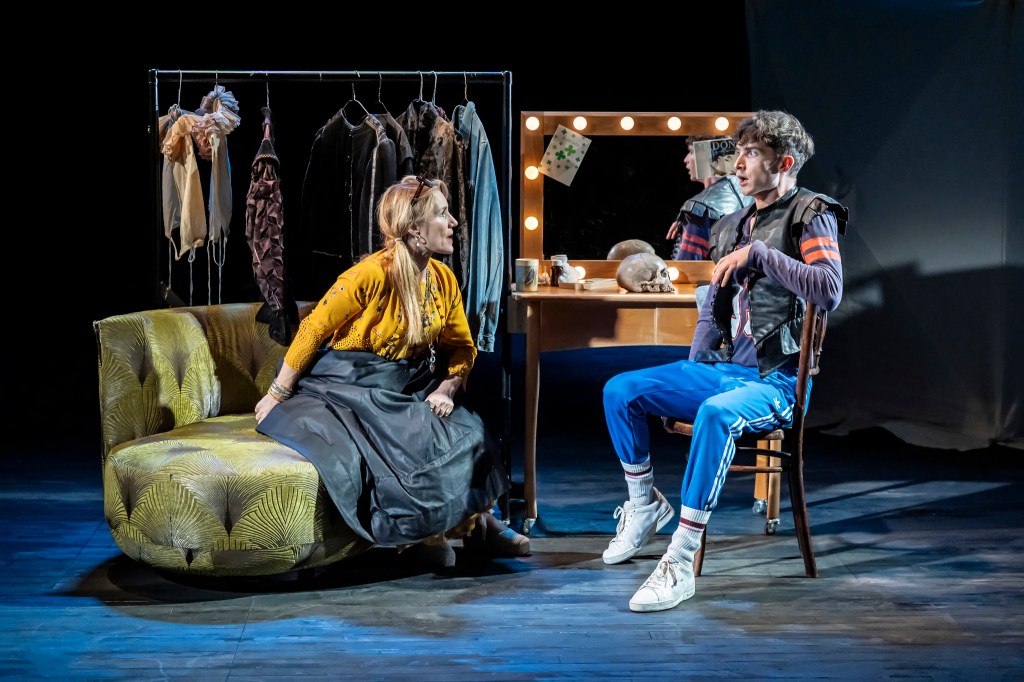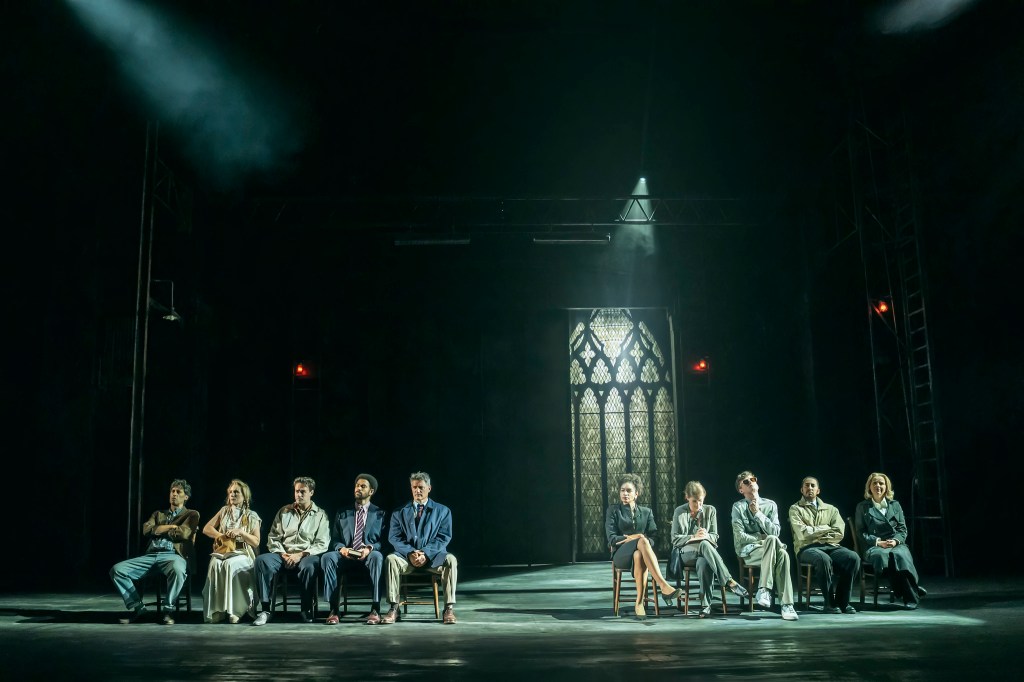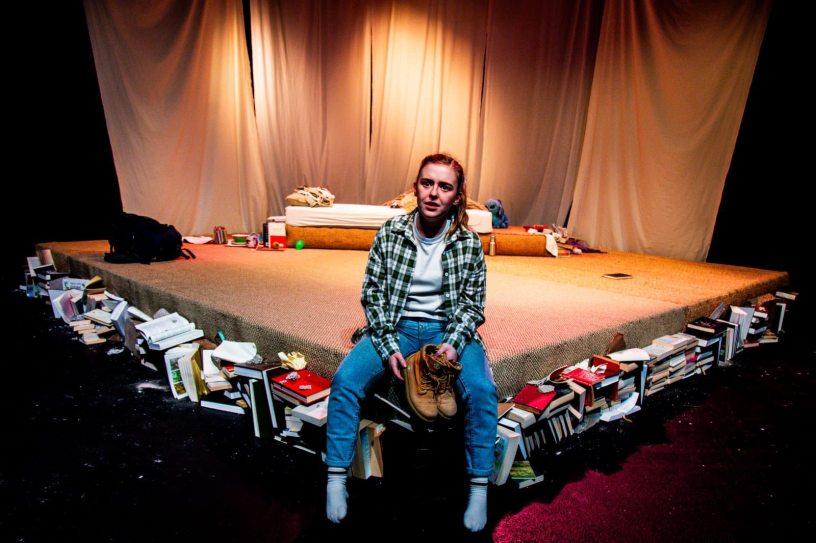
The Assassination of Margaret Thatcher

Reviewed by Matt Forrest

Opening Night verdict ⭐️⭐️⭐️⭐️
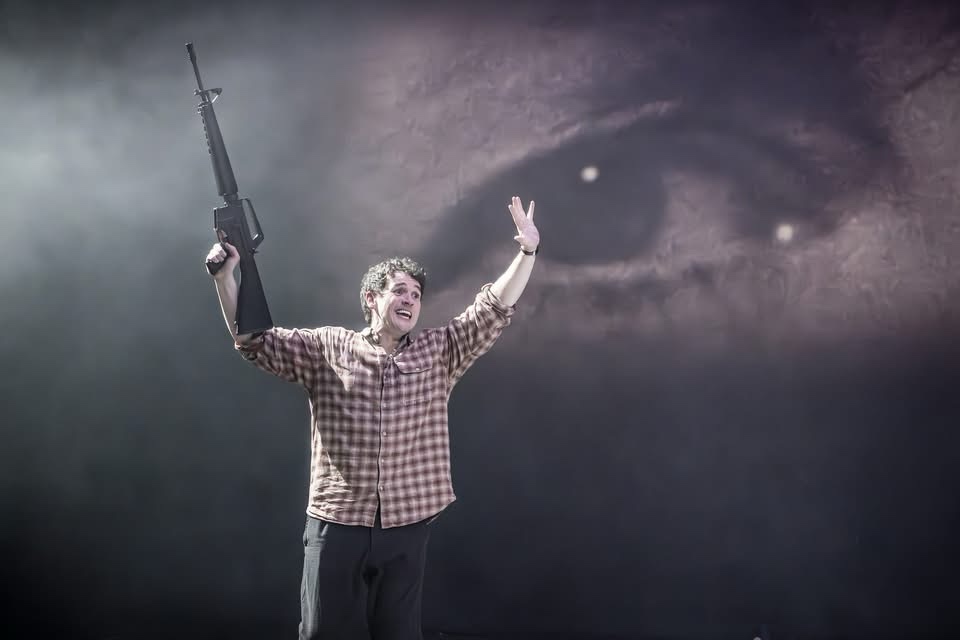
In 2014 a short story anthology by author Dame Hilary Mantel was published. The title alone grabbed a great deal of headlines and caused quite the stir as it came just a year after Thatcher’s death. Now, the collection’s title story has been adapted for the stage by Alexandra Wood, and there may be no more fitting place for it to be performed than Liverpool, where Thatcher’s name still provokes strong emotions to this day.

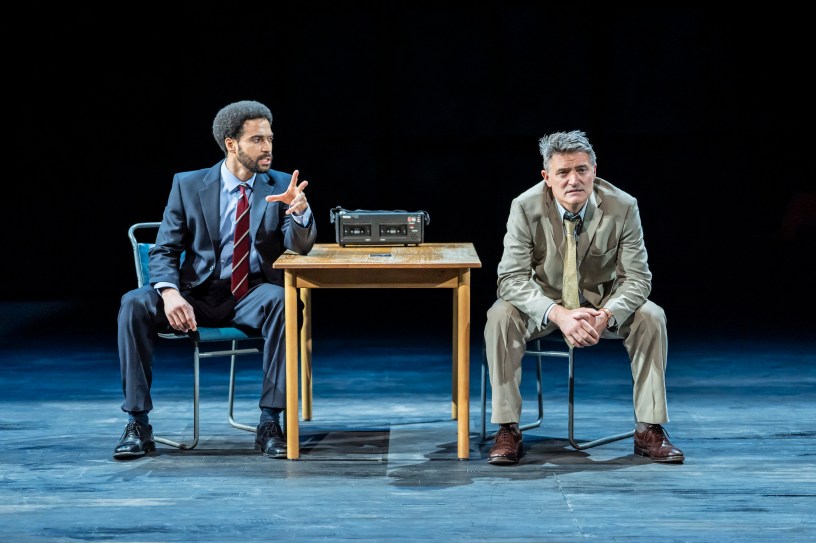
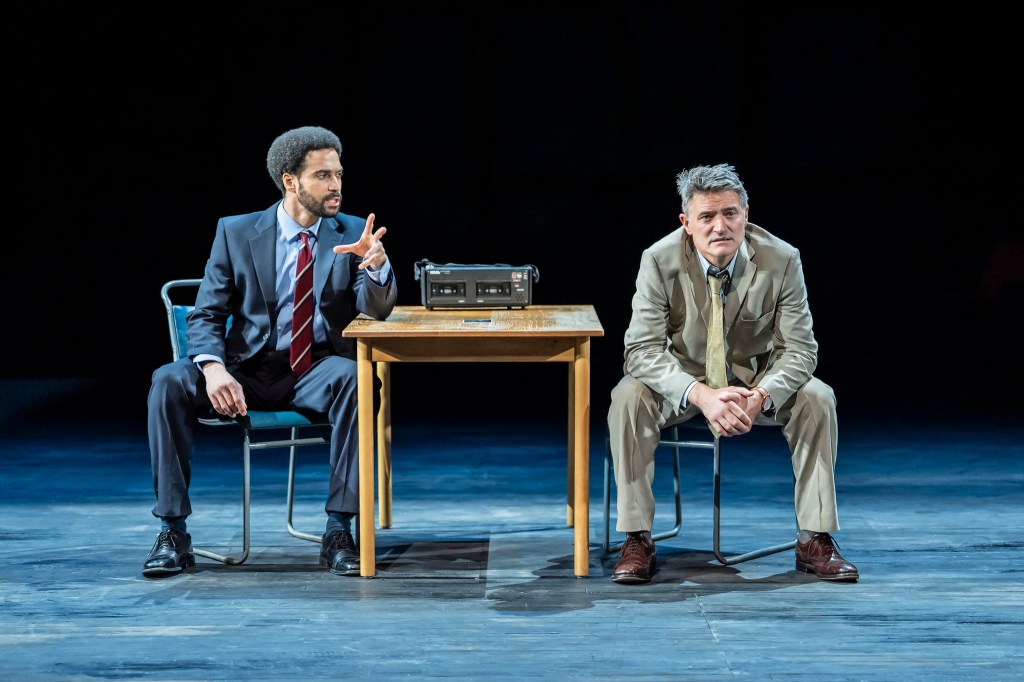
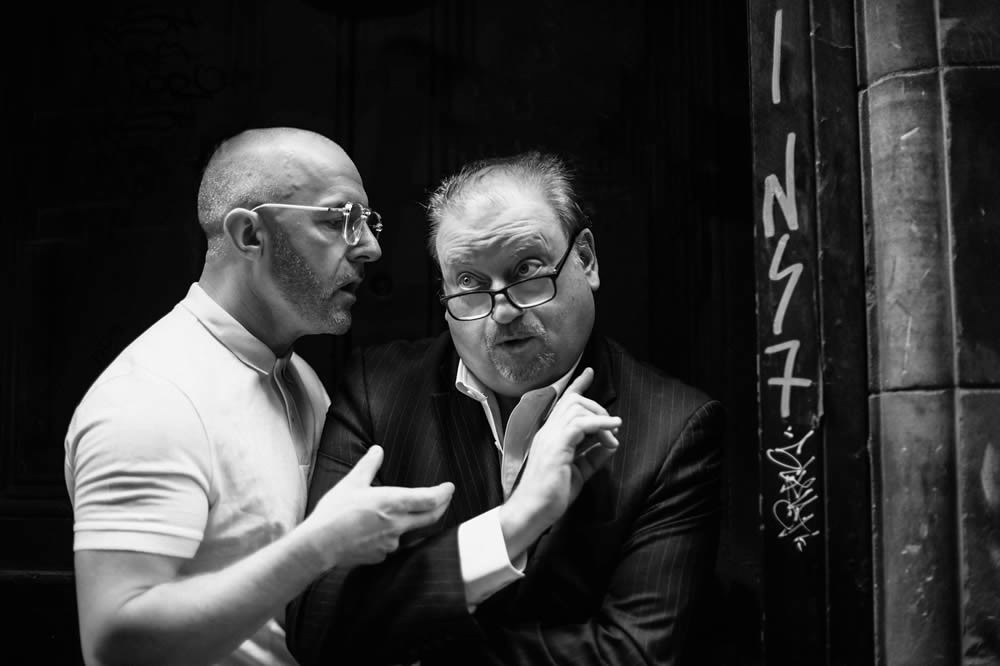
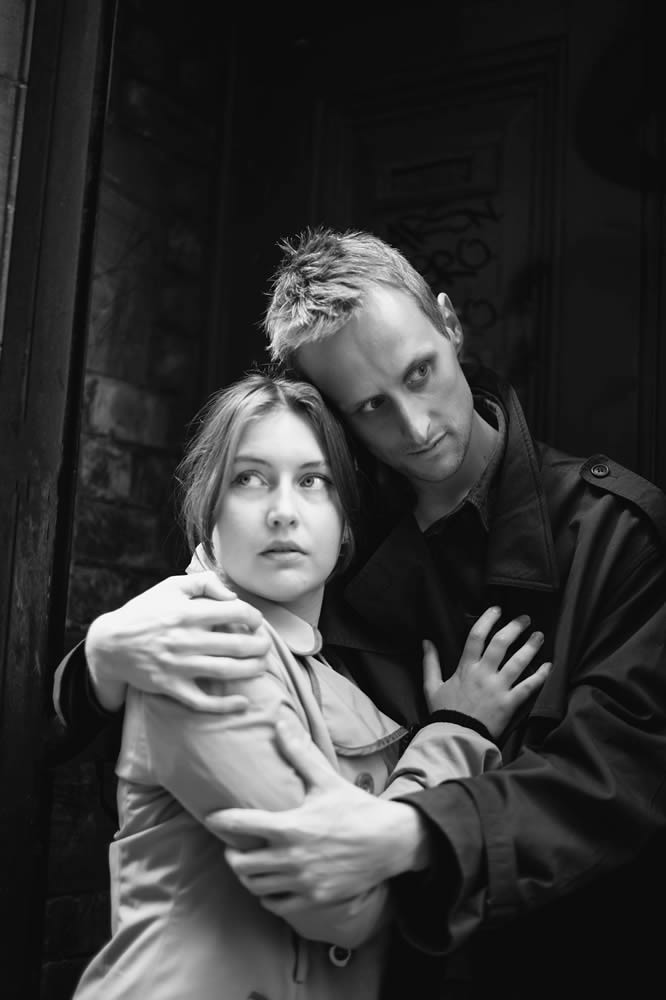
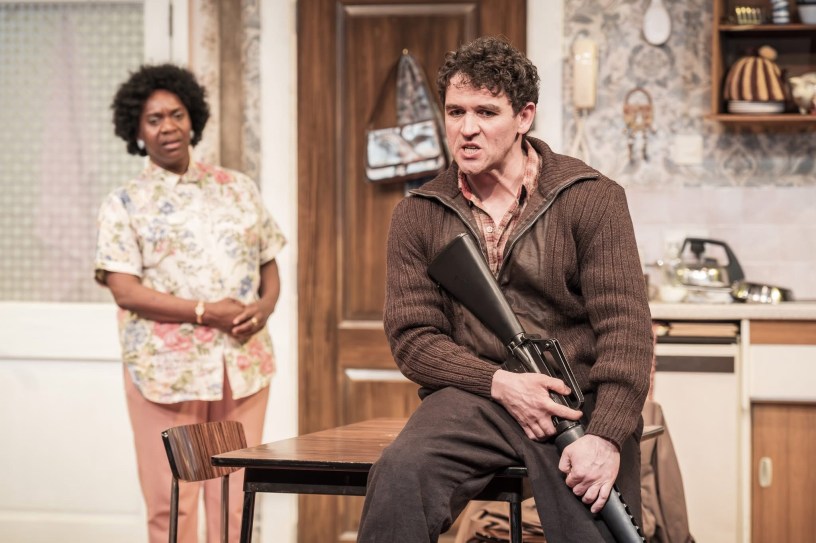
Set in Windsor shortly after the Falklands War, the play introduces us to divorcee Caroline (Anita Reynolds), who is preparing a hot pot while patiently waiting for the repairman to arrive. When the buzzer finally sounds, she is greeted by Brendan (Robbie O’Neill), a surly-looking Scouser complete with a tool bag and, in Caroline’s view, an unacceptably scruffy coat. It quickly becomes apparent, however, that Brendan is not there to fix the radiators, and that the tools in his bag are intended to solve a very different kind of problem.
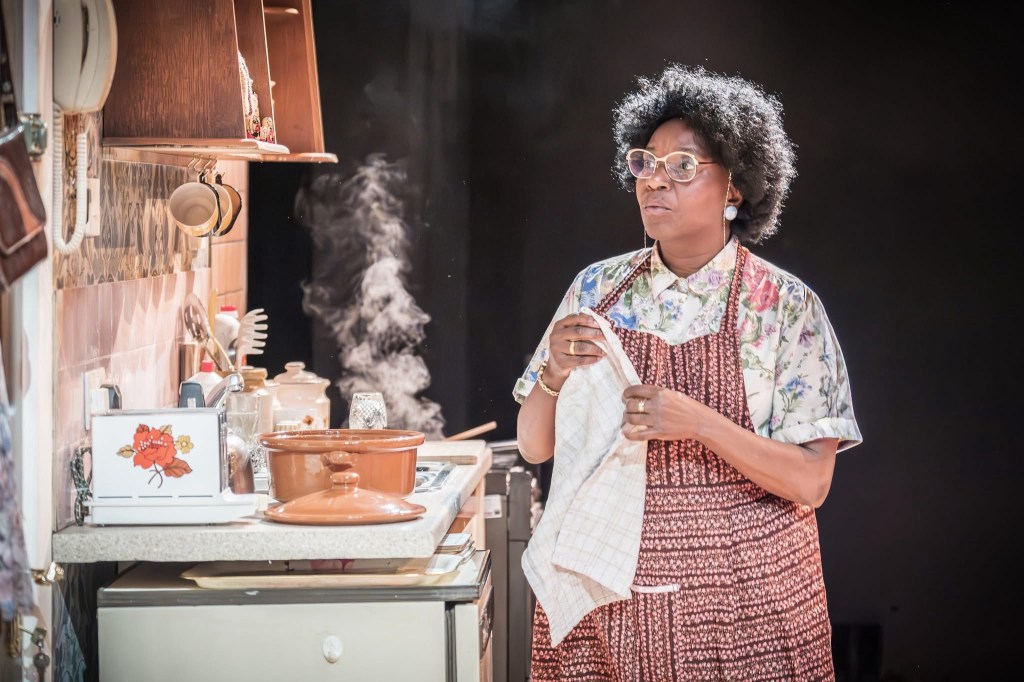
Caroline’s flat provides Brendan with the perfect vantage point overlooking the hospital where Prime Minister Margaret Thatcher is undergoing a medical procedure. As the would-be assassin waits for the signal to take his shot, the pair find themselves with time to spare, and begin to talk. Over the course of the afternoon, Caroline and Brendan gradually discover that they may have far more in common with one another than either initially imagined. Caroline hopes she can show Brendan a alternative path and maybe save one, possibly two lives this day or is the killer-in-waiting not for turning?

There is so much to admire and enjoy in Alexandra Wood’s adaptation. The script is laced with pitch-black humour from the moment Brendan sets foot in the flat; at times unsettling, yet packed with genuinely funny one-liners that heighten the tension. Alongside the humour, the play explores wider themes of isolation and shines a spotlight on a climate of political anger and social division that was just as prevalent in the 1980s as it is now.
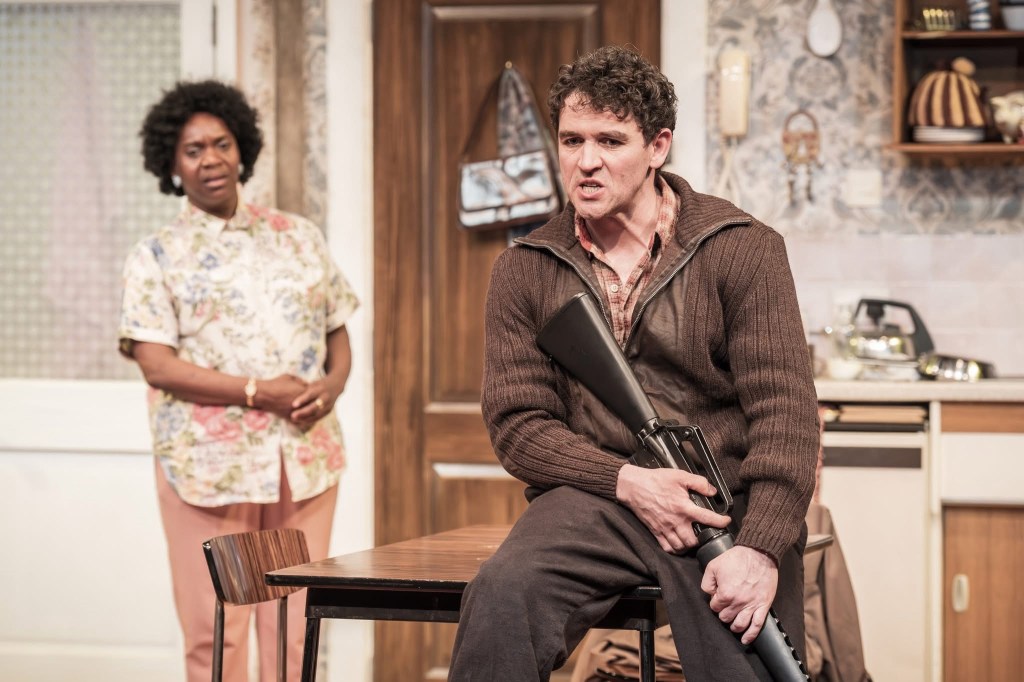
Under the direction of John Young, the production benefits from two exceptional performances. Robbie O’Neill delivers a desperate yet restrained turn, filled with quiet menace and a wonderfully dry sense of humour, while Anita Reynolds provides the perfect counterbalance with a warm, compassionate, and deeply reasoned performance. Together, the pair complement each other superbly, creating a dynamic that feels both tense and surprisingly caring

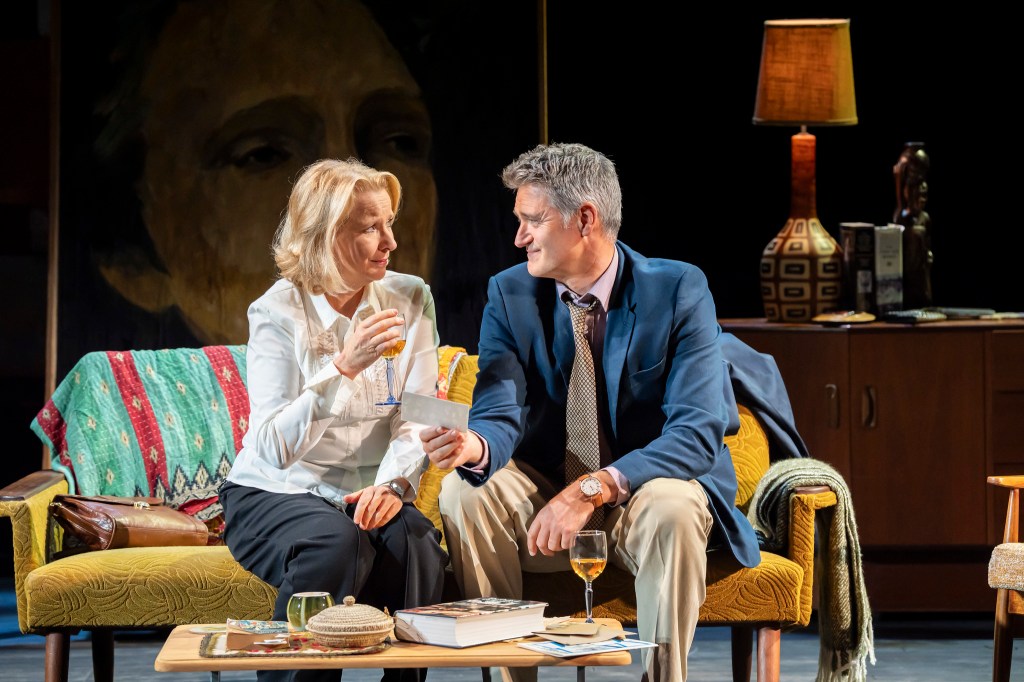
They are further supported by Ceci Calf’s fabulous set design. Caroline’s flat is steeped in 1980s charm and nostalgia; modest and unflashy, yet clearly viewed with envy by Brendan. There is also an unmistakable sitcom quality to the setting, evoking the domestic comedies that were such a staple of British television in the decade. At the same time, the cramped interior creates an underlying sense of entrapment and claustrophobia.
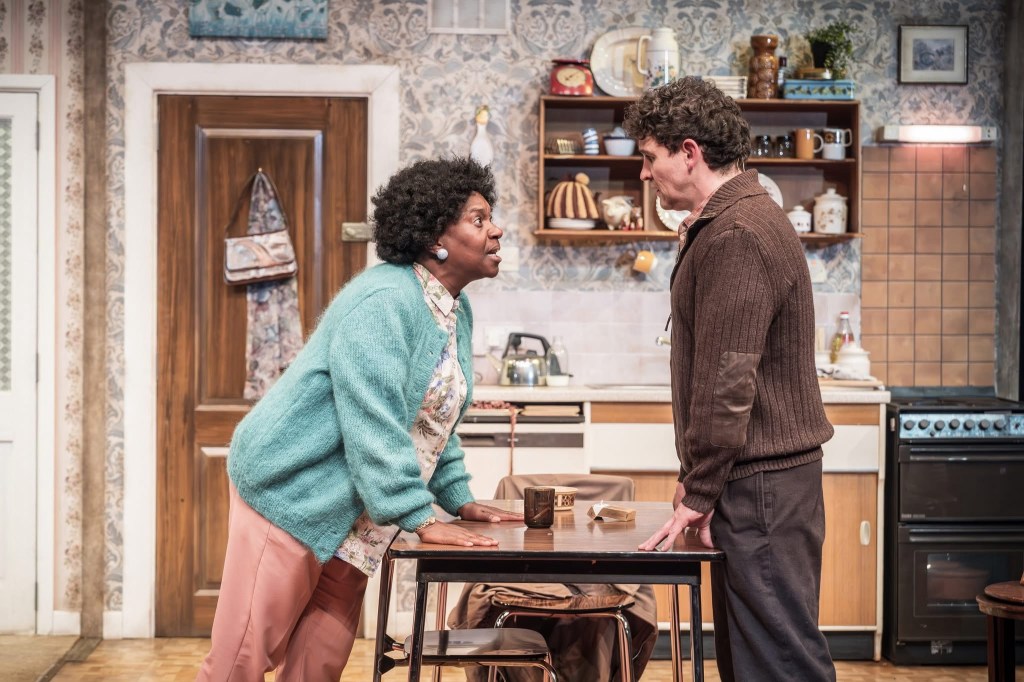
This is a thought-provoking, layered, and at times shocking piece of theatre, shot through with a wonderfully droll sense of humour and anchored by superb performances. It is a production that will spark debate, challenge perceptions, and, rather sadly, remind audiences that the more things change, the more they stay the same.

The Assassination of Margaret Thatcher is on at Liverpool’s Everyman until Saturday 23rd May tickets are available here.
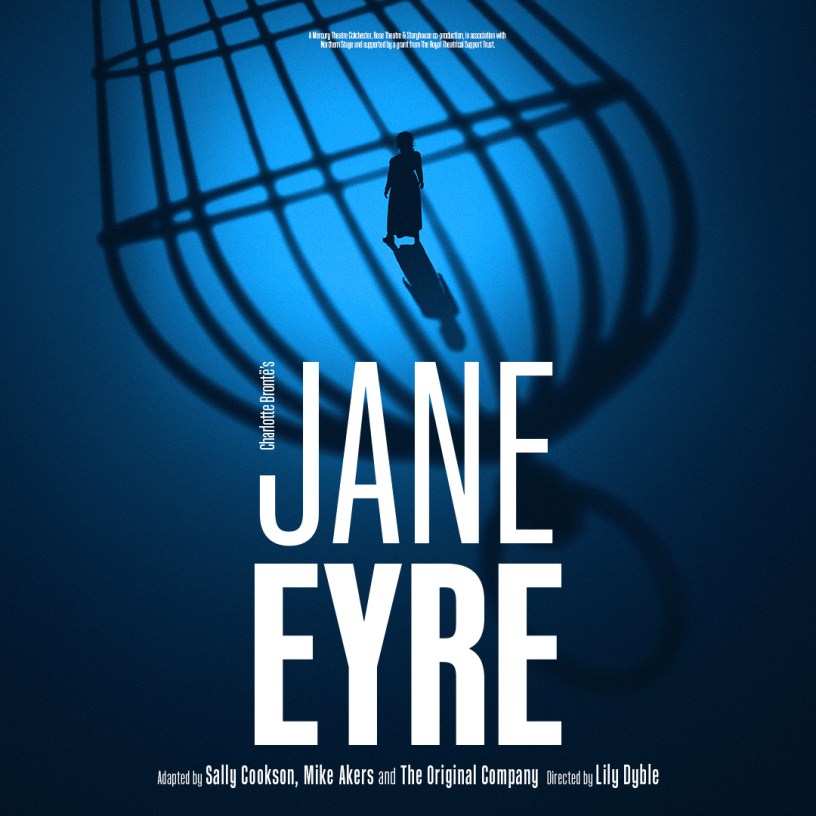
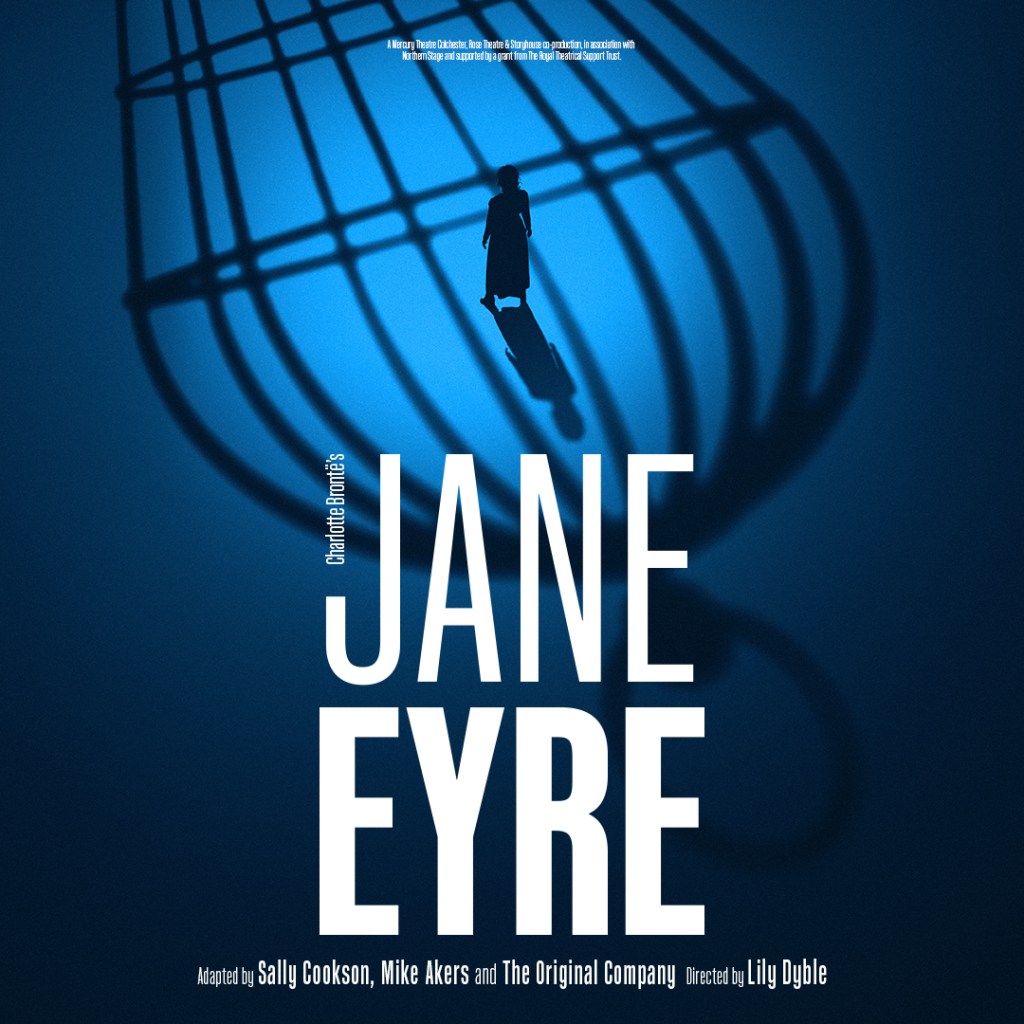
Jane Eyre to be staged at Storyhouse

A powerful trailblazing adaptation of Charlotte Brontë’s much-loved classic Jane Eyre is set to be staged at Storyhouse this autumn.

The imaginative and inspiring new production will be presented at the Chester cultural venue from Tuesday, 10 November to Saturday, 21 November 2026.

Tickets go on sale to Storyhouse Members today Thursday 30 April, and on general sale from tomorrow, Friday 1 May.

“I am no bird; and no net ensnares me.”

Orphaned as a young girl, the passionate and sensitive Jane Eyre longs to escape the clutches of her cruel aunt. Freedom beckons when she is offered the job of governess in the house of the brooding and secretive Mr Rochester.

As intrigue turns to attraction, Jane finds herself drawn in by Rochester’s mercurial charm. But when the truth finally comes out, she will be forced to choose between the man she wants – and the woman she wants to be.

Jane Eyre is a co-production between Storyhouse, the Mercury Theatre, Colchester, and Rose Theatre Kingston and is presented in association with Northern Stage and supported by agrant from the Royal Theatrical Support Trust (RTST).

It is based on Sally Cookson, Mike Akers and the original company’s acclaimed adaptation of Charlotte Brontë’s groundbreaking novel and will be directed by 2025 RTST Sir Peter Hall Director Award winner Lily Dyble.

The annual RTST Sir Peter Hall Director Award is designed to provide an up-and-coming director with a first-time, career-breakthrough opportunity to originate and direct, as sole or lead director, a fully funded production as part of a main stage season of plays at a leading regional UK theatre and to tour to other similar venues. Storyhouse was on the panel of the 2025 awards.

Director Lily Dyble says: “What I see at the heart of this story is courage in the face of the unknown. Jane Eyre reminds us of the risk and enormity of love, but also how uncertainty can breed hope as well as fear; that we can choose to fiercely love each other and ourselves, even within chaos, and even when our old lives have been lost to the fire.

“I’m thrilled to be bringing Jane’s story to audiences across England this autumn, with the support of four wonderful venues and the RTST.”

Meanwhile Jane Eyre is one of several adaptations of classics announced under the Storyhouse Originals banner for 2026. It follows a critically acclaimed new staging of Macbeth last month.

Storyhouse Originals is the Chester venue’s strand of vibrant and imaginative homegrown productions. Previous shows include Miss Julie, Bluestockings, Sophocles’ Antigone, Faustus: That Damned Woman, The Parent Agency and Kinky Boots, as well as Storyhouse’s popular annual Christmas productions and shows at Grosvenor Park Open Air Theatre.

Helen Redcliffe, Head of Producing at Storyhouse said today: “One of the key themes of Jane Eyre is personal discovery and development, which feels especially fitting as we celebrate the RTST Sir Peter Hall Director Award and its commitment to championing the next generation of theatre-makers. At Storyhouse, we are thrilled to be part of this partnership and to support Lily as she takes this exciting step in her career. From the moment we encountered her work, we were struck by her bold, imaginative style and her instinctive understanding of our venues and audiences. Her Jane Eyre promises to be a heightened, deeply theatrical experience, using the very best of storytelling to bring this beloved classic to life — and we are proud to play a part in what we’re certain will be an extraordinary journey for her and a memorable production for our community.” 

For more details on Jane Eyre visit www.storyhouse.com

Double Indemnity

Reviewed by Sophie Rowley

Opening Night verdict ⭐⭐⭐

Credited as “one of the great crime novels of the 20th century” the 2026 stage adaption of Double Indemnity is now showing at Manchester’s Opera House. Originally a novella by James M Cain in 1943, then in 1944 a classic film noir film by Billy Wilder, and now Tom Holloway, Oscar Toeman and their creative team present a reimagining of Cain’s story which promises to thrill and delight audiences with a stylised immersive production of this film noir classic.

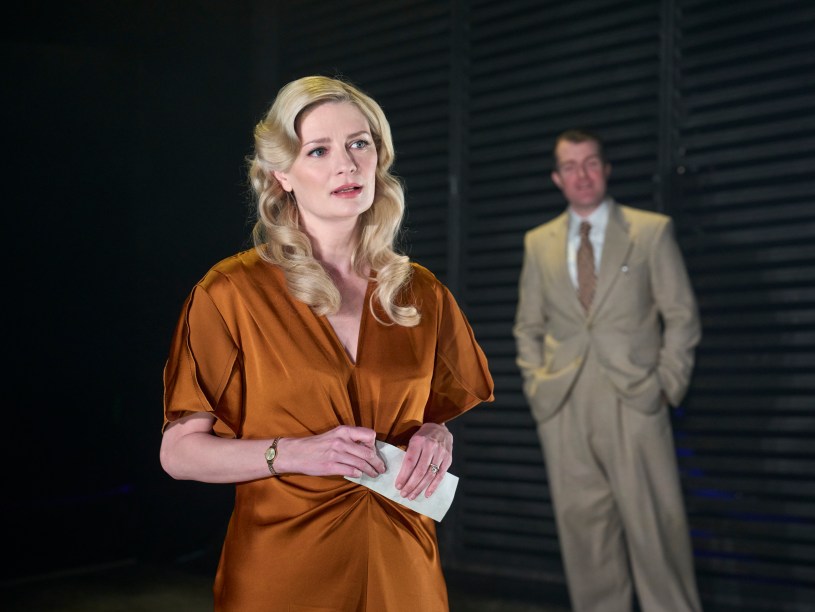
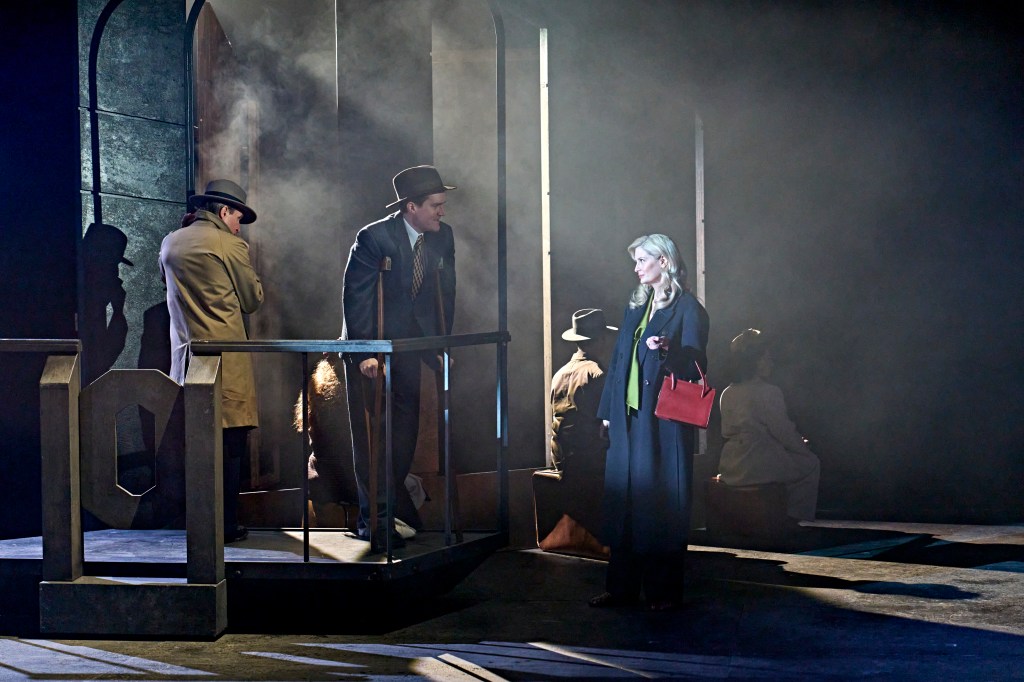
The 1930’s aesthetic is told through a stylised theatrical lens, Holloway and the team lean on every Noir nuance of shadow lighting and sharp design, smoke effect and dialogue to depict a period which is renowned for decay and depression, greed and corruption. When Phyllis Nirdlinger (Mischa Barton) walks into Walter Huff’s (Ciaran Owens) life with an interesting proposal, his life is never the same. Suddenly Walter is pulled into a tense world of manipulation and betrayal which leaves Walter questioning everything he knows, he truly is under the spell of Phyllis, the original Femme Fatale.

As an insurance salesman, Walter Huff needs to have a keen eye for detail, and prides himself on being able to spot a scam. Then Phyllis Nirdlinger enters his life wanting to discuss her husband’s life insurance policy – now everyone knows this conversation can never go well. Walter is now sucked into Phyllis’s web – embroiled in a world of lies, seduction and betrayal. Ciaran Owens commands the stage from the second he enters; he exudes confidence and charm throughout. I am a fan of a fourth wall break and Holloway’s use of this technique works well. It is this breaking of the fourth wall that allows the audience to see the break in Walter’s character and Owens portrays this extremely well.

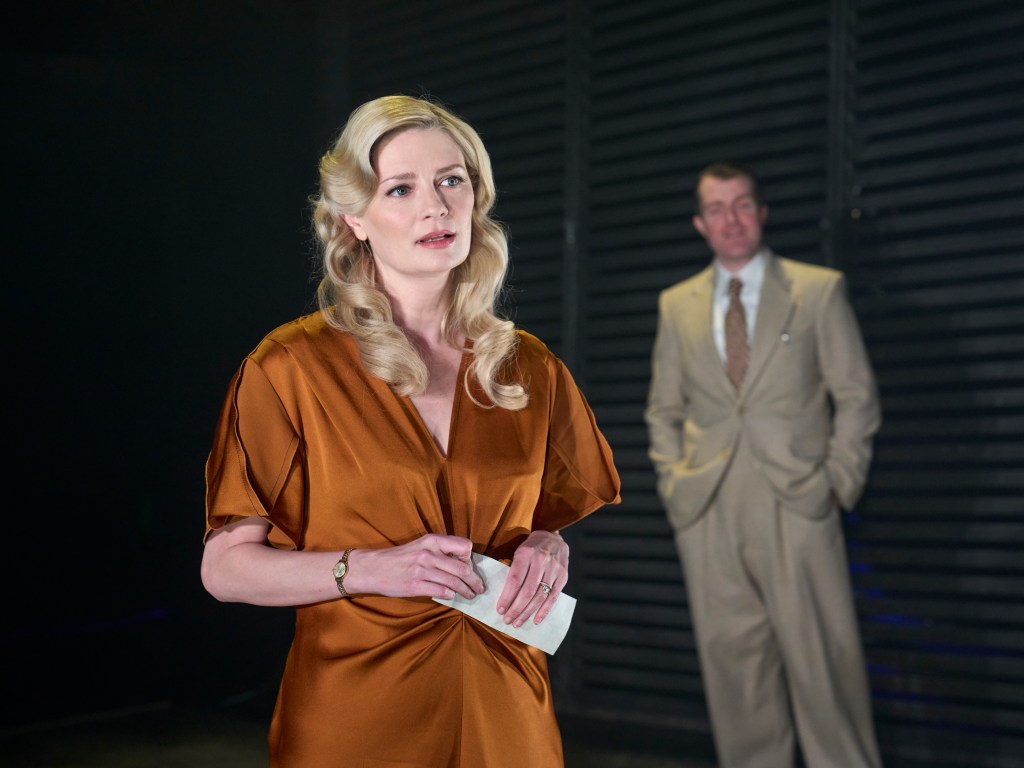
Making her UK debut Mischa Barton is headlined as the femme fatale Phyllis Nirdlinger, she bravely takes on the role of a villain and plays heavily on the film noir stereotype. Barton attempts to build tension throughout, her body language is dramatic, she stares longingly into the audience slowing her speech so every word is heard. Dressed in a burnt orange dress, adding a splash of colour but fully embracing the film noir aesthetics in her mannerisms. Barton’s and Owens’ work well together but I did want them to have a little more chemistry, however as a duo they successfully build the tension in the first act. Despite Barton being the headliner, the star role has to go to Martin Marquez. Marquez pairs well with Owens as his boss Keys, where in a story centred on murder, these two present a vulnerable element which is wonderfully endearing. As always there are a number of multiple role parts which demonstrate the talent of an ensemble, Oliver Ryan, Joseph Langdon, Gillian Saker and Sophia Roberts all deliver each of their role with ease and an abundance of presence. Each character adds an extra element to the play which all allow the plot to flow in the classic film noir style.

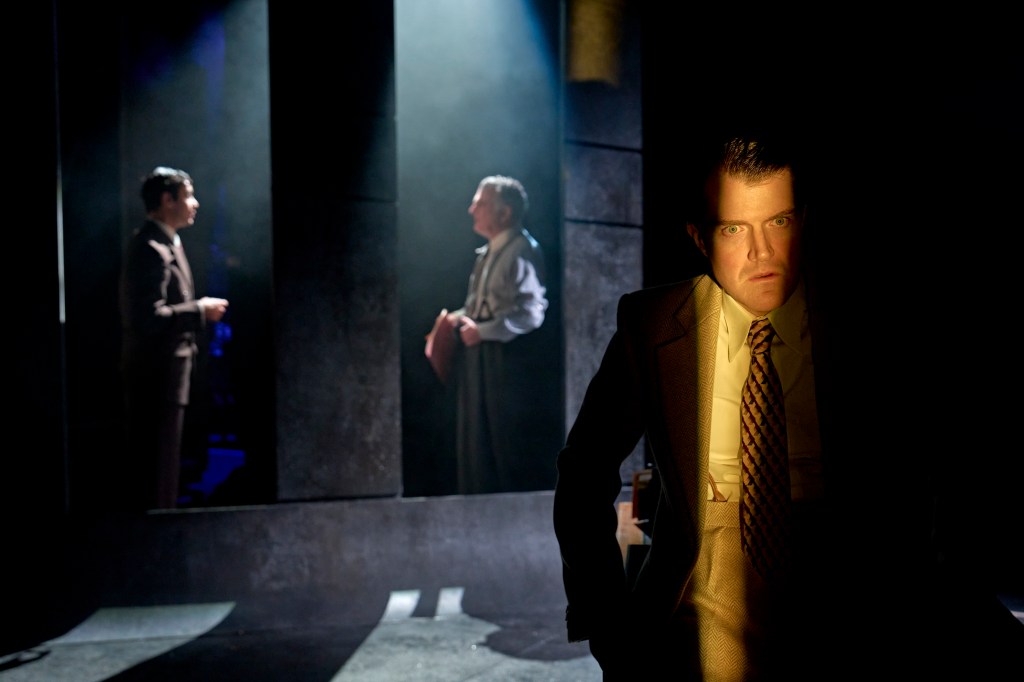
Ti Green’s set captures the nuances of Film noir, the backdrop of a reverse Hollywood sign acts as a constant reminder that they are more on the depressive side of the 1930 rather than the American Dream optimism. In addition, the bare construction of the sets provide the perfect antithesis to Hollywood’s stereotypical glamour. Greens set is utilised well, for a static set the multiple uses Green incorporates is quite impressive. Joshua Gadsby’s lighting and Dan Balfour sound design, pairs well with Greens set and this trio’s attempt to create the film noir spectacle is commendable. The constant use of the smoke effect, was a little overdone and at times it did appear a bit heavy on the stage when the characters were not moving. Green’s choice of costumes cleverly evoke the 1930’s style, providing each character with a sleek and classic silhouette which fills the production with a glamorous feel. Phyllis’ costumes are elegant and stylish and despite not obvious in colours, the polished outlines add to her seductive temptress character. Owens’ suits are symbolic of 1930 style, creating a more formal business-like aesthetic to Walter’s wardrobe. Green’s interesting use of tailoring and intentional character driven styles reinforces the noir aesthetic.

Presenting film noir on stage is a difficult task but Holloway’s production is well executed. Aesthetically the creative team adaptation of Cains tale does work well, where possible every nuance of Film Noir has been captured. The polished and elegant costumes contrast with the industrial/ construction style set resulting in them being symbols of the moral decay of the characters.  The forefront of this story is murder and is obviously a prominent theme of the play, however through Owens and Barton’s characterisation this play becomes more than this. Holloway contrasts comedy and tenderness with murder and seduction and in doing so begs the audience to question their moral compass. Made even more emphatic by having Owens continually break the fourth wall, Holloway literally involves the audience in the characters thoughts and feelings which gives this play a human quality that in my opinion makes it an interesting watch.

Double Indemnity is on at Manchester’s Opera House until Saturday 2nd May tickets are available here.
The Boy at the Back of the Class

Reviewed by Gill and Stan Selkirk

Opening Night verdict ⭐️⭐️⭐️⭐️⭐️

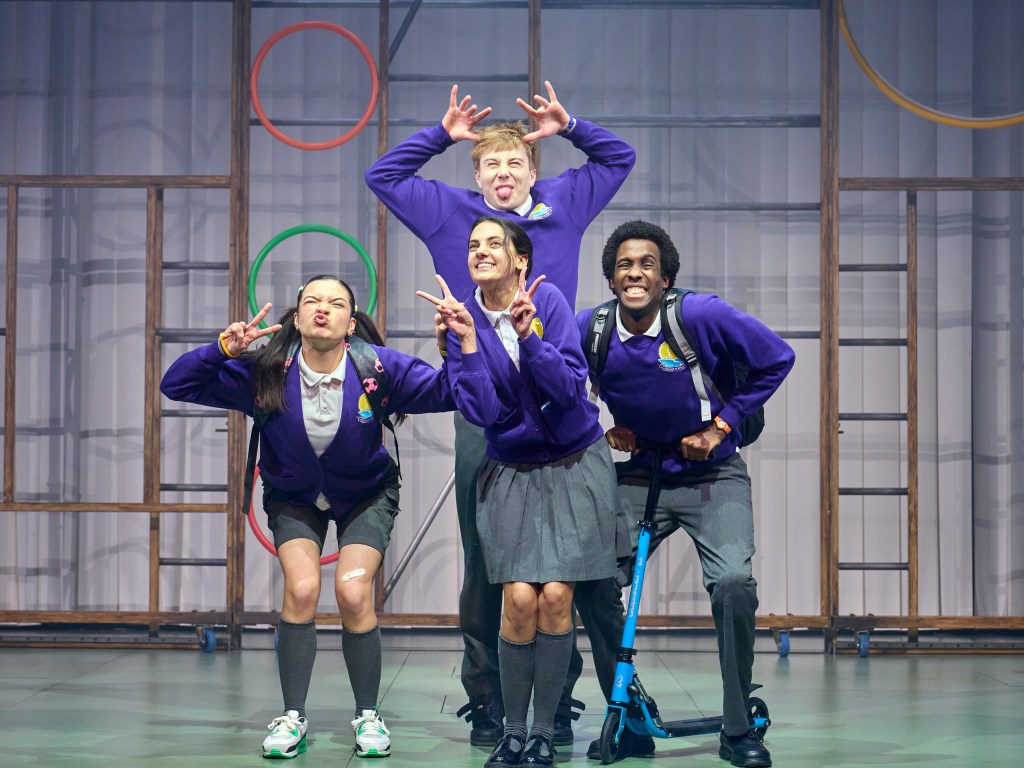
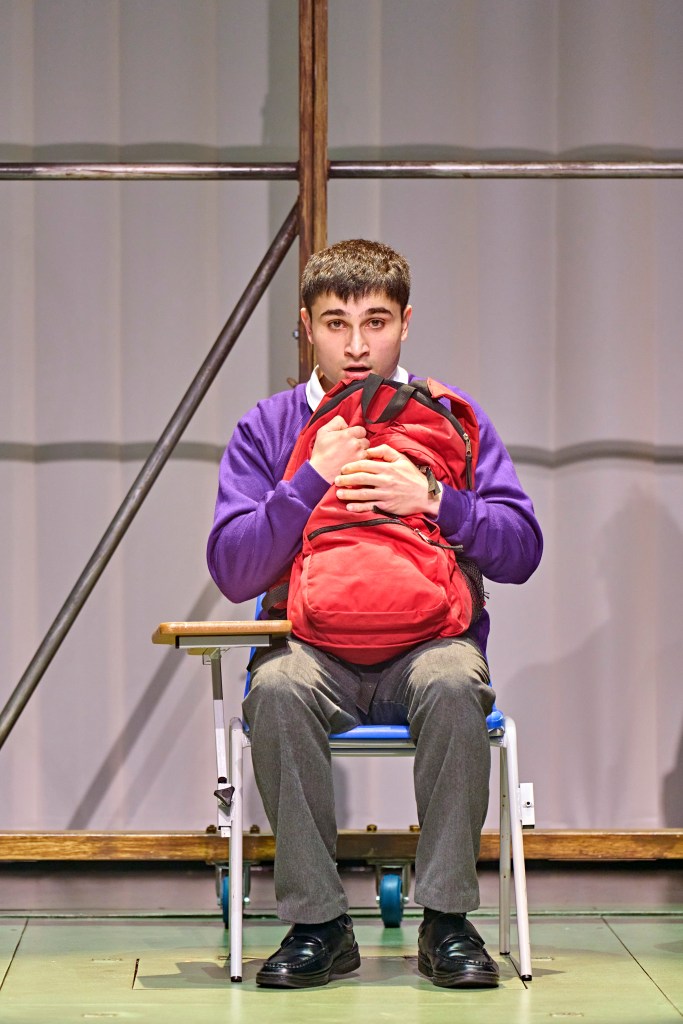
The Boy at the Back of the Class is a well-loved book for many school children. This award-winning book by Onjali Q. Raúf has been adapted by Nick Ahar and is now a 2026 Oliver Award-winning stage show. It tells the story of Ahmet, a refugee boy from Syria. Even though the book is aimed at children this play can absolutely be enjoyed by all ages.

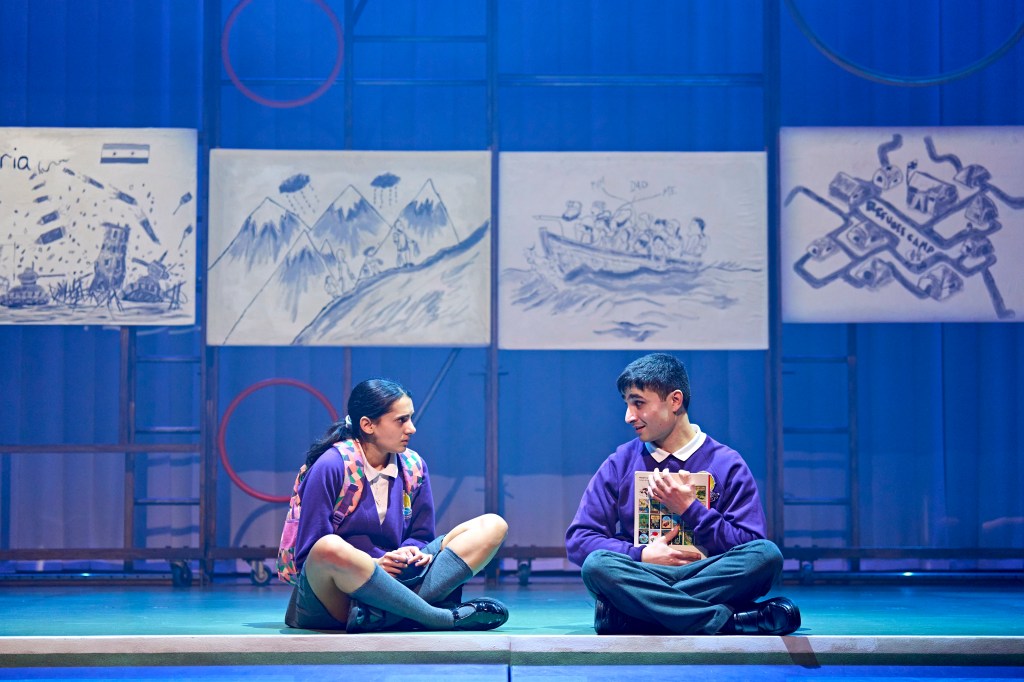
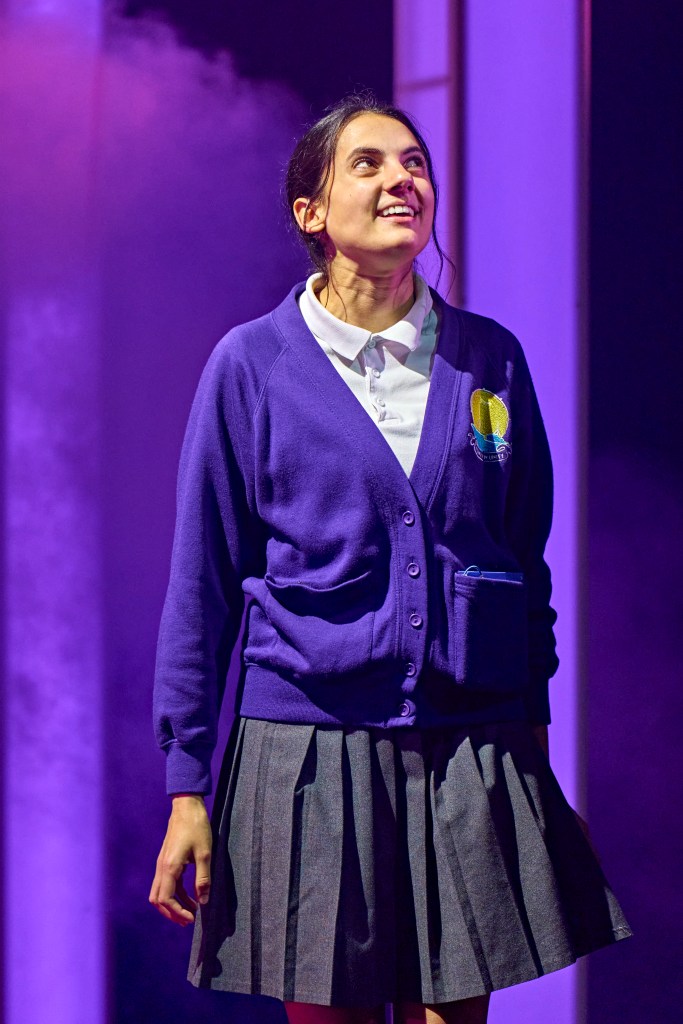
We follow Ahmet played by Serkan Avlik as he tries to settle into his new school in a different country. He is welcomed by a very caring girl called Alexa played by Sasha Desouza-Willock and her friends “The A Team” as they try and help this new boy, who sits quietly at the back of the class. They learn he is a refugee, which is a word they are not familiar with, after learning more about his heartbreaking situation they make it their mission to help reunite Ahmet with his family.

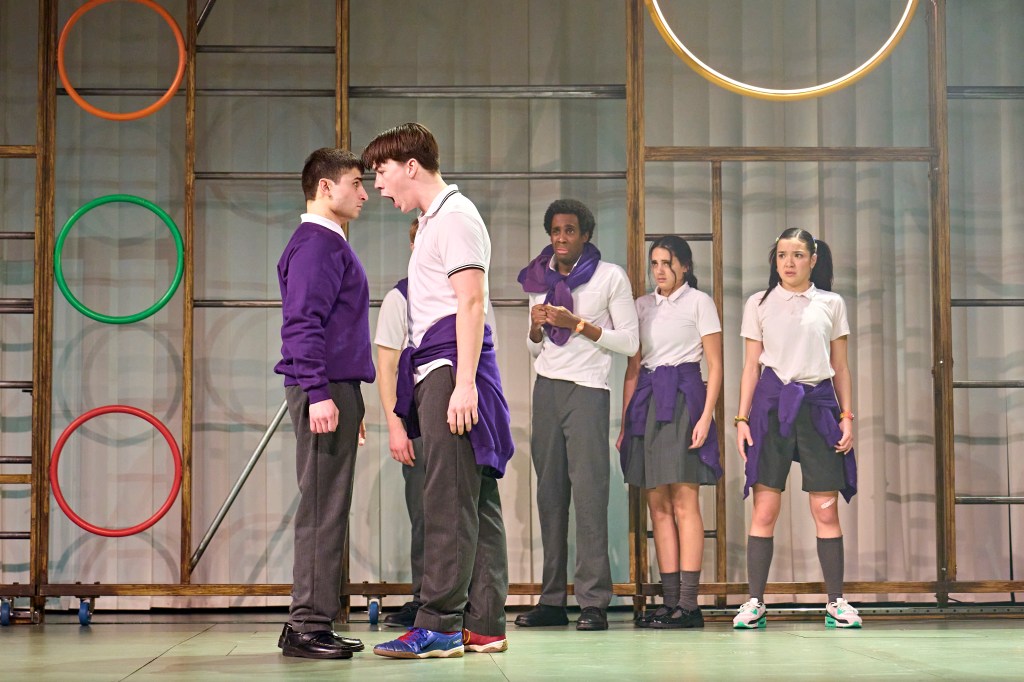
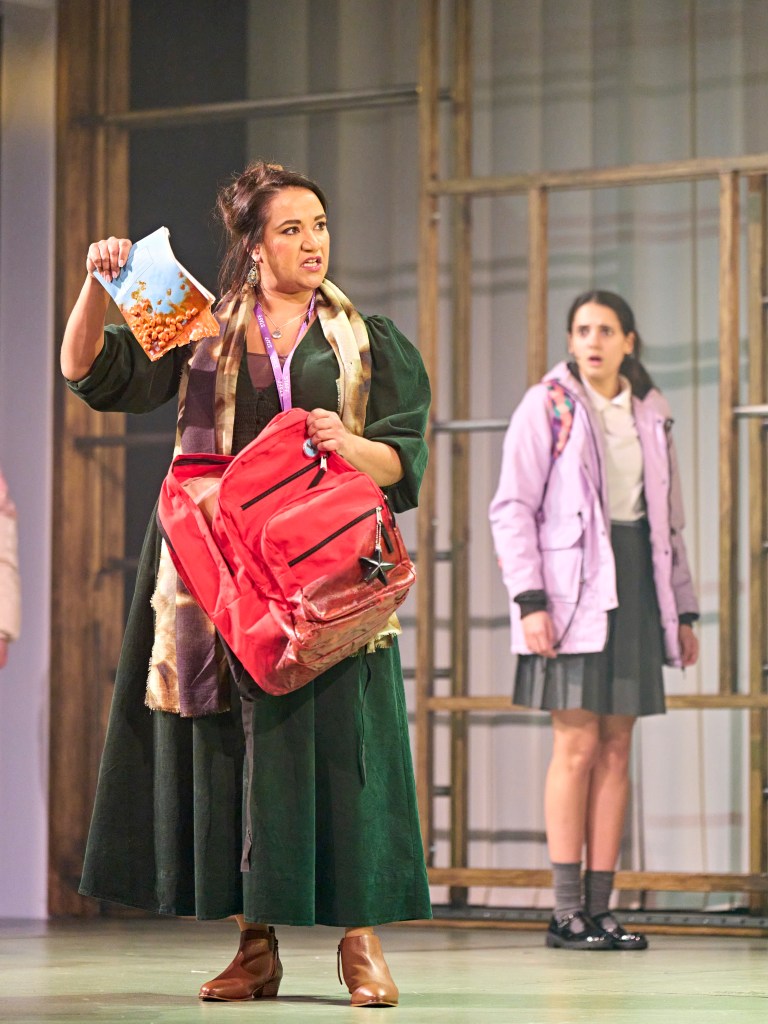
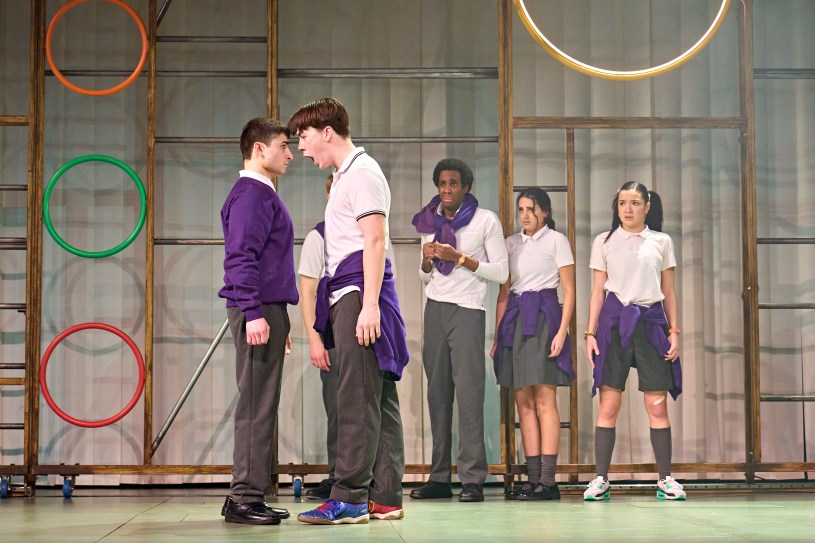
Despite most of the children being welcoming and trying to find ways around the language barrier using games and sharing snacks, Ahmet still must deal with awful treatment from the school bully Brendan played by Max Jordan, some of the parents, and even a teacher.

The story is told through the children’s eyes. Which gives it a refreshing innocence. It challenges why things are accepted by so many in the current world we live in. At no point during this production did I feel it had been dumbed down for children. 

It manages to be accessible, thought provoking and interesting for all. Even with the difficult topic the creators still managed to include plenty of giggles for all the audience. More political moments, are handled well and clearly show the responsibility politicians and the press have in how they portray refugees. 

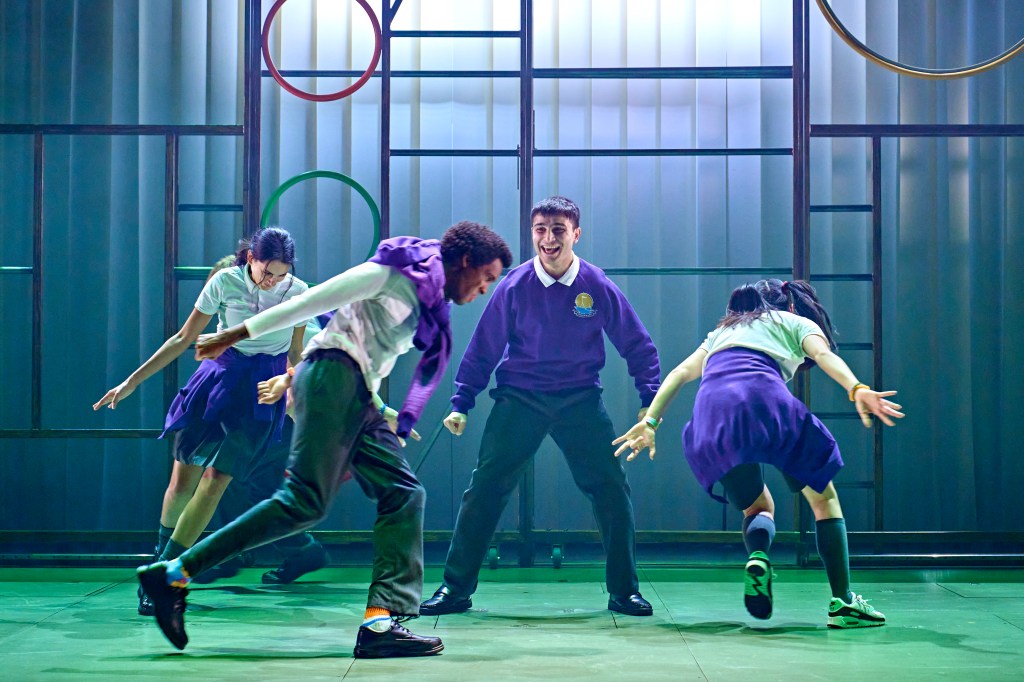
The brilliantly talented cast are played by adults which works extremely well. Together as the friends Alexa, Michael, Josie and Tom all provide plenty of humour without losing the more serious message in the story. Alexa is also our narrator, she does this with a child’s innocence but allows her incredible determination for justice to shine through as she switches from directly addressing the audience back to the story seamlessly, fidgeting throughout, like many 9-year-old children but then can switch to play the adult characters perfectly.

Jonny Walker is the over-enthusiastic American Tom, who is full of energy and positivity, even managing to continue his performance upside down exercising. Natasha Lewis plays Mum and Mrs Khan, she does this brilliantly with care and compassion being the sort of teacher we all would want. 

Petra Joan-Athene plays star-crazy friend Josie, as well as some of the adult roles, easily switching between her many personas. Serkan Avlik plays Ahmet, our title character in such a way we instantly warm to him, and we are all in his corner, his sadness and fear at the beginning is all-encompassing but we slowly see him become a happier and more confident person as the show goes on. 

Direction by Monique Touko ensures the energetic pace means the audience attention is held throughout thanks to this well told story; incorporating Ahmet talking to the audience making us feel like we are even more invested in the outcome of this story, we see the situation through his eyes and the genuine struggle of many refugees, allowing us to see them as individuals with their own stories rather than the way they are shown often in the media. 

Set design is by Lilly Arnold and adds wonderfully to the storytelling. The backdrop is the kind of PE apparatus that many school children still know and adults remember. This backdrop is easily adaptable, making way for many scenes and works incredibly well along with some great sound effects even transforming to the gates of Buckingham Palace as well as the classroom.

Nick Ahad’s stage adaptation of this best-selling novel has been done beautifully. It manages to be funny and incredibly moving (tissues needed at the end) and portrays such a difficult subject with humanity.

Stan Selkirk – aged 10

I saw The Boy at the Back of the Class at The Lowry and I really enjoyed it. Some bits were funny and made everyone laugh, but other parts were serious and made me feel a bit sad for Ahmet. It taught me a lot about refugees and how hard life can be for them, and it also showed how important it is to stand up to bullying.

The show made me think about how even small acts of kindness can help someone. I liked how the kids in the story tried to help instead of just talking about it. Even though I don’t think I could travel to Buckingham Palace I always try and be kind and help others and I hope as I get older, I can do this more to change the way people treat refugees like Ahmet.

The whole show was produced well – the acting, the set, everything. When it finished, I felt like I’d learned something important and I kept thinking about it afterwards.

We talked about it driving home last night and all thought things need to change, and we all need to be part of this. I learnt that we shouldn’t worry about asking questions and what words mean to help us understand and change things for the better, I hope I can do this more as I get older. 

The Boy at the Back of the Class is on at The Lowry until Saturday 18th April tickets and further information are available here.

Inspector Morse – House of Ghosts

Reviewed by Sophie Rowley

Opening Night verdict ⭐⭐⭐⭐

There is something fascinatingly fitting about having the Lowry showcase Inspector Morse: House of Ghosts. By association it is a venue known for being modern, elegant and immersive, quite the start for this production. Inspector Morse, a classic ITV British staple which Radio Times dubbed ‘the greatest British crime series of all time’ was renowned for holding storylines that were intellectual, with a hint of melancholy and crime set superbly against the backdrop of the Oxford academic infrastructure. This theme is felt instantly from the moment you enter the Lyric theatre to Schubert’s symphony number 5 in B flat, welcoming the audience. Then the lights dim and the audience is treated to a bit of Shakespeare, before the plot begins to unfold. This first stage adaptation doesn’t just retell the story of the iconic inspector, it invites the audience into the meticulous mind of Morse and shares intimate details of his life, both past and present which allows an appreciation for the detective. Drawing inspiration from the long running ITV drama and the two spin off series Lewis and Endeavour, it’s fair to say Tom Chambers has a hefty pair of shoes to fill.

The play starts strong with an on-stage death of a young actress, which calls for Inspector Morse (Chambers) and his trusty sidekick D.S. Lewis played brilliantly by Waterloo Road alumni Tachia Newall, to now discover the truth. The dynamic duo, Morse and Lewis must now embark on a chilling investigation which uncovers more than Morse ever thought possible. Chambers and Newall’s pairing is perfect, a self-confessed fan of the show, Chambers embodies this perfectly, seamlessly weaving Morse’s mannerisms, recognisable facial expressions and sarcastic humour into every scene. Newall’s characterisation of Lewis provides the complete anthesis to Chambers, rather, Newall’s Lewis is caring and quiet and brings a subtle charisma to the role which pairs wonderfully with Chambers melancholic charm. Teresa Banham plays a brilliant part as Ellen who shares a history with the protagonist. The ten strong cast is a wealth of talent with James Gladdon as Freddy, Spin Glancy as Justin, Charlotte Randle as Verity, Olivia Onyehara as Harriet and Eliza Teale as Rebecca. As ever there is always one person who steals the show and that has to go to Jason Done, yet another Waterloo Road icon, who plays a dual role of Lawrence Baxter and Paul Kincaid. Lawrence Baxter is the obstinate, arrogant, loud villainous director who craves admiration, Done is superb in his portrayal. Paul Kincaid on the other hand is a vicar with a guilt complex which Done delivers with ease. In truth, the whole ensemble works well together to bring this masterpiece to life.

Penned by acclaimed writer Alma Cullen the plot holds special significance for Morse fans as Cullen is one of the original four writers from the original 1987 series. Cullen keeps the integrity of the iconic Morse character, upholding his classic characteristics and elements that make him recognisable. The creative collaboration of Director Anthony Banks and Cullen is a major success. Banks bring Cullens words to life, with stark realism which is hard to convey on stage. Banks is no stranger to staging a suspenseful thriller so there could be no better collaborative team to hold the responsibility of adapting Morse to the stage. As an audience member you feel safe in Banks’ and Cullen’s creation, Morse becomes real before your eyes, as you see how he deals with his personal demons and past burdens in his private and professions spheres.

The production team must be commended for the outstanding job they have done with this show. Colin Richmond the set and costume designer excelled in making the stage a home for Morse. Each piece of clothing has been so well thought out as the intricate details allow each character to become instantly recognisable. Suited up and complete with tie both Morse and Lewis command the stage in every scene. Jason Done’s wardrobe as Lawrence is flashy and eludes the arrogance of the character by doing pleather trousers and open neck silk shirts. The sets whilst on first glance, seem simple and structural, act as characters in their own right, constantly interchanging and guiding the plot seamlessly, occasionally accompanied by an instrumental interlude to signify a scene change. The lighting is very well executed and creates an atmospheric feel that heightens the emotional charge of the dialogue in every scene. The tempo of the plot mimics the tempo of the television series, slowing building up suspense for 2 hours then hitting the audience with a curveball plot twist that makes the wait worthwhile.

Chambers relishes this role and in doing so he successfully brings Morse to life – he makes sure all the relatable nuances of Morse are still present as well as managing to bring a fresh take on the classic detective. Newall similarly brings a modernism to Lewis, still keeping the youthful innocence of the character which is relatable to this Salford audience. A personal highlight was to see the Waterloo Road trio reunited and seeing how natural they all were in this partnership. The whole ensemble works wonderfully together to bring this chilling case to the stage. I’m not going to give any spoilers but anyone thinking of venturing out for a classic murder mystery needs to book tickets to this superb production asap.

Inspector Moorse – House of Ghosts is on at The Lowry until Saturday 11th April tickets available here.

My Name is Rachel Corrie

Reviewed by Nikki Cotter

Opening Night verdict ⭐⭐⭐⭐⭐

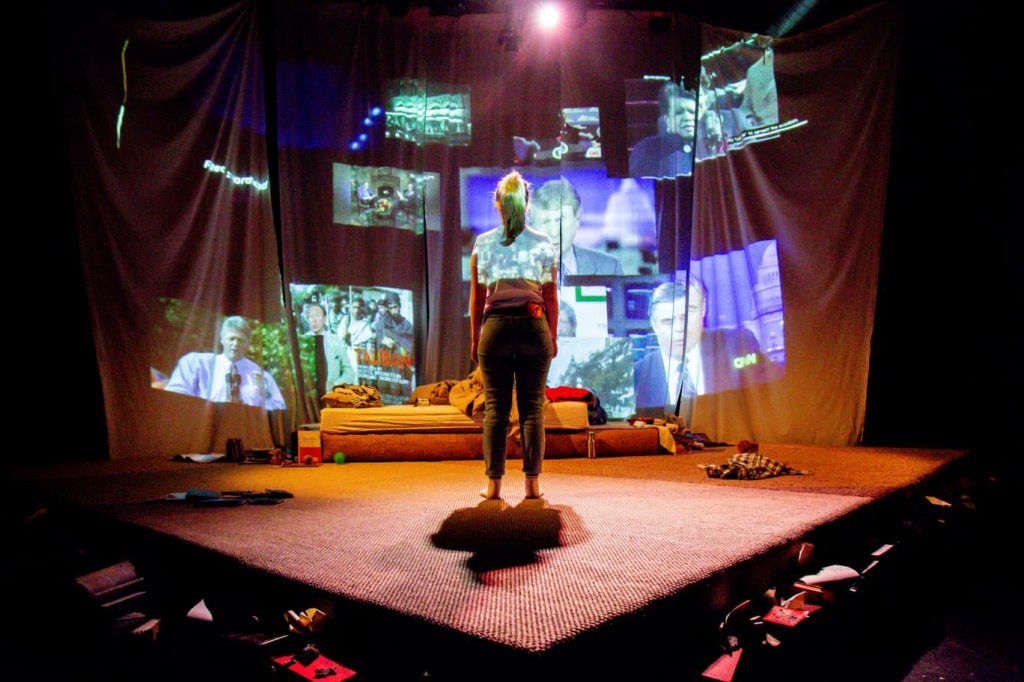
Originally edited by the late Alan Rickman and current Guardian Editor, Katharine Viner, My Name Is Rachel Corrie introduces us to 23-year-old American activist Rachel (Harriet Bibby) who was killed by a military bulldozer in 2003 when she tried to prevent the Israeli demolition of Palestinian homes.

Derived from Rachel’s own diaries and e-mails we quickly learn of her dedication to helping others, she is restless in her hometown of Olympia, Washington and keen to see the world. Upon her arrival in Rafah, she builds purposeful connections with Palestinian families and her fellow Internationals, the injustice she witnesses further fuelling her commitment to improving the lives of the marginalised.

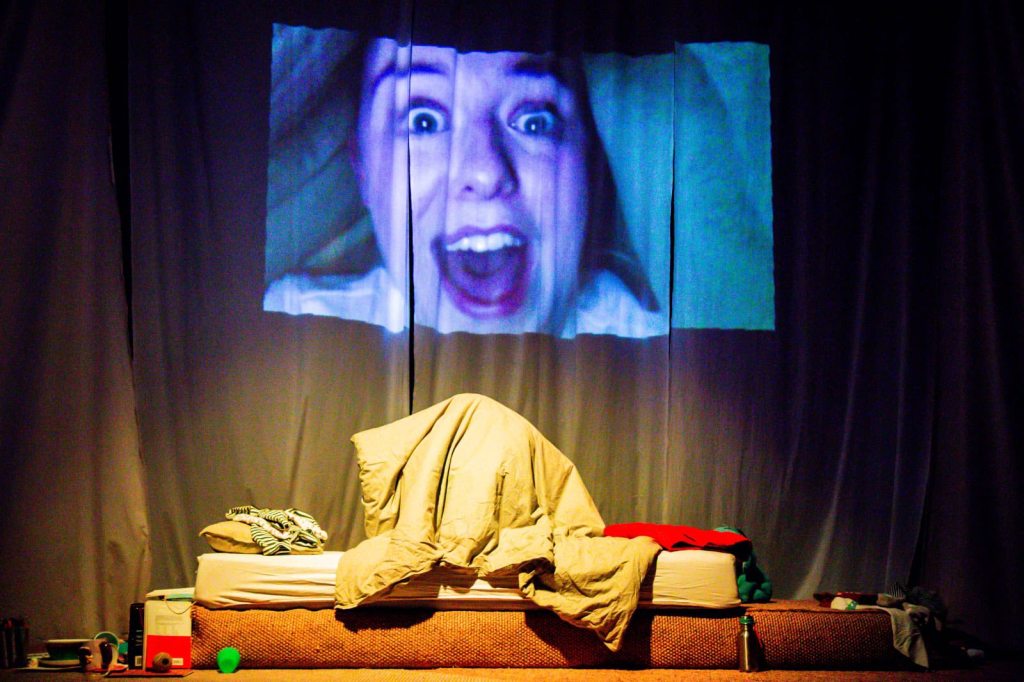
The play begins in Rachel’s bedroom, where we see her living a seemingly normal life, listening to music, writing in her diary, and reflecting on her friendships. She soon reveals her deepening commitment to activism, choosing to leave her comfortable surroundings to join the International Solidarity Movement in protesting the Israeli Defence Force.

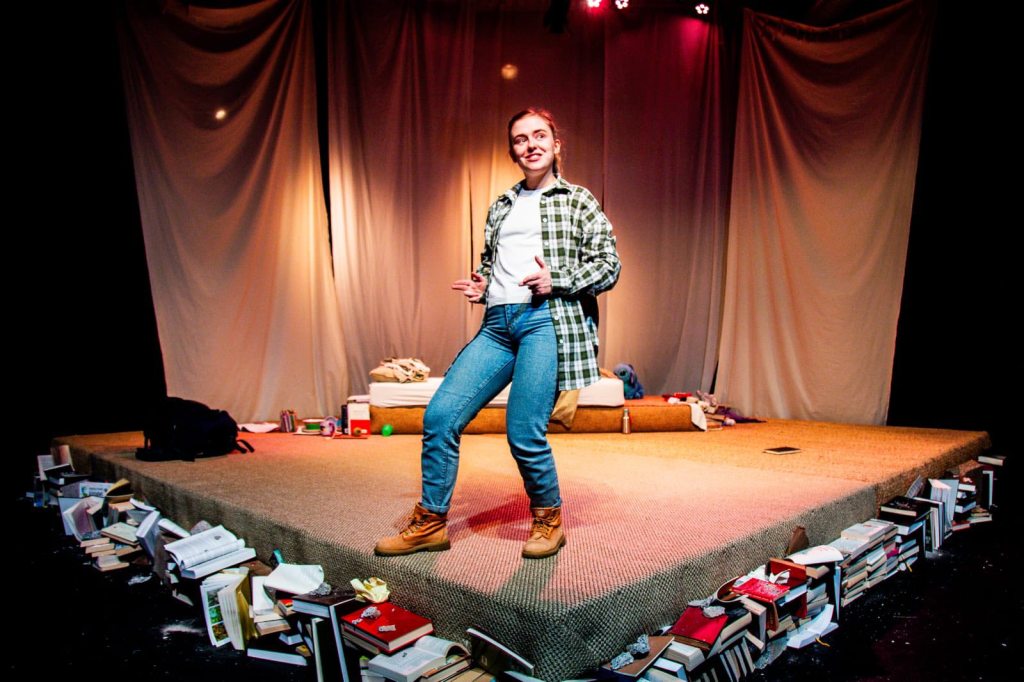
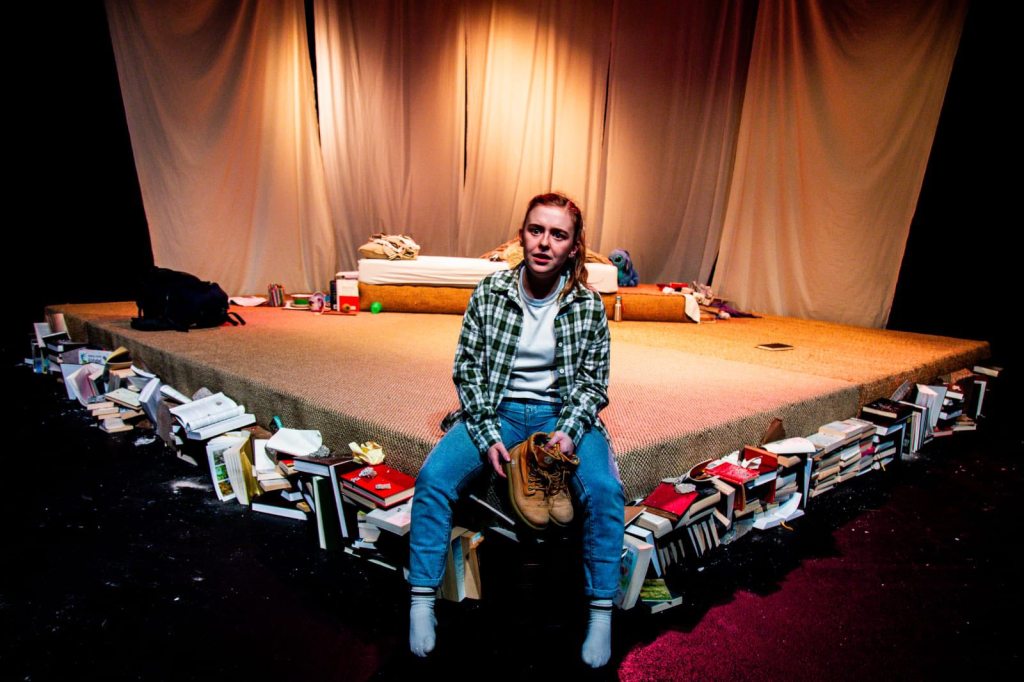
Harriet Bibby holds the attention of the audience entirely for this 90-minute solo show. Her performance feels wholly authentic as she skilfully brings Rachel to vibrant life in the intimate setting of 53Two. Her wide-eyed hopefulness and boundless energy endear her wholeheartedly to the audience. Driven by a need to help others and speak out against oppression her fierce determination shines through.

Ian Kershaw has directed this piece beautifully, taking us on an incredibly moving and intimate journey. In choosing a minimalist set, the focus stays entirely on Bibby, ensuring that every subtle shift in posture, tone, and pacing carries genuine emotional weight.

As Harriet Bibby delivers each poetic line with pure heart her transition from the goofy, vibrant Rachel we first meet to the disillusioned and deeply affected Rachel during her final days is striking. She captures Rachel’s hopefulness, sharp intelligence, and growing political awareness with a gentle ease. There’s a natural vulnerability in her performance that makes the material feel personal, making the ending even more devastating.

This powerful and important piece of theatre feels urgent and heartbreakingly current with Bibby bringing clarity to its message. The thoughtful direction of having Bibby leave the stage to make way for original footage of the real Rachel Corrie works wonderfully. Watching her share her hopes for a better world acting as a reminder of who has been lost here and what could have been.

In partnership with 53Two, Take Back Theatre has created a visceral, emotive portrayal that strikes a powerful chord with modern audiences. This production is both profoundly affecting and intensely human, ensuring it will live long in the memory after the lights go down.

My Name is Rachel Corrie is on at 53Two until Sunday 22nd March tickets are available here.

BSL Interpreted perfomance Sunday 22nd March

The Constant Wife

Reviewed by Sophie Rowley

Opening Night verdict ⭐⭐⭐⭐

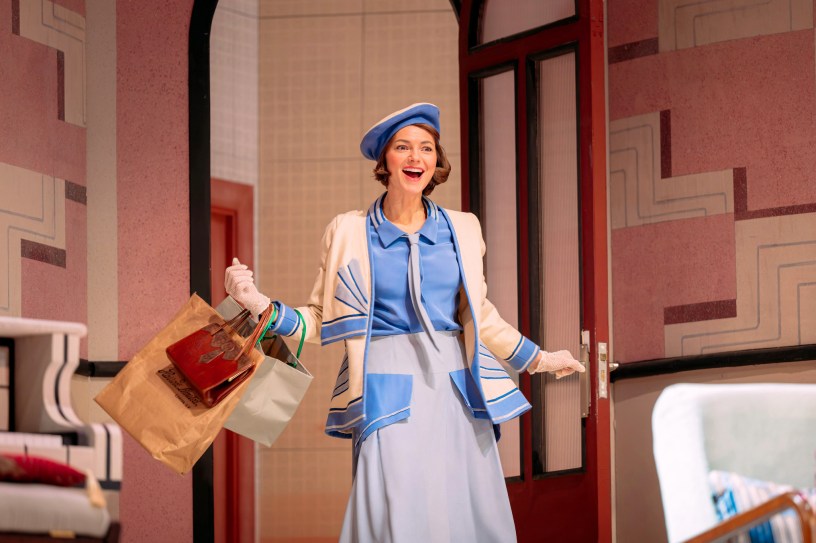
Filled with style, sophistication and sharp wit, W Somerset Maugham‘s 1926 play The Constant Wife explores the institution of marriage, morals and manners turning every expectation on its head with an imaginative alternative telling of infidelity, betrayal and scandal. Being labelled Maugham’s “most clever and captivating creations” he creates the ultimate heroine in Constance Middleton. Always aware of her husband’s extra-curricular activities with her best friend Marie Louise, Constance plays the dutiful wife and in true 1920’s style pretends to live her life in blissful ignorance. That is until the affair is made public, now Constance must decide how she wants to live her new life. Now a century on, how will the 2026 audience receive Maugham’s play?

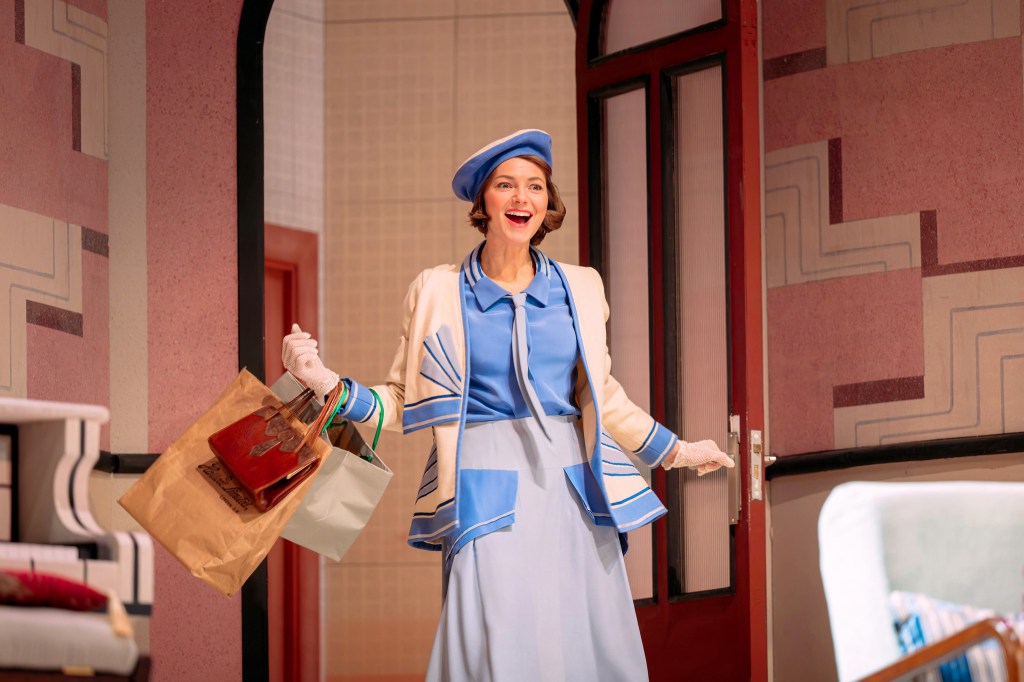
Fresh from the success of a West End run, Maugham’s story is brought to life in this incredible collaboration by David Pugh, Cunard and the Royal Shakespeare Company. Such a trio, the expectation is high for Laura Wade’s Lowry production. Staring Kara Tointin as the formidable heroine Constance who is far ahead of her time. Once the affair is made public, this allows Constance a clean slate to rewrite her story. Tointin plays this wonderfully, she playfully weaves humour and sarcasm into her sizeable script. Moreover, Tointon brings a wonderful modern twist to Constance and despite being set in the 1920’s era, she still manages to make Constance relevant and daring. Maugham’s script shines though in Tamara Harvey’s direction, it’s clear to see why this show has had the success it has.

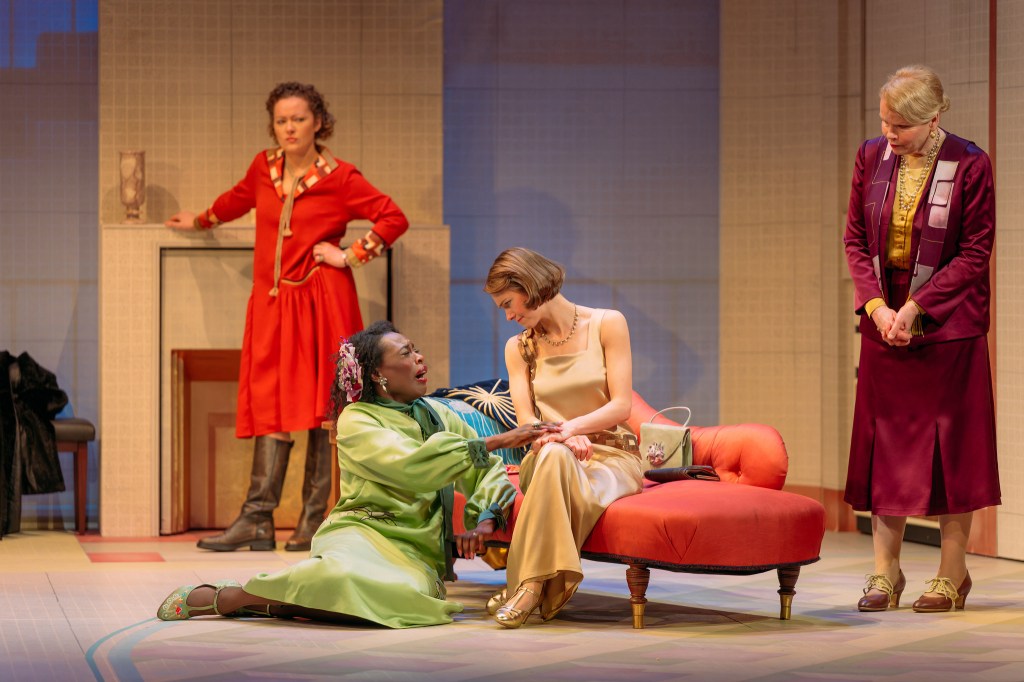
Tim Delap brings a subtle depth to John Middleton who has a predilection for women that aren’t his wife. He plays the 1920’s male very well and the entitlement is played to perfection, especially in the second act when John even slips into melodrama. He epitomised the idea that “men are polygamous and should be allowed their indulgences”. Delap mixes charm with arrogance in his portrayal of John, and as an audience member you feel conflicted in your feeling of him. This conflict of character is also seen in Marie-Louise Durham – played wonderfully by Jocasta King, on the surface she should be despised for defying her loyalty to Constance, yet it could be argued she could be pitied for being swept along in a romance that wasn’t hers to take. The obliviousness King shows in Marie-Louise’s actions highlights her selfishness, this combined with her lack of awareness is a very clever character choice and it works. For me both Delap and King excel in their characterisation and must be commended.

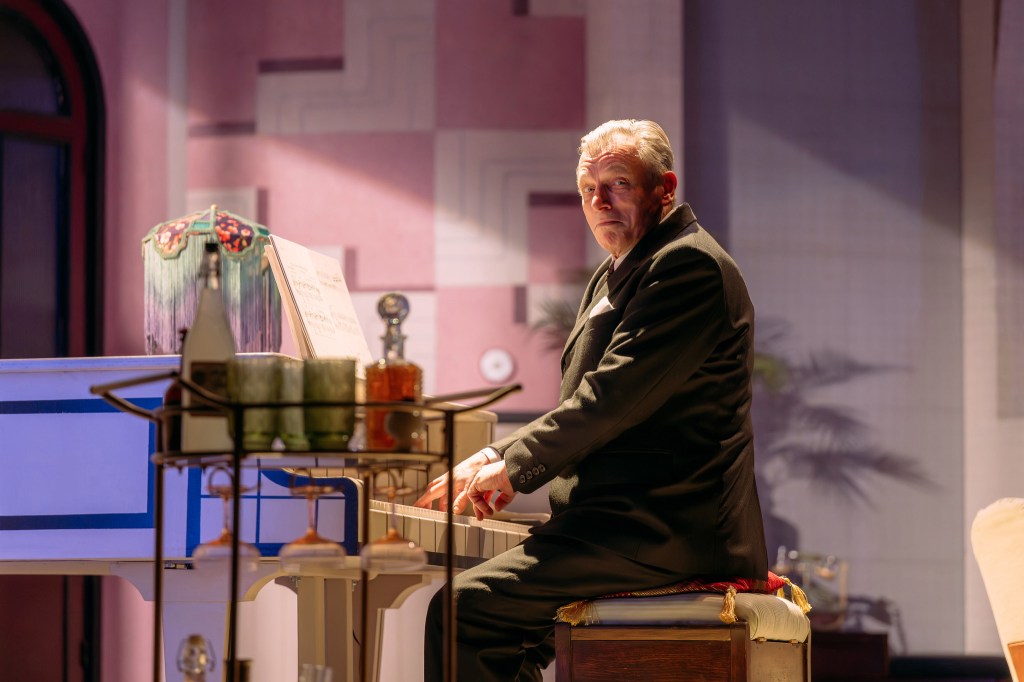
Sara Crowe is perfect as a 1920’s mother – filling Constance with the advice of the time yet she managed to get a few cutting insults on her perception of Constance’s life. Combing humour and wit Crowe brings the archetypal 1920’s mother to life. Amy Vicary-Smith is superb as Martha, Constance’s Sister – the “confirmed Spinster” brings postmodernism to the idea of what a woman is – she is independent and fiercely loyal of Constance. She is a businesswoman and unmarried at a time where this was extremely unfeminine. Like Crowe she brings an effervescent humour that makes the play very enjoyable. Jules Brown, whist having a small part as Mortimer Brown plays a pivotal part as the catalyst for the plot unfolding. Alex Mugnaioni’s portrayal of Bernard as the doting lovesick best friend of Constance adds a entertaining side plot to the play. Finally, Philip Rham’s Bentley the butler is endearing as well as a very talented pianist.

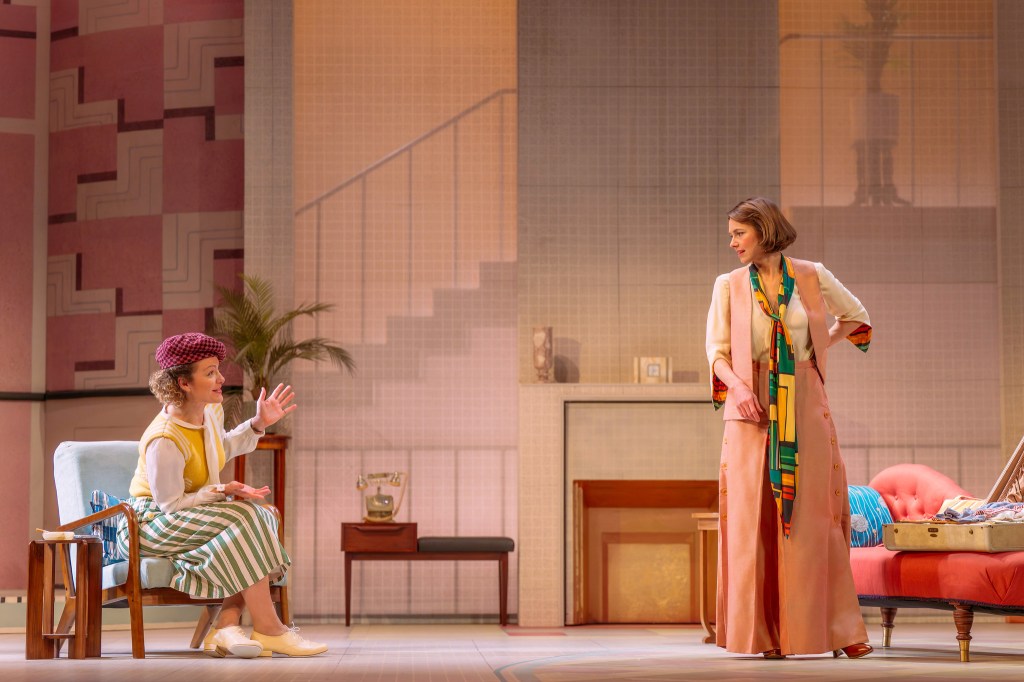
Now a moment must be dedicated to discuss the set and costumes created by Anna Fleischle and Cat Fuller. They have been described as ‘fresh and captivating’ and I cannot disagree. The set is filled with 1920’s staple furniture and art deco designs. Fleischle still brings the 1920’s glamour and elegance with a modern twist that you would see on the high street today.  The combination of these sets and costumes complement one another perfectly and the whole creative team have done a sterling job in creating this masterpiece of visual theatre. For the musical score you can do no better than to include original compositions by Jamie Cullum. Cullum’s signature jazzy tones act as perfect scene changes throughout the play.

The whole production team have delivered an exquisite piece of theatre. The cast is superb in each of their portrayals and are complimented perfectly by the beautiful set, stunning costumes and a jazz soundtrack that will fill you with joy.

The Constant Wife is on at the Lowry until 21st March tickets are available here.

Macbeth

Reviewed by Nikki Cotter

Opening Night verdict ⭐⭐⭐⭐⭐

Marking the return of Shakespeare to Storyhouse’s stage, this bold, inventive interpretation of the Bard’s ultimate tragedy sets an impressively high standard for Storyhouse Originals 2026 programme.

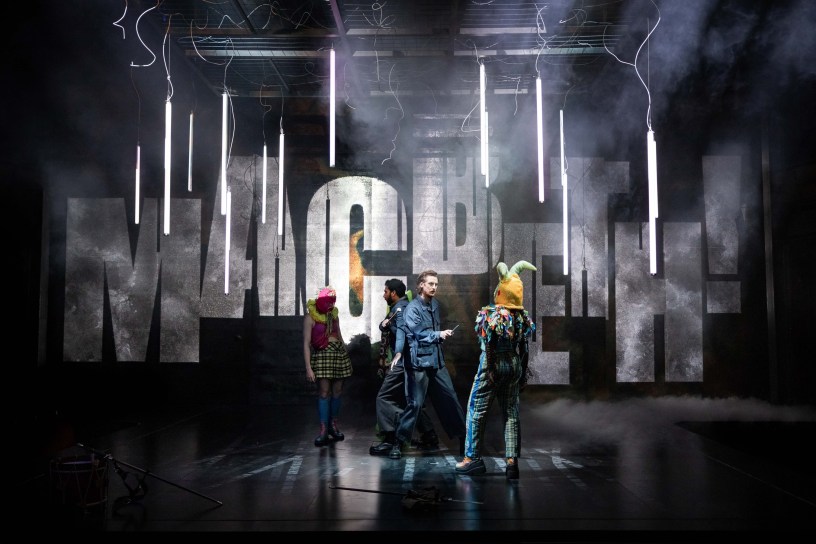
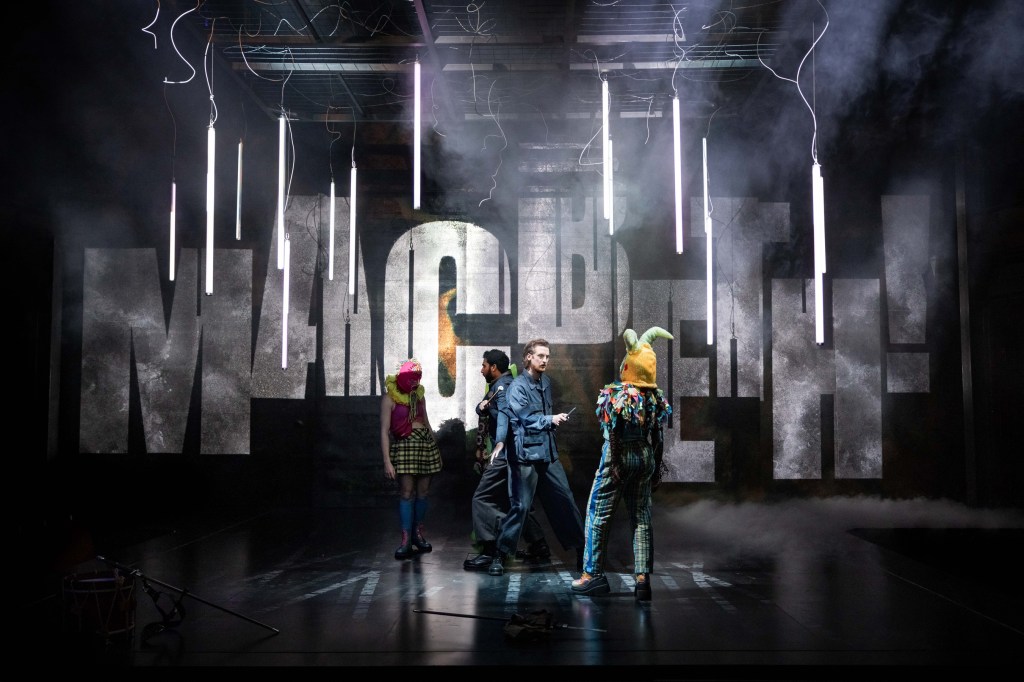
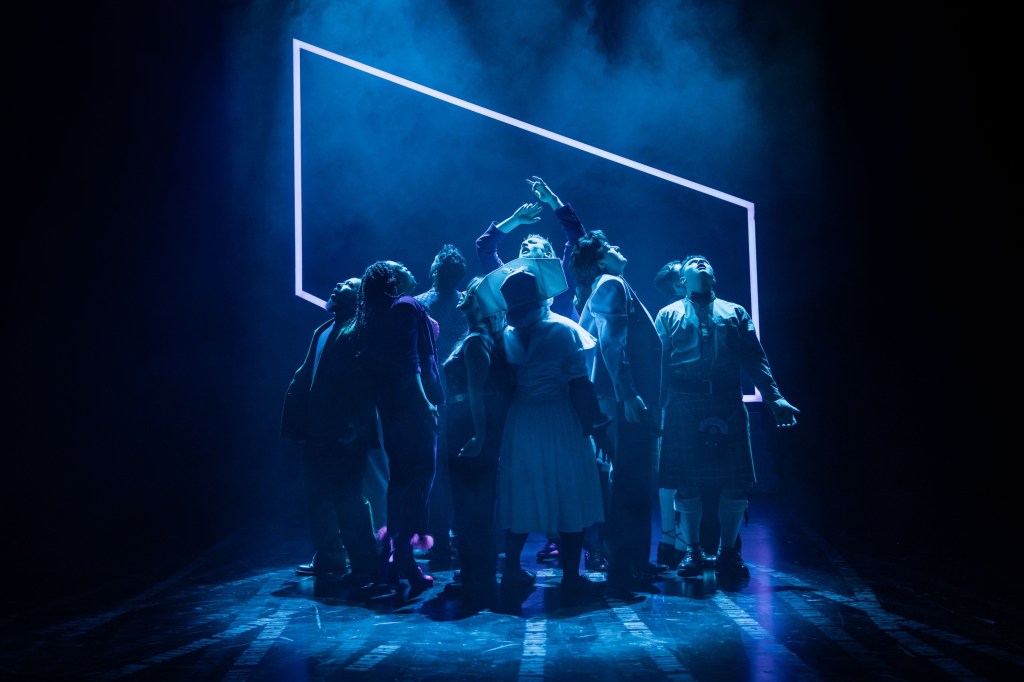
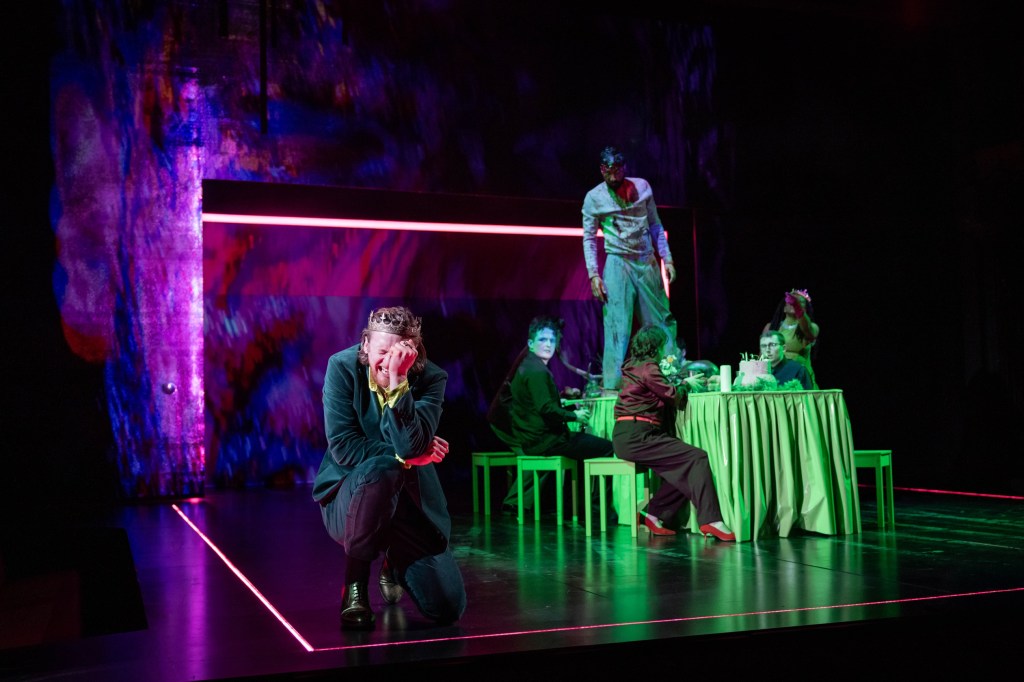
Adapted and directed by Jamie Sophia Fletcher, the play stays true to the classic text while its vivid modern-day setting leans deliciously into cinematic horror. It’s vibrant, loud, fast-paced fluorescent and unapologetic making it incredibly accessible for 2026 audiences.

The intimate thrust staging has been embraced by set and lighting designer Andrew Exeter who creates an intense sensory experience with a stunning use of Daniel Denton’s imposing video projections, layered sets and atmospheric lighting while Sarah Victoria’s pitch perfect sound design further cements the quality of this gripping production.

Robin Morrissey captures Macbeth’s spiral into the dark side perfectly as he shifts compellingly from curious social climber to power hungry, murderous King, following his first meeting with the three witches. Yolanda Ovide as Lady Macbeth is equally as impressive, calculating and cold as she plunges powerfully into psychosis, unravelling viscerally before our eyes.

Mika Onyx Johnson’s vulnerability and rawness as Macduff kicks you in the guts while Roly Botha shines playing multiple memorable roles, Witch 1, Porter and Lady Macduff. Special mention must also go to Pete MacHale who brings depth, humour and warmth to Ross.

Storyhouse stay true to their community ethos offering actors from their Youth Theatre an incredible opportunity to make their professional debuts. This is a true ensemble piece with each and every cast member working together cohesively to create unforgettable theatre magic alongside a team of impressive creatives, including April Dalton, costume designer, Michela Meazza movement director, Kaitlin Howard fight and intimacy director. Storyhouse have also worked together with Dan Parr from Hear the Picture for creative audio description while each performance is captioned.

If you thought you knew Macbeth, think again — this production is full of surprises, from unexpectedly brilliant dance breaks while Murderer 1, 2 and 3 will never quite be seen the same again.

The palpable sense of foreboding throughout is added to continually by the striking set and lighting design, visually stunning and adding enormously to the clever creativity of this exceptional piece of theatre.

This Macbeth feels startlingly fresh and fiercely relevant, leaving you longing for a Storyhouse revival of every one of the Bard’s classics. It doesn’t merely retell the tragedy, it grabs you from the first moment and lingers long after the final curtain, a superb piece of theatre that deserves rich praise.

Macbeth is on at Storyhouse until Saturday 21st March tickets are available here.

New Dawn Fades

Reviewed by Matt Forrest

Opening Night verdict ⭐⭐⭐

The Brit Awards rolled into Manchester weekend just past, and not for the first time   Manchester was the music epicentre of the universe, a hyperbolic claim that Anthony H Wilson would have endorsed if he were still with us today. However, what is not an exaggeration is that one of the key factors in the story of popular music in Manchester is the importance and influence of Joy Division.

Writer Brian Gorman’s play New Dawn Fades charts the rise of Joy Division while weaving in a potted history of the great city of Manchester — or Mamucium, as it was christened by the Romans.

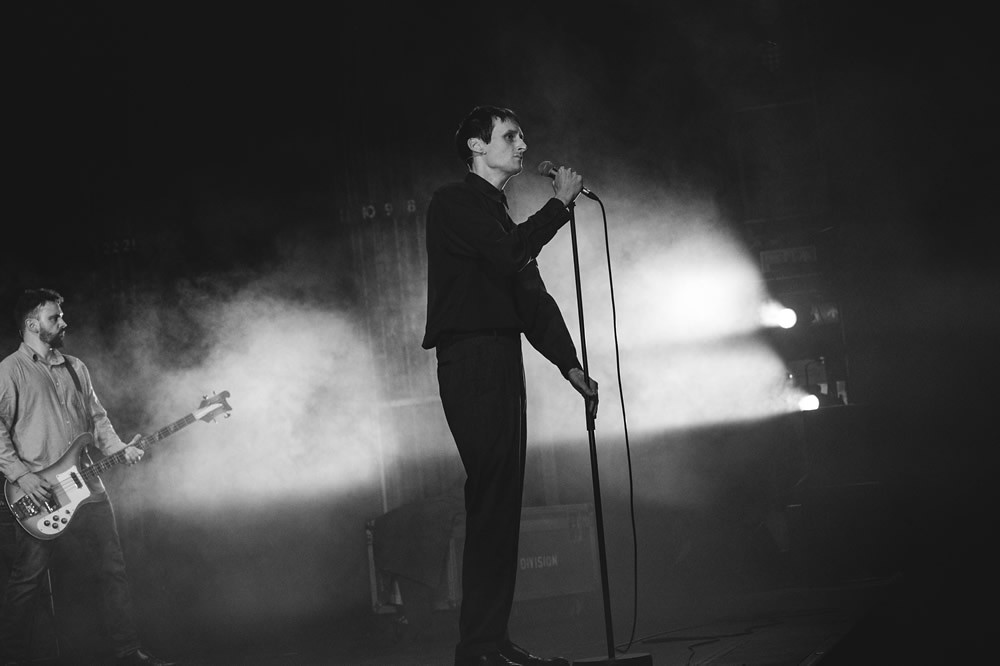
The play opens with “Mr Manchester” himself Tony Wilson in full television-presenter mode (Brian Gorman), brandishing a This Is Your Life red book as he introduces the band’s key figures: frontman Ian Curtis (Josh Lonsdale), guitarist Bernard Sumner (Garient Lyons), bassist Peter Hook (Gaz Hayden), and drummer Stephen Morris (Jack McGarry). Completing the picture and central to the band’s story is Debbie Curtis (Lauren Greenwood), Ian’s wife. Wilson himself was an essential part of the Joy Division story signing them to Factory, the record label he co-founded.

As we’re given an inside track on the band’s formation, we’re also offered a vivid snapshot of life in 1970s Manchester, capturing the raw energy of the punk movement and the seismic influence of bands such as Sex Pistols and Buzzcocks on the city’s cultural identity. Along the way, the audience is treated to a brisk history lesson exploring Manchester’s origins and what makes it so distinctive.

As the band begins to garner success, which means more tours and more live shows, the mounting pressures begin to take their toll on Curtis, straining his marriage, testing his relationships within the band, and exacerbating his fragile physical/mental health with devastating consequences.

New Dawn Fades has all the ingredients to be something truly special; however, it doesn’t always fully come together. When it works, though, it works well. Josh Lonsdale is outstanding as Curtis, completely capturing the intensity of the man, nowhere more so than in the electrifying renditions of Joy Division classics “Shadowplay,” “Transmission,” and “Love Will Tear Us Apart.” Yet it is Lonsdale’s portrayal of the debilitating impact of epilepsy on Curtis that resonates most powerfully.

Brian Gorman delivers a fantastic performance as Tony Wilson. His delivery is uncanny, and he does a spot-on job of bringing Wilson’s mannerisms and at times self-aggrandising nature to life. Lauren Greenwood is good as Debbie, though somewhat underused; you can’t help but feel it was a missed opportunity not to explore more of her perspective and give greater depth to her side of the story.

Where the show misses a trick, is with the live song performances, of the band only Lonsdale  seemed to be performing live, whilst the rest of the band played a long to a backing track, it seems an odd choice considering that all the actors are musicians as well.

The narrative flow also stutters at times. Scene transitions are marked by quick blasts of music as the lights abruptly drop and rise again. The effect can feel jarring and would benefit from a smoother, more seamless approach.

There is, however, much to admire. The playfulness of the first half, using figures such as a Roman general and Friedrich Engels to frame Manchester’s story, adds invention and humour. The band dynamics are engaging, particularly the fiery presence of Peter Hook balanced against Bernard Sumner’s more measured, calming nature, which brings welcome levity. This tonal lightness contrasts effectively with the darker intensity that follows the interval. That said, aside from Curtis, the band members are not fully fleshed out and at times feel somewhat superficial.

This is clearly a labour of love, created with deep affection for the band and the great city of Manchester. While there is much to enjoy, the production ultimately left me wondering what might have been, and wanting just a little more.

New Dawn Fades is on at the Lowry till 4th March tickets are available here.

Single White Female

Reviewed by Matt Forrest

Opening Night verdict ⭐⭐⭐⭐

The 1990s was a decade of cultural phenomena—Britpop, Grunge, and “Girl Power.” It also saw Hollywood churning out a wave of erotic psychological thrillers; while many were straight-to-video fare, a select few cracked the mainstream to become cult classics. Chief among them was the 1992 film Single White Female, boasting standout performances from Bridget Fonda and Jennifer Jason Leigh, some notoriously “cringy” dialogue, and a stiletto-based scene that still makes audiences wince over 30 years later.

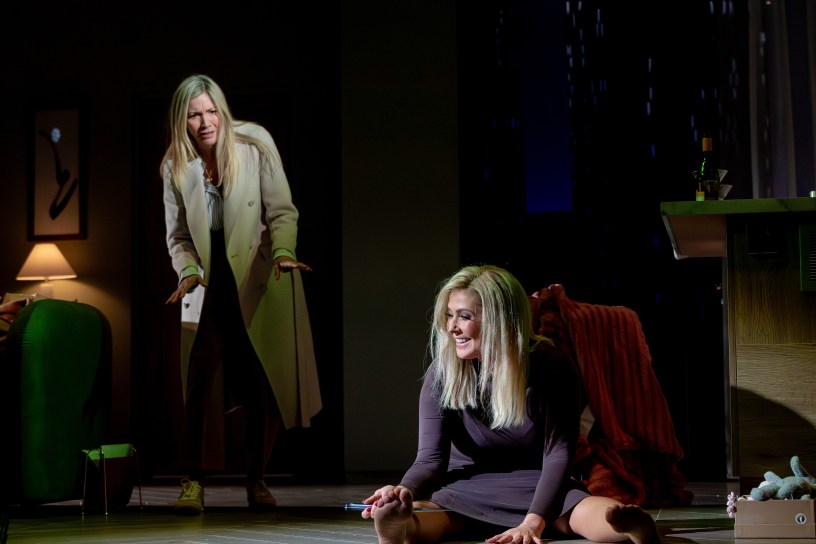
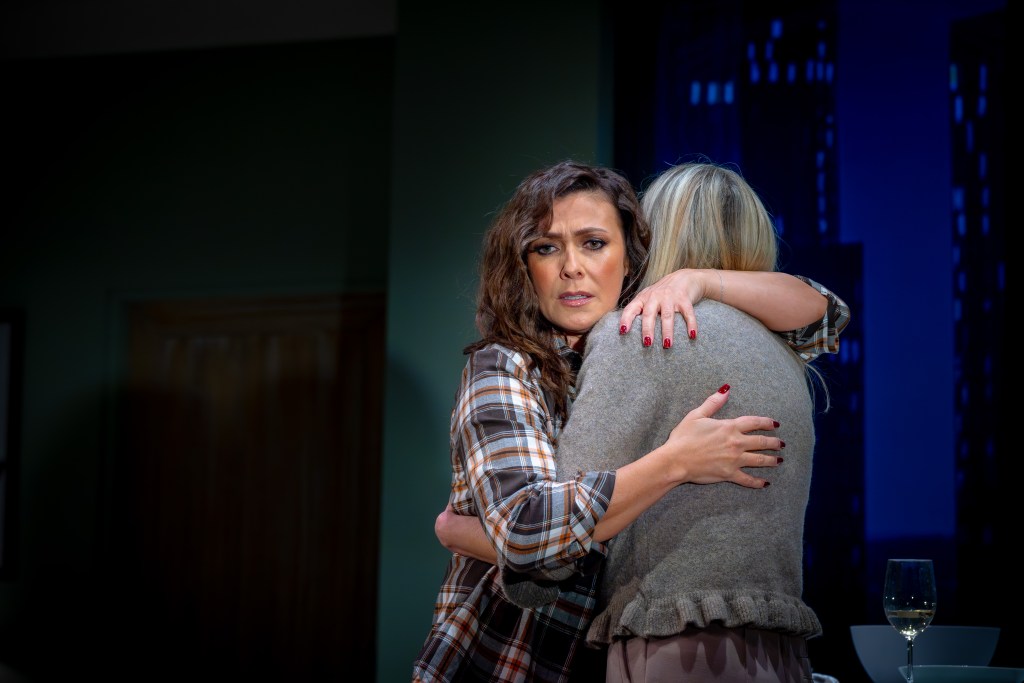
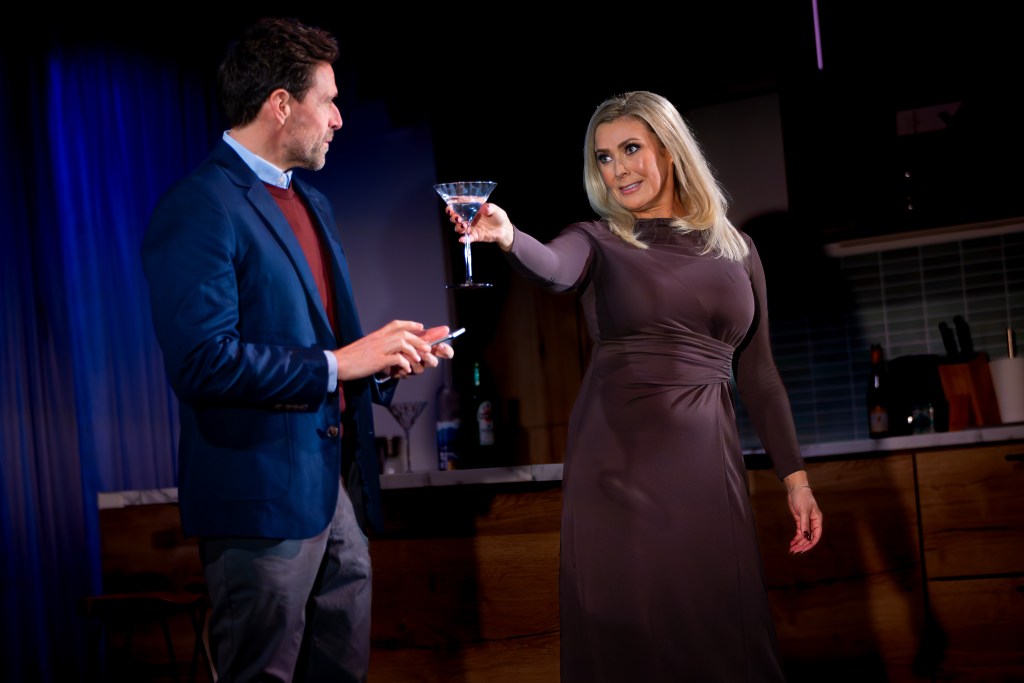
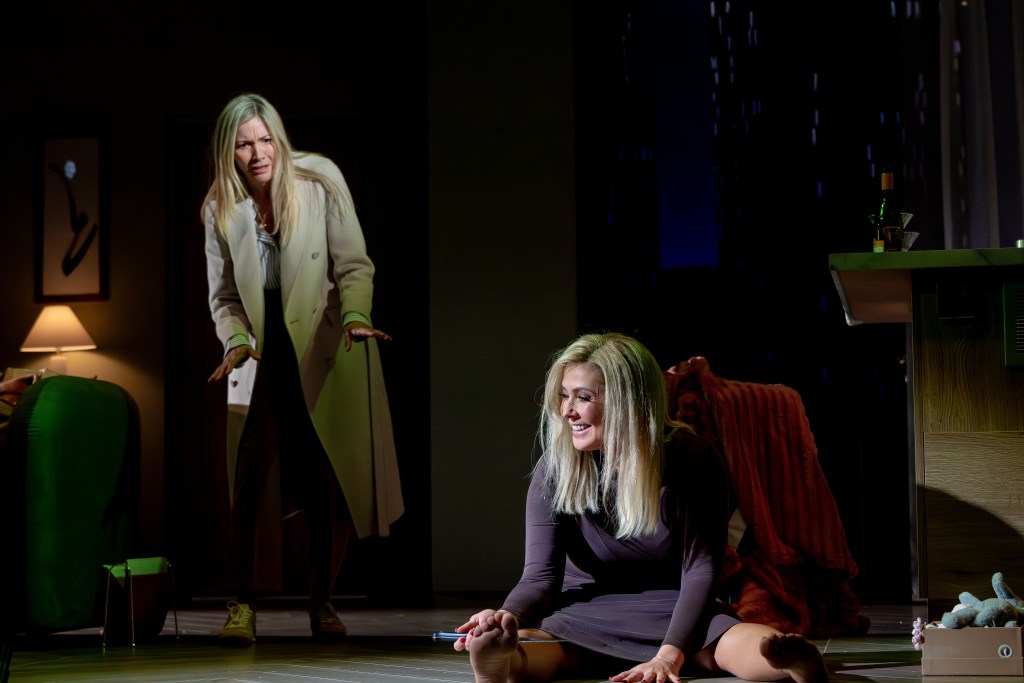
In 2026, we have a bold stage adaptation currently on a nationwide tour. Written by Rebecca Reid, this reimagining sharpens the story for the digital age, seamlessly weaving social media into the plot and introducing several narrative shifts that work superbly well. Crucially, much like the original film, the production boasts two powerhouse central performances: Kym Marsh and Lisa Faulkner who more than deliver.

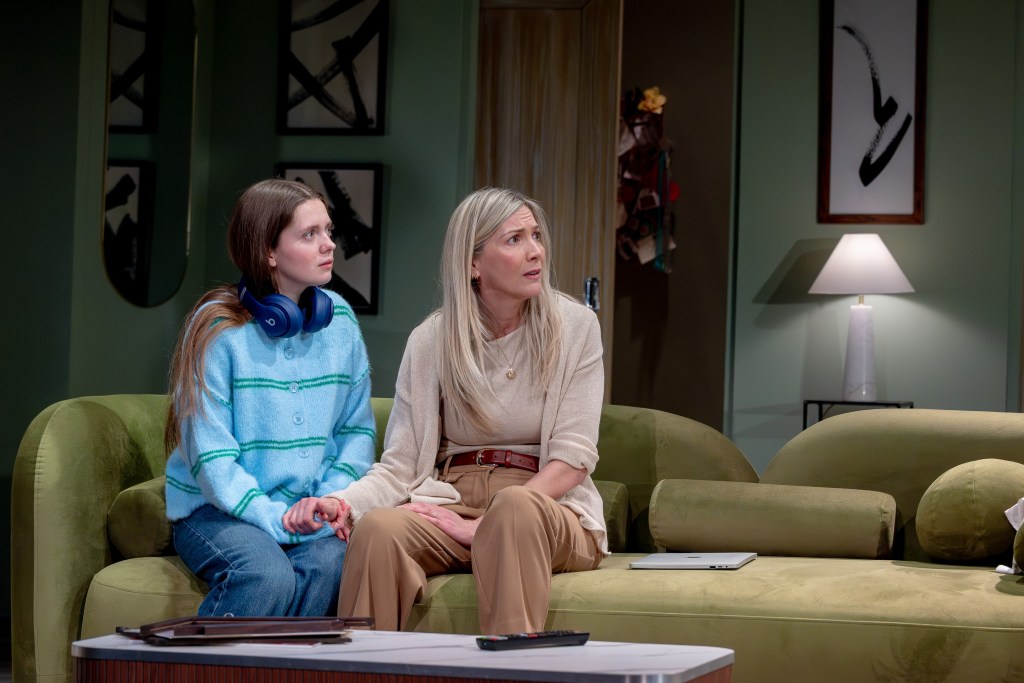
Relocated to modern Britain, the story finds single mum Allie (Lisa Faulkner) and her teenage daughter Bella (Amy Snudden) in a crumbling city-centre apartment. While the move places Allie closer to her tech-partner and best friend Graham (Andro), the building has a few structural/maintenance issues and Bella is struggling to adapt to a new school.

Financial pressure peaks when Allie’s ex-husband, Sam (Jonny McGarrity), announces he is halving his child support payments, forcing Allie to advertise for a lodger. Enter Hedy (Kym Marsh), a roommate who initially seems too good to be true: she’s helpful, supportive, and remarkably patient with Bella’s adolescent outbursts. However, the atmosphere quickly sours as Hedy’s “meddling” turns into a dark obsession, systematically targeting Allie and those she loves most.

Kym Marsh is in fine form as the unhinged Hedy; in a role that could easily stray into melodrama, her restraint makes the performance feel chillingly cold and terrifying. Lisa Faulkner is equally impressive as the good-natured Allie; her frustrations are deeply relatable, ensuring the audience roots for her long before things turn ugly.

Andro provides excellent value as Graham, injecting much-needed levity, while Jonny McGarrity is suitably slimy as the arrogant Sam, a character who surprisingly garners more sympathy as the narrative unfolds. Meanwhile, Amy Snudden does a fine job of making the troubled Bella both sympathetic and relatable.

Rebecca Reid’s adaptation makes bold, successful narrative choices. Integrating social media, cyberbullying, and grooming gives the production a contemporary feel, further grounded by topical references to Vinted and Mounjaro. Reid’s significant departures from the original script keep the audience on their toes, while well-placed moments of pitch-black comedy provide a welcome relief to the anxiety.

The tension is ratcheted up by Morgan Large’s set design, which, paired with Max Pappenheim’s unsettling soundscape, creates a palpable sense of claustrophobia within the single-apartment setting.

This is a fresh, entertaining night at the theatre with more than enough surprises to remain engaging throughout. It is certainly one of the strongest screen-to-stage adaptations of recent years. One word of advice: leave the stilettos at home and opt for flats—it’s just a bit safer for all involved.

Single White Female is at the Opera House Manchester till 14th February, tickets are available here.

To Kill a Mockingbird

Reviewed by Nikki Cotter

Opening Night verdict ⭐⭐⭐⭐⭐

Oscar winning writer Aaron Sorkin’s stage adaptation of Harper Lee’s literary classic To Kill a Mockingbird arrived at the Lowry this week as part of its first ever UK tour. Having received rave reviews on both Broadway and in the West End this much anticipated production directed by Tony award-winning director Bartlett Sher, is bold, necessary and profoundly affecting.

Set in the racially charged American South during the 1930s, To Kill a Mockingbird introduces us to important themes and unforgettable characters. Racial injustice, social inequality, human morality, male pride, empathy and the loss of innocence are woven into the tapestry of this captivating piece as we follow incredible character arcs that grip us from the start.

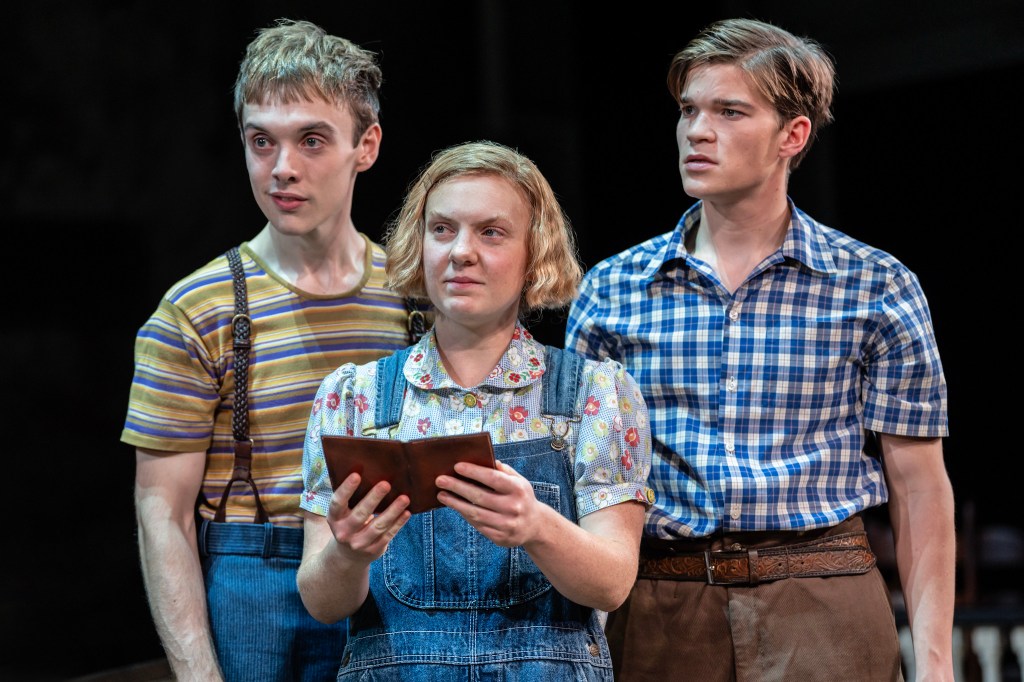
Lee introduces us to Alabama lawyer Atticus Finch (played tonight by John J. O’Hagan) who, committed to fighting injustice takes on the controversial case of Tom Robinson, (Aaron Shosanya) a local black man who has been falsely accused of raping white teenager, Mayella Ewell (Evie Hargreaves). This decision both impacts and exposes Finch’s children Scout (Anna Munden) and Jem (Gabriel Scott) to the harsh realities of racism and prejudice while posing questions about their own moral integrity and ability for empathy.

Events are told through the eyes of Scout, older brother Jem and Dill Harris (Dylan Malyn) who is visiting the neighbourhood for the summer. All three excel enormously in bringing a child-like innocence to their roles, high-spirited and filled with adventure they bring an easy light to the shade of this often-dark story, making Act 2 all the more impactful as innocence is lost and heartbreaking truths are revealed. Special mention must go to Dylan Malyn, making his professional debut as Dill, his joyful innocence feels all the more devastating as the reality of his homelife is later revealed.

Sorkin’s decision to have the courtroom action feature throughout the play rather than in one climactic scene works superbly, a decision which ensures the pace never wanes as the three children cleverly narrate flashbacks ensuring the storytelling remains clear and entirely captivating.

John J. O’Hagan makes for a tremendous Atticus Finch, he is calm, considered and utterly committed to the role, he carefully explores and exposes the emotional depth of Atticus as the story unfolds and he’s truly tested by the moral limitations of those around him. His scenes with Andrea Davy as an excellent Calpurnia act as a powerful example of the novels themes of moral integrity.

Oscar Pearce gives a dedicated performance as the loathsome Bob Ewell while Richard Dempsey as prosecuting attorney Horace Glimer is every inch as odorous as you’d expect him to be. Aaron Shosanya is utterly devastating in his portrayal of the falsely accused Tom Robinson. His quiet resignation to his wholly abhorrent fate is heartbreaking to watch, yet despite the cruelty and injustice he remains dignified throughout.

This is a stunning adaptation which succeeds entirely in bringing Lee’s characters to vivid life. While the source material was written in 1960 its themes, language and terrifying injustice sadly do not feel alien in today’s society particularly when we think about Trump’s America. This Mockingbird is powerful, engrossing and deeply poignant. Sorkin successfully retains the core essence of Lee’s classic novel while exposing a modern relevance reminding every theatregoer that we’re not just a viewing audience but morally we each have a societal role and responsibility to play.

To Kill a Mockingbird is on at The Lowry until Saturday 24th January tickets are available here.
A Christmas Fair

Reviewed by Matt Forrest

Opening Night verdict ⭐️⭐️⭐️⭐️

Not Too Tame have built up quite the reputation for putting on fun, interactive shows that deliver an entertaining night out. For the latest offering, a reworking of playwright Jim Cartwright’s A Christmas Fair, in collaboration with Oldham Coliseum, the interaction and fun are present, but so is something a little grittier.

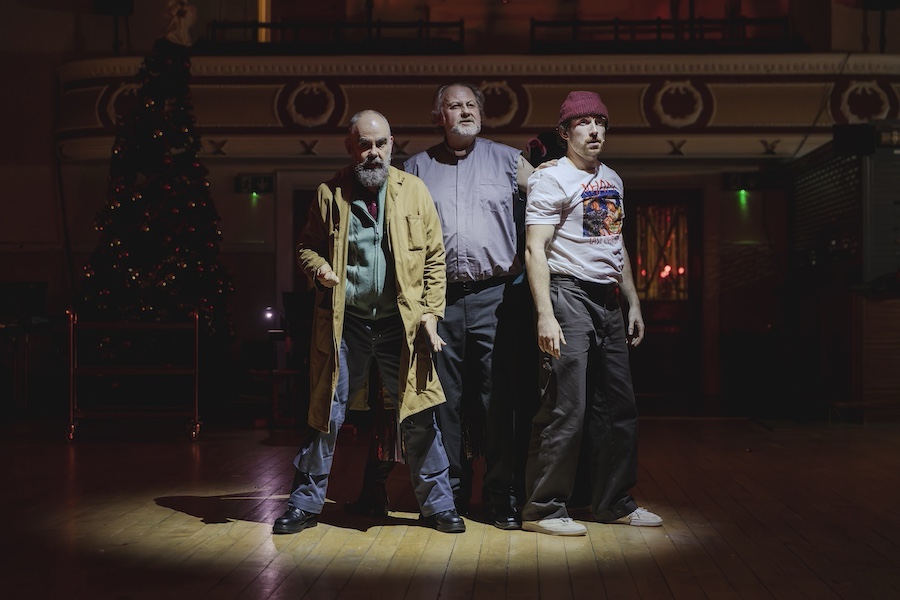
Set in the beautiful Chadderton Town Hall, we are introduced to a community group attempting to organise the annual Christmas fair. There is the Elvis loving Town Hall Caretaker (Lee Toomes), who isn’t filled with Christmas cheer at all, and just wishes that people would clear up after themselves. Next up is the fair’s organiser-in-chief, Veronica (Samantha Robinson), who wants the fair to be just like her, perfect in every way. Next up is the fun loving cycling enthusiast Vicar (Dickon Tyrell), who is roped in, despite having the Christmas sermon to write. 

Then there is cafe worker and all round good egg, Lucy (Kelise Gordon-Harrison), who is fully into the Christmas spirit and happy to help in any way she can. And finally there is out-of-town writer, Johnny (Paddy Stafford), whose cynicism and sharp tongue threatens to derail everything.

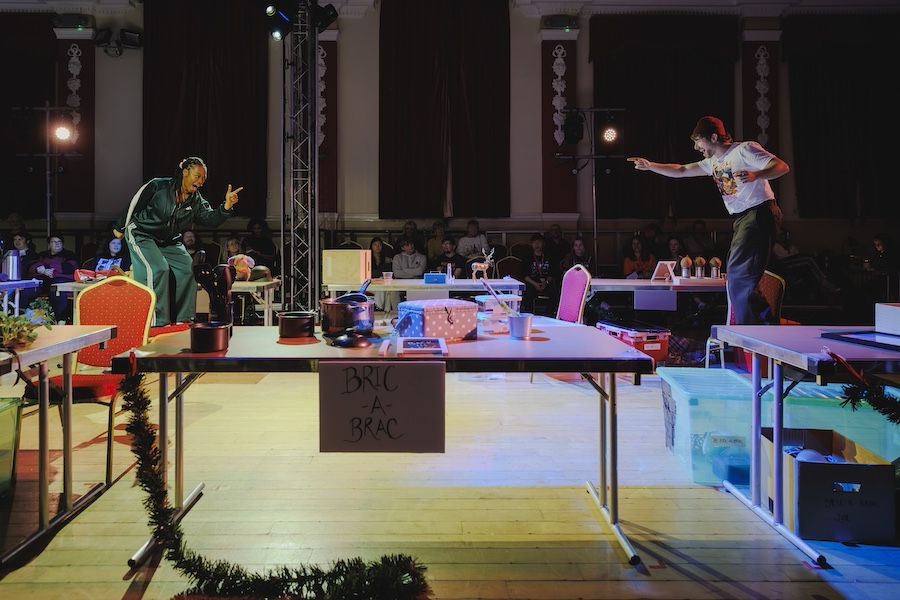
As the quidditative quintet begin setting up the hall making it look festive, with a Christmas tree and stalls, we learn a bit about each of them. However, later, when the fair has closed and the clean up begins, we learn that each one has a story to tell of Christmas’s gone by that isn’t quite as in keeping with the joyous, festive time of year.

This is very much a play of two very different acts. The first, a fun-filled hour where we are introduced to our characters and their foibles. All this is mixed in with festive-fun, with sing-along carols, festive readings from the works of Dylan Thomas and Charles Dickens, and possibly one of the most impressive and quick Christmas decorations performed in live theatre. Add in the mix a possible blossoming love story between the younger characters Johnny and Lucy, and it sets up for what promises to be a memorable show.
However, the warning signs were there in the first act, and the second act takes a darker turn, with lengthy monologues, involving loneliness, crime and murder. Whilst some of the stories successfully highlight that not everyone will be celebrating this Christmas, some felt they a little more development.

Lee Toomes is in fine form as the fed-up but kind hearted caretaker, and is the glue that holds everything together. He’s the most rounded of the five characters. Kelise Gordon-Harrison brings the energy as the lovely, infectious Lucy. She’s perfectly paired with Paddy Stafford’s misery, Johnny. The chemistry between the pair is engaging and their duet on Fairy Tale of New York is a treat. You just wish there was a bit more of their story.

Samantha Robinson is brilliant as Veronica. She nails the festive officiousness; it’s a great comedic turn, that could in lesser hands irritate, but never does.  She strikes the balance between comedy and anguish perfectly. Dickon Tyrell’s turn as the Vicar is somewhat restrained until his Christmas monlogue, which, despite being one of the grimmer stories, his charismatic turn makes it an engaging watch. They are supported by a fine group of young actors for some of the song and dance numbers, which enhances your viewing.

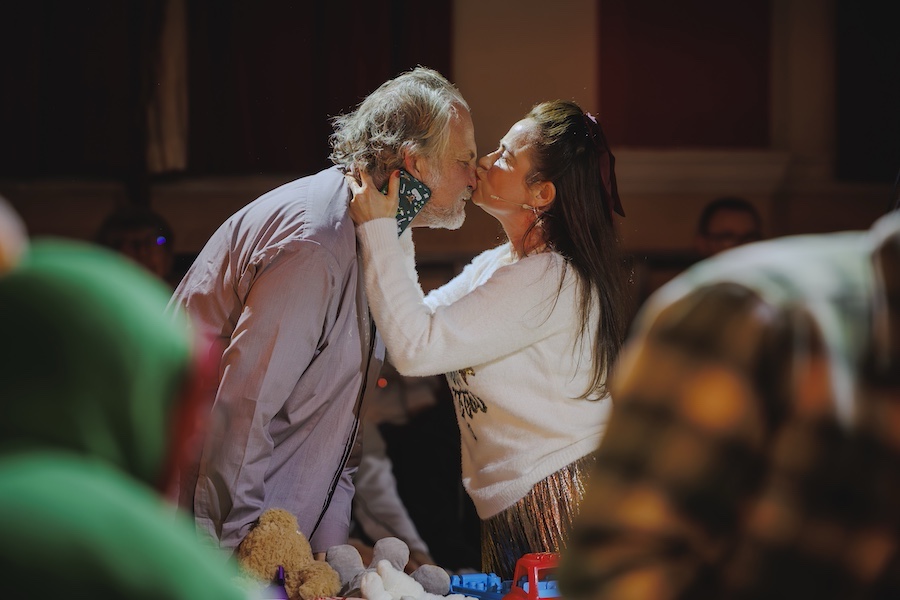
As always with Not Too Tame, there is a spot of audience participation, in this case we are required to peruse the Christmas fair during the interval. The cast set up the fair during the first half of the performance and this is just a nice touch that adds an extra layer to the show.

Overall this is a well-acted, clever production that is at times funny and poignant. Whilst it won’t leave you with a warm Christmas glow, it’s well worth a watch and offers something a little different for the Greater Manchester theatre scene this Christmas.

A Christmas Fair on at Chadderton Town Hall until 2nd January tickets are available here.