

Reviewed by Sophie Rowley
Opening Night verdict ⭐⭐⭐⭐
Filled with style, sophistication and sharp wit, W Somerset Maugham‘s 1926 play The Constant Wife explores the institution of marriage, morals and manners turning every expectation on its head with an imaginative alternative telling of infidelity, betrayal and scandal. Being labelled Maugham’s “most clever and captivating creations” he creates the ultimate heroine in Constance Middleton. Always aware of her husband’s extra-curricular activities with her best friend Marie Louise, Constance plays the dutiful wife and in true 1920’s style pretends to live her life in blissful ignorance. That is until the affair is made public, now Constance must decide how she wants to live her new life. Now a century on, how will the 2026 audience receive Maugham’s play?
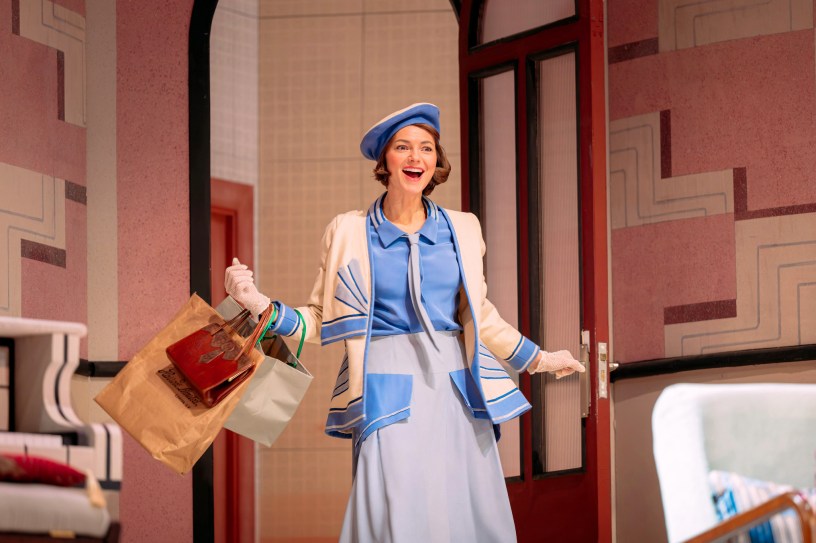
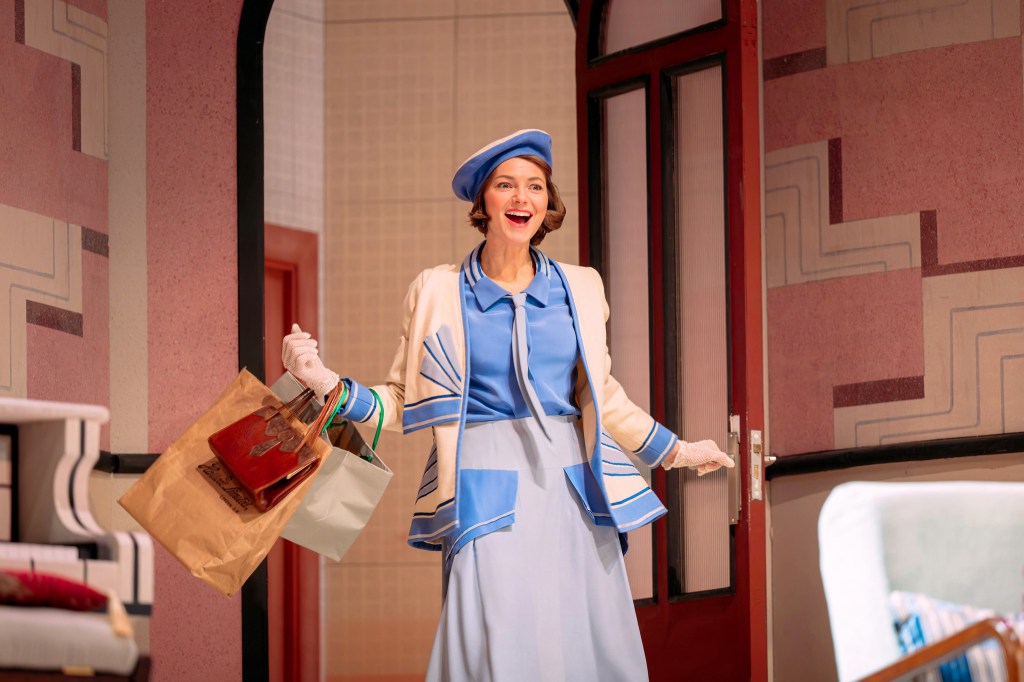
Fresh from the success of a West End run, Maugham’s story is brought to life in this incredible collaboration by David Pugh, Cunard and the Royal Shakespeare Company. Such a trio, the expectation is high for Laura Wade’s Lowry production. Staring Kara Tointin as the formidable heroine Constance who is far ahead of her time. Once the affair is made public, this allows Constance a clean slate to rewrite her story. Tointin plays this wonderfully, she playfully weaves humour and sarcasm into her sizeable script. Moreover, Tointon brings a wonderful modern twist to Constance and despite being set in the 1920’s era, she still manages to make Constance relevant and daring. Maugham’s script shines though in Tamara Harvey’s direction, it’s clear to see why this show has had the success it has.
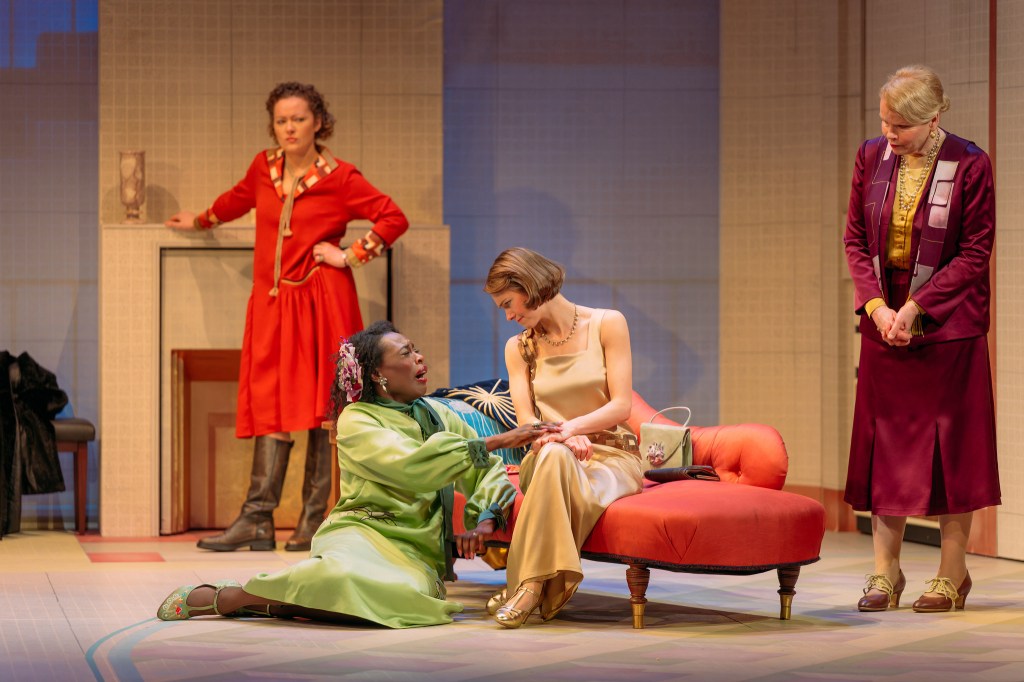
Tim Delap brings a subtle depth to John Middleton who has a predilection for women that aren’t his wife. He plays the 1920’s male very well and the entitlement is played to perfection, especially in the second act when John even slips into melodrama. He epitomised the idea that “men are polygamous and should be allowed their indulgences”. Delap mixes charm with arrogance in his portrayal of John, and as an audience member you feel conflicted in your feeling of him. This conflict of character is also seen in Marie-Louise Durham – played wonderfully by Jocasta King, on the surface she should be despised for defying her loyalty to Constance, yet it could be argued she could be pitied for being swept along in a romance that wasn’t hers to take. The obliviousness King shows in Marie-Louise’s actions highlights her selfishness, this combined with her lack of awareness is a very clever character choice and it works. For me both Delap and King excel in their characterisation and must be commended.
Sara Crowe is perfect as a 1920’s mother – filling Constance with the advice of the time yet she managed to get a few cutting insults on her perception of Constance’s life. Combing humour and wit Crowe brings the archetypal 1920’s mother to life. Amy Vicary-Smith is superb as Martha, Constance’s Sister – the “confirmed Spinster” brings postmodernism to the idea of what a woman is – she is independent and fiercely loyal of Constance. She is a businesswoman and unmarried at a time where this was extremely unfeminine. Like Crowe she brings an effervescent humour that makes the play very enjoyable. Jules Brown, whist having a small part as Mortimer Brown plays a pivotal part as the catalyst for the plot unfolding. Alex Mugnaioni’s portrayal of Bernard as the doting lovesick best friend of Constance adds a entertaining side plot to the play. Finally, Philip Rham’s Bentley the butler is endearing as well as a very talented pianist.
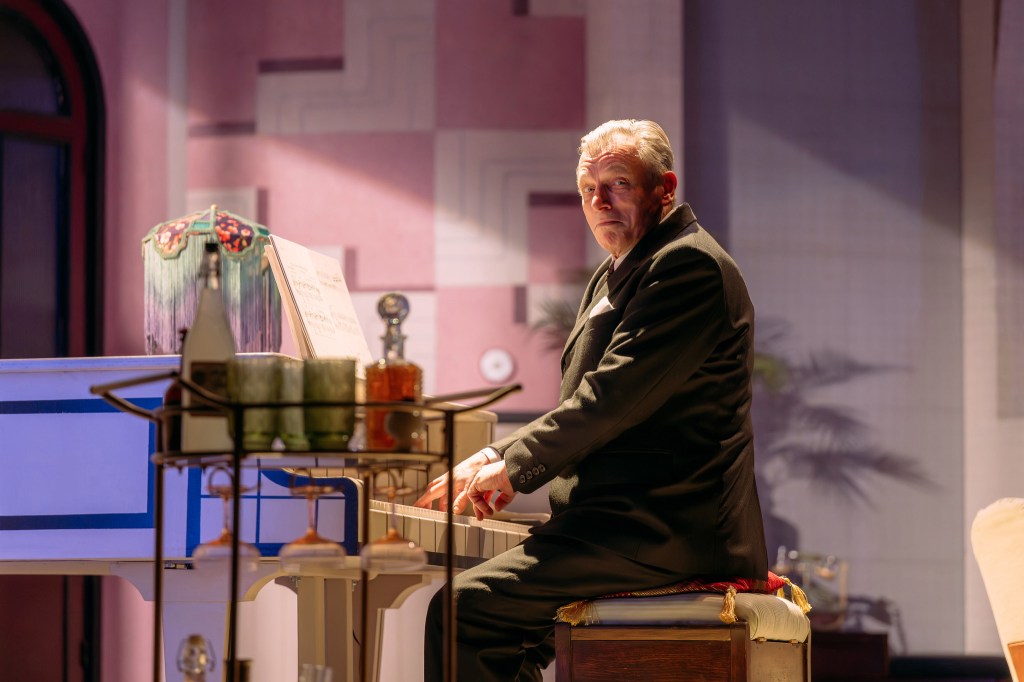
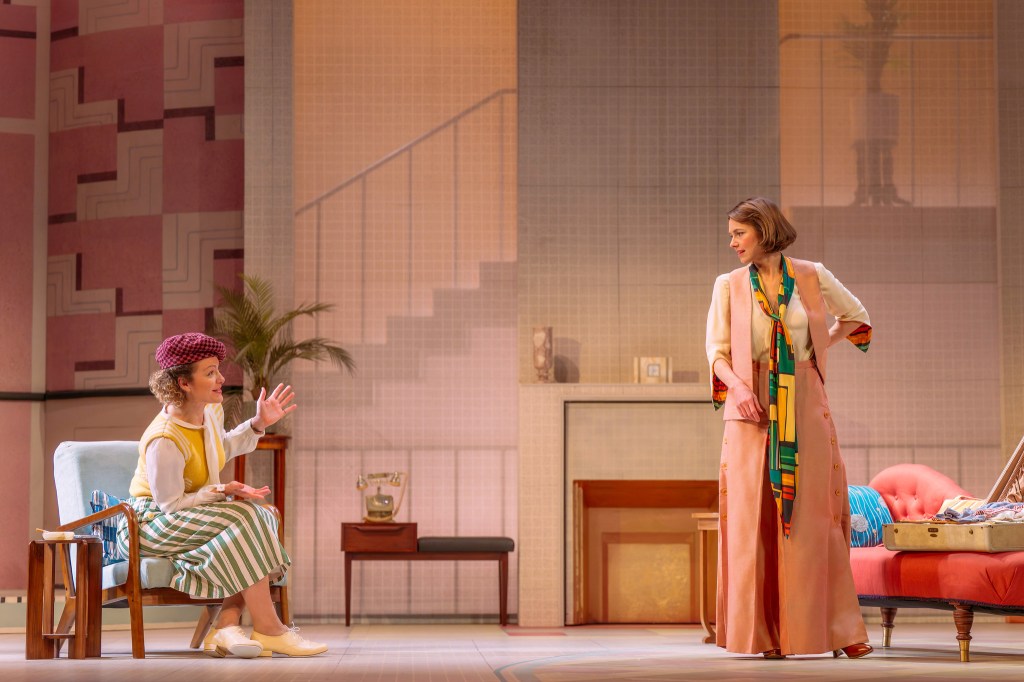
Now a moment must be dedicated to discuss the set and costumes created by Anna Fleischle and Cat Fuller. They have been described as ‘fresh and captivating’ and I cannot disagree. The set is filled with 1920’s staple furniture and art deco designs. Fleischle still brings the 1920’s glamour and elegance with a modern twist that you would see on the high street today. The combination of these sets and costumes complement one another perfectly and the whole creative team have done a sterling job in creating this masterpiece of visual theatre. For the musical score you can do no better than to include original compositions by Jamie Cullum. Cullum’s signature jazzy tones act as perfect scene changes throughout the play.
The whole production team have delivered an exquisite piece of theatre. The cast is superb in each of their portrayals and are complimented perfectly by the beautiful set, stunning costumes and a jazz soundtrack that will fill you with joy.
The Constant Wife is on at the Lowry until 21st March tickets are available here.


 Opening Night